Whether a Brittany Should Chase Early On
It’s a classic dilemma for anyone bringing home a Brittany puppy: you see that boundless energy, that undeniable instinct, and the natural desire to chase anything that moves. You wonder if letting them run freely after every leaf, bird, or squirrel is helping them develop their natural hunting drive, or if you’re actually setting yourself up for a chaotic, difficult-to-handle gun dog down the line. This guide will walk you through the nuances of a Brittany’s chase instinct, explaining why uncontrolled chasing can be detrimental and how to properly channel that incredible drive into a well-mannered hunting companion.
Understanding the Brittany's Innate Drive
Brittanys are born with a powerful prey drive; it's what makes them such exceptional bird dogs. They are hardwired to locate, point, and retrieve game. This instinct often manifests as an intense desire to chase anything that flushes or scurries away. While this drive is a beautiful thing to witness, especially in a young pup, it’s crucial to understand that uncontrolled chasing is not the same as productive hunting.
The Strong Prey Drive
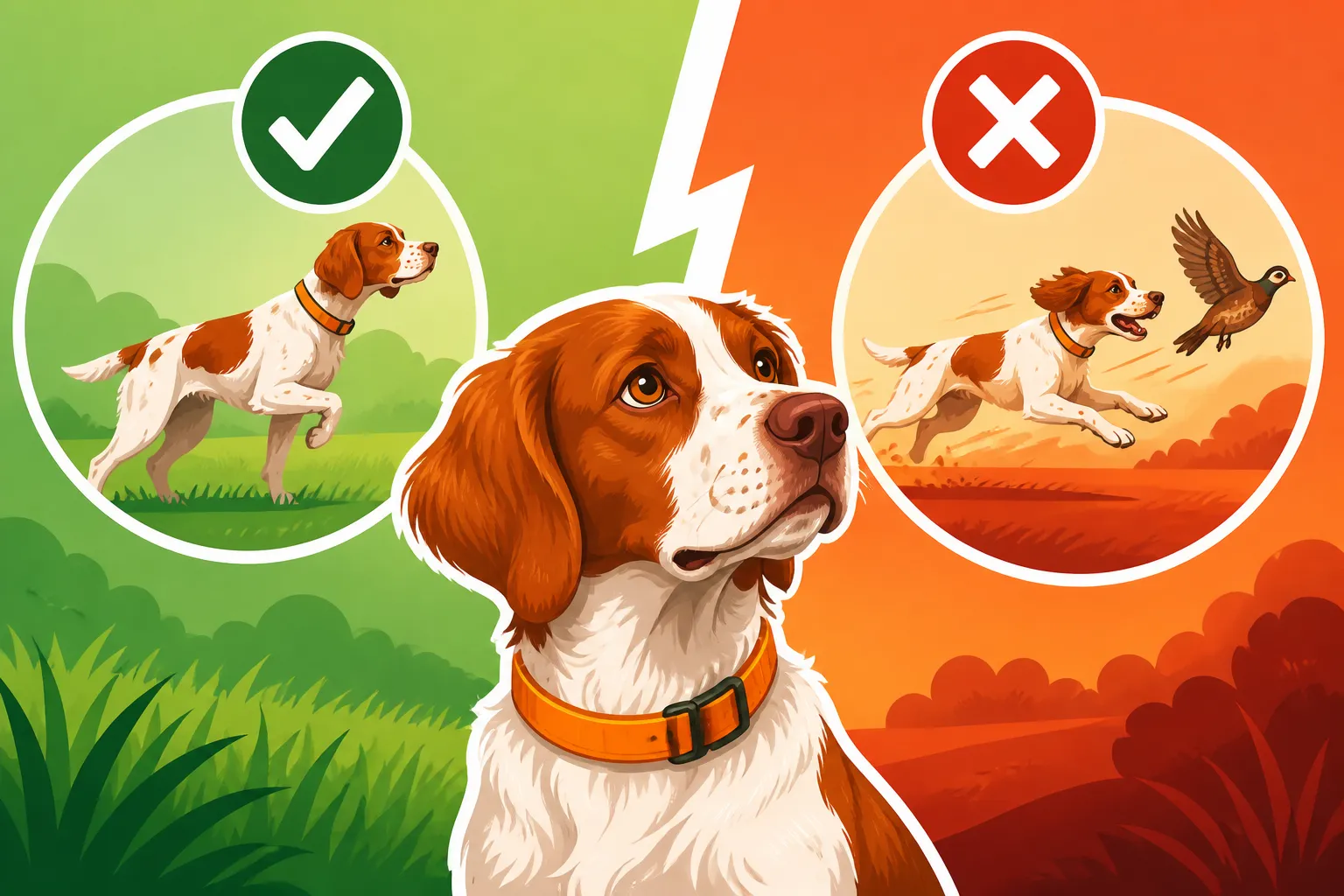
From the moment they open their eyes, Brittany puppies exhibit behaviors related to hunting. They pounce on toys, stalk their littermates, and will inevitably show interest in birds or small animals. This isn't just puppy play; it's their genetics kicking in. Their ancestors were bred for generations to find and point game, and that drive is deeply ingrained. For a new owner, it can be tempting to just let them go, thinking, "They're just being a bird dog!" And while it's true they are, an unfettered chase can quickly become a habit that overrides essential commands you'll need in the field. Imagine trying to call your dog off a running pheasant if they've spent their whole life being rewarded by the thrill of the chase. It's a tough habit to break. You want to nurture their natural abilities, but always within a framework of control.
The "Whoa" Command's Role
The ultimate goal for a bird dog is to be "steady" – steady to wing, steady to shot, and ideally, steady to fall. This means they hold their point when a bird flushes, remain calm when the gun goes off, and wait for the "fetch" command before retrieving. The foundation for this steadiness is the "whoa" command. This single word means "stop right there, don't move a muscle, wait for my next instruction." If your Brittany is constantly chasing, they are learning the opposite: to react instinctively and immediately to movement. Introducing Teaching a Brittany Whoa early and consistently, even before formal bird work begins, is paramount. It teaches them patience and control, which are vital if you want a reliable hunting partner rather than a wild cannonball through the brush. Think of "whoa" as the emergency brake for their prey drive; you need it to be absolutely reliable.
The Risks of Unchecked Chasing in a Young Brittany
While it might seem harmless, or even beneficial, to let your young Brittany chase to their heart's content, this can inadvertently lead to significant challenges in their future training and overall behavior. You want that enthusiasm, but you need to shape it.
Solidifying Bad Habits
Every time your Brittany puppy chases something and is successful (meaning, it gets to run and experience the thrill, even if it doesn't "catch" anything), that behavior is reinforced. Their brain makes a strong connection: "See bird, chase bird, feel good!" This creates a deeply ingrained habit that becomes incredibly difficult to modify later on. When you finally introduce formal bird training and try to teach them steadiness – to hold a point, to wait for your command – you're essentially asking them to unlearn months or even years of reinforced chasing behavior. It's like trying to teach someone to drive carefully after they've spent their entire life joyriding without rules. The habit of chasing can make it incredibly frustrating to teach concepts like Teaching a Brittany Steady to Wing or Teaching a Brittany Steady to Shot. You'll find yourself constantly battling their instincts instead of channeling them.
Safety Concerns in the Field
Beyond training frustrations, unchecked chasing poses real safety risks for your Brittany. A dog that doesn't understand boundaries or the "whoa" command is a dog that can quickly get into trouble. Imagine your Brittany, consumed by the chase, running headlong into a busy road, disappearing into dense cover, or even worse, running onto private property where they might not be welcome. Their intense focus on the game can make them oblivious to their surroundings, to your calls, and to potential dangers. A reliable recall is essential for any dog, but especially for a bird dog. If they're accustomed to ignoring you in the heat of the moment, their life could literally be at stake. Early, controlled training ensures that when you do take them into the field, they have the foundational understanding that your commands are paramount, even when their instincts are screaming otherwise. It’s about building trust and respect, so they know to check in with you, even if they've got their nose to the ground on a hot track.
Introducing Birds Correctly: Controlled Exposure is Key
The goal isn't to suppress your Brittany's natural bird drive, but to channel it into productive, controlled hunting behaviors. This means very deliberate introductions to birds, always keeping an emphasis on obedience and steadiness.
Controlled Exposures
When your Brittany puppy is ready to meet its first bird, it should be a planned, controlled event, not a free-for-all. Typically, a puppy around 3-6 months old might be ready for these initial introductions, but this can vary. When a Brittany Puppy Should Meet Its First Bird offers more detailed insights. These early exposures often involve a wing on a string or a live bird in a controlled setting, like a pigeon in a remote launcher. The key is to teach them that you are the source of the birds, and your rules dictate when they get to interact with them. This builds anticipation and reinforces your role as the handler. You might let them chase a pigeon briefly, then immediately call them back, rewarding heavily when they comply. It's a delicate balance: allowing some natural expression of their drive, but always bringing it back to your control. This is where tools become invaluable. A long check cord, for example, purchased easily from retailers like Amazon, allows you to maintain physical control while giving them the illusion of freedom. You can let them find the bird, go on point, and then gently apply pressure on the cord as you issue "whoa," preventing them from busting the bird.
Building the Foundation: Recall and Steadiness
Before you even think about putting your Brittany on wild birds, a rock-solid foundation in obedience is non-negotiable. This includes:
- Reliable Recall: Your dog must come when called, every single time, regardless of distractions. Start this in low-distraction environments and gradually increase the challenge. This is often covered in comprehensive puppy programs, such as those offered by BAXTER & Bella, which focus on positive reinforcement and building a strong relationship. How Reliable a Brittany's Recall Is depends entirely on the consistent effort you put in.
- "Whoa" Command: As discussed, "whoa" means "stop." Practice this command daily in various situations, teaching your Brittany to freeze in place until released. This is practiced away from birds first, making it second nature.
- Leash Manners: Your Brittany should walk politely on a leash, understanding that you dictate the pace and direction.
- Duration of Training Sessions: Brittanys are smart and eager, but they can also get bored. Keep training sessions short, fun, and positive to maximize engagement. How Long a Brittany's Training Session Should Be is usually 10-15 minutes, two to three times a day for a puppy.
Only when these foundational commands are consistently reliable can you truly begin to integrate them with bird work, moving towards a dog that honors its point and waits for your cue.
Addressing Persistent Chasing Issues
Even with the best intentions, you might find your Brittany struggling with the urge to chase. This is where patience, consistency, and sometimes specialized tools or professional help come into play.
Tools and Techniques
When dealing with a Brittany that has developed a strong habit of chasing, certain tools and techniques can be incredibly helpful:
- Check Cord: This is your best friend. A long line (20-50 feet) attached to your dog's collar allows you to prevent them from chasing birds or to reinforce the "whoa" command with a gentle tug. You can find excellent quality check cords on Amazon. When your dog starts to break, you step on the cord or give a quick, firm pop and say "whoa." This is about preventing the chase, not punishing it after it's happened.
- Remote Launchers: These devices allow you to launch birds on command, giving you ultimate control over the bird's flight. When your dog is on point, you can launch the bird and enforce steadiness, preventing them from chasing. This allows for repeated, controlled scenarios where your dog learns that busting the bird doesn't lead to a chase.
- E-Collar (Electronic Collar): Used correctly, an e-collar is a communication tool, not a punishment device. It can be incredibly effective for long-distance recall and reinforcing steadiness. However, it requires careful, knowledgeable application. Never use an e-collar without understanding proper conditioning and timing, as improper use can create fear and anxiety. Whether a Brittany Needs an E Collar is a common question, and for serious bird training, many handlers find them invaluable, but only after extensive foundational training.
- Consistency: This is the most vital "tool." Every interaction with birds, every walk, every training session must reinforce the desired behavior. If you allow chasing sometimes but not others, you're creating confusion. Brittanys are highly intelligent and read their handlers well; What a Brittany's Temperament Is Really Like means they thrive on clear expectations.
Here's a quick comparison of proactive vs. reactive training approaches:
| Approach | Description | Pros | Cons |
|---|---|---|---|
| Proactive/Controlled | Introducing birds in a structured, guided manner from the start. | Builds strong foundational obedience, prevents bad habits. | Requires more initial effort and planning. |
| Reactive/Unchecked | Allowing free chasing, then trying to correct later. | Seems easier in the short term, satisfies dog's immediate urge. | Leads to ingrained bad habits, difficult and frustrating to fix. |
Seeking Professional Help
If you're finding it difficult to manage your Brittany's chasing instincts on your own, don't hesitate to seek out a professional gun dog trainer. A good trainer can provide personalized guidance, identify specific areas where your dog needs improvement, and teach you advanced techniques for developing a truly steady bird dog. They have the experience and facilities (like bird fields and bird launchers) to create realistic training scenarios. Sometimes, a fresh pair of eyes and hands can make all the difference. Remember, your Brittany is a sensitive breed; How Sensitive a Brittany Is to Correction means that improper or harsh corrections can set back training significantly, making a professional's nuanced approach even more valuable. They can help you understand the subtle cues your dog gives and how to respond effectively.
Ultimately, whether your Brittany should chase early on isn't about crushing their spirit or their innate drive, but about guiding it. By establishing clear expectations, building a strong foundation of obedience, and using controlled introductions to birds, you can develop a magnificent hunting partner who is both passionate about the field and reliably responsive to your commands. It's a journey, and a rewarding one at that.
Disclaimer
This article is for general informational purposes only and does not constitute professional advice. Laws, prices and regulations vary by location and change over time. Consult a qualified professional for guidance on your specific situation.