Whether a Beeper Collar Changes a Brittany’s Range
One of the most common worries for Brittany owners, especially those new to hunting, is keeping track of their energetic dog in dense cover. It's easy to feel a knot of anxiety tighten in your stomach when your beloved bird dog disappears into a thicket, and you're left wondering if they're still working or if they've decided to go on a solo adventure. This comprehensive guide will explore whether a beeper collar genuinely changes a Brittany's natural hunting range or if it's simply a tool that helps you manage and understand that range better.
Understanding Your Brittany's Natural Ranging Instincts
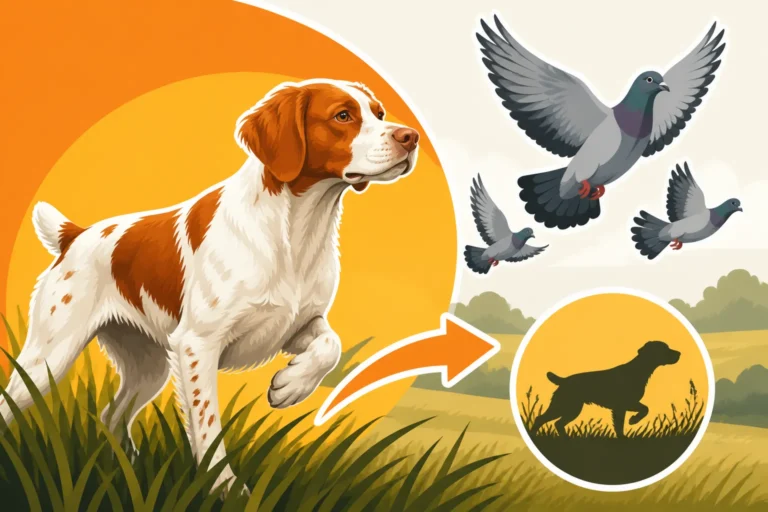
Brittanys are renowned for their incredible bird drive and enthusiasm in the field. They are, by nature, active, intelligent, and possess a strong desire to cover ground in search of game. This inherent drive for exploration and pursuit of scent is deeply ingrained in their breed history and genetic makeup.
What Influences a Brittany's Natural Tendencies?
Every Brittany is an individual, of course, but their ranging behavior is a fascinating mix of genetics, early experiences, and ongoing training. A dog bred from lines known for wide-running field trial champions will likely have a more expansive natural range than one from lines focused on closer-working foot hunting. Beyond genetics, the environment plays a huge role. If a young Brittany puppy is consistently exposed to vast open fields and encouraged to search, it will naturally develop a larger range. Conversely, a pup primarily hunted in small patches of cover might learn to work closer.
Consider your Brittany's personality too. Some are naturally more independent, eager to strike out and find birds on their own, while others might prefer to stay within a closer visual or auditory range of their handler. This isn't a defect; it's just part of their unique character. Early socialization, consistent recall practice, and exposure to various hunting scenarios all shape how your Brittany will naturally quarter and search the cover. Understanding these foundational elements is crucial before we even talk about equipment.
The Difference Between American and French Brittanys' Range
It's really important to distinguish between the two distinct types of Brittanys, as their natural ranging tendencies are often quite different. The American Brittany, developed in the United States, was historically bred for wide-ranging performance in large open spaces, often hunted from horseback. These dogs are known for covering ground with impressive speed and stamina, pushing out hundreds of yards to find birds. Their purpose was to efficiently locate game across vast agricultural fields or expansive prairies. For more on this, you might read How Far an American Brittany Ranges.
In contrast, the French Brittany, or Epagneul Breton as it's known in its homeland, was bred for closer, more methodical hunting, typically with a walking hunter. These dogs generally work within shotgun range, often no more than 50 to 100 yards, checking in frequently. Their style is characterized by a precise, deliberate search, ensuring no bird is missed in dense European cover. If you have a French Brittany, you might want to look into How Close a French Brittany Hunts. So, when we talk about "changing range," it's vital to know which type of Brittany you're working with, as their baselines are very different. A beeper collar might feel very different on a wide-ranging American Brittany versus a close-working French type.
What a Beeper Collar Actually Does for You and Your Brittany
Before we dive into how a beeper collar might influence range, let's get clear on what it actually is and what it's designed to do. It's not a magical device that dictates your dog's movements, nor is it primarily a training tool for range control in the same way a check cord or an e-collar is.
The Technology Behind Beeper Collars
A beeper collar is essentially an auditory locator device. It emits a series of audible beeps that allow you, the handler, to track your dog's location, especially when they are out of sight in thick cover or at a distance. Most modern beeper collars come with multiple modes. Typically, there's a "run mode" where the collar emits a single beep every few seconds (e.g., 5-10 seconds) to let you know the dog is moving. Then, there's a "point mode" which activates when the dog stands still for a predetermined period (usually 3-5 seconds), indicating it's on point. In point mode, the beeping becomes more rapid and continuous, signaling its precise location.
The sounds can vary too – some collars offer different tones, volumes, or even hawk screams. These devices are invaluable for safety, helping you quickly locate a dog that's lost its way or simply working out of sight. They save you from having to constantly blow a whistle or shout, which can disturb the hunting area and, frankly, irritate your hunting partners! Many reputable brands offer durable, weather-resistant beeper collars that can stand up to the rigors of the field.
Common Misconceptions About Beeper Collars
One of the biggest misconceptions about beeper collars is that they are some form of "correction" collar or that they are directly tied to e-collar functions. While many e-collars do have a beeper function integrated, a standalone beeper collar is solely for auditory tracking. It does not provide static correction, vibration, or any other physical sensation to the dog. Its purpose is purely informative for the handler.
Another common mistake is thinking the beeping itself will somehow tell the dog where to go or how far to range. The dog hears the beeps, yes, but it doesn't associate them with a command to come closer or to range wider. The beeps are for your ears, not primarily for the dog's behavioral modification. Some handlers worry the constant beeping might distract the dog, but most Brittanys quickly learn to tune out the sound as background noise, focusing instead on scent and birds. It becomes just another part of their hunting environment, much like the wind or rustling leaves.
The Nuance: How a Beeper Collar Indirectly Influences Range
While a beeper collar doesn't inherently change a Brittany's range through direct command or correction, its presence and the information it provides can indirectly influence how a dog's range is managed and perceived by the handler. This distinction is subtle but crucial.
Providing Aural Feedback and Reassurance
For handlers, the constant "beep… beep… beep" in run mode is incredibly reassuring. You know your dog is moving, working the cover, even when you can't see them. When that familiar single beep stops and transitions to the rapid "beep-beep-beep" of point mode, it tells you exactly where to head, even if your dog is tucked away behind a rise or deep in a thicket. This constant feedback reduces the handler's anxiety about losing the dog.
Think about it: if you're constantly worried your wide-ranging Brittany might disappear for good, you might be more inclined to blow your whistle incessantly or cut off their casts prematurely. You might even start trying to How to Shorten a Brittany's Range out of fear. But with a beeper collar, that worry lessens. You know where they are. This psychological comfort for the handler can lead to a more relaxed handling style, allowing the dog to work naturally at its preferred range without constant interference. In this way, the collar doesn't change the dog's range, but it allows the handler to accept the dog's natural range more readily.
The Importance of Initial Training and Association
A beeper collar isn't a magic button that instantly makes your dog hunt perfectly. Like any piece of equipment, its effectiveness is deeply tied to how it's introduced and integrated into your overall training philosophy. If a dog only hears the beeper when it's being called back or corrected with an e-collar (if using a combined unit), it might start to associate the sound with negative experiences. This could potentially make a dog reluctant to range out, not because of the beeper itself, but because of the handler's reactions to its feedback.
However, if the beeper is introduced calmly, as simply another part of the hunting experience, the dog will quickly acclimate. Many trainers advocate for putting the collar on during walks and play sessions long before hunting season, so the dog simply sees it as part of its gear, no different from its regular collar. This helps prevent any negative associations. BAXTER & Bella, for example, emphasizes positive reinforcement and gradual exposure in their training philosophies, which aligns perfectly with introducing new gear like a beeper collar in a stress-free manner. The goal is for the dog to ignore the beeps and focus on its job, while you, the handler, benefit from the location information.
When a Beeper Collar Might Seem to "Change" Range
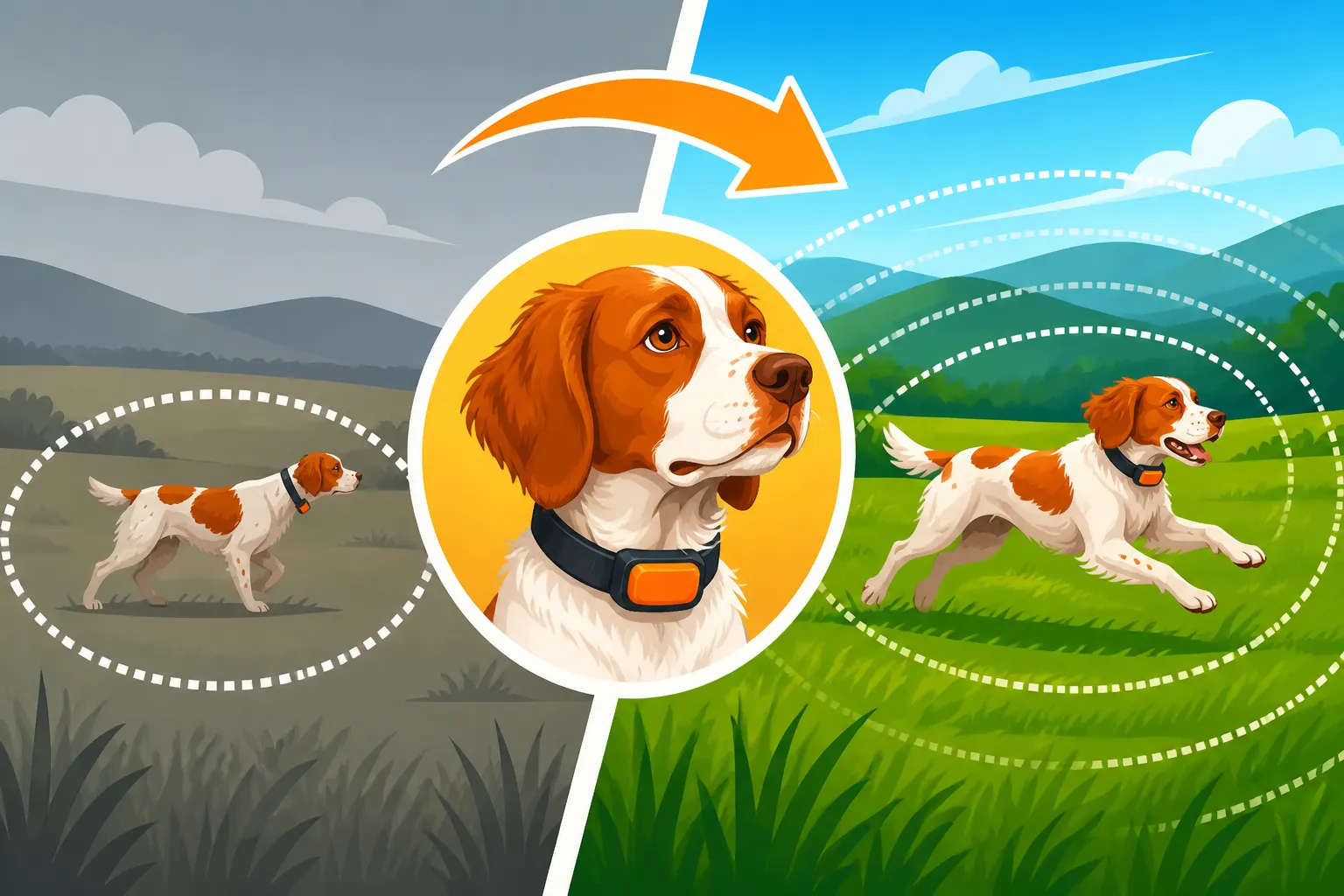
Sometimes, a handler perceives a change in their Brittany's range after using a beeper collar, but this is usually a reflection of altered handler behavior rather than the collar itself. For instance, if you previously limited your dog's range because you couldn't keep track of them, the beeper collar might empower you to let them work wider. The dog hasn't changed its inherent desire; you've simply given it more freedom because you have a safety net.
Conversely, if a handler becomes overly reliant on the beeper and uses it to constantly micromanage the dog, repeatedly calling them in or redirecting them immediately when they go out of sight, this could inadvertently shorten the dog's range over time. The dog learns that ranging out means constant interruption. But again, this isn't the collar altering the range; it's the handler's response to the information the collar provides that creates the perceived change. A well-trained Brittany should have a reliable recall, irrespective of the collar, as discussed in How Reliable a Brittany's Recall Is. The beeper is a locator, not a substitute for solid foundational training.
Leveraging a Beeper Collar to Enhance, Not Alter, Your Brittany's Hunt
The most effective way to use a beeper collar is to think of it as an enhancement tool, not a range-altering device. It allows you to maintain control and awareness without stifling your Brittany's natural hunting instincts.
Integrating the Beeper Collar into Your Training Routine
Introduce the beeper collar as just another part of the hunting ritual. Let your Brittany wear it during non-hunting activities, like walks in the park or backyard play, so the sound becomes normal background noise. When you start field work, combine it with positive experiences. For a young dog, early exposure to birds and positive reinforcement during pointing drills can help build confidence, as outlined in When a Brittany Puppy Should Meet Its First Bird. The beeper collar simply accompanies these experiences.
You can also use the beeper collar to reinforce your "whoa" command. When your dog goes on point and the point-mode beeping kicks in, you know exactly where to approach to verbally reinforce the "whoa" command and move in for the flush. This immediate, accurate feedback on your dog's location helps you be a more effective trainer, allowing you to time your interventions perfectly without disturbing the bird or the dog more than necessary. It's a fantastic tool for communication, especially when your Brittany is out of sight.
Using the Beeper Collar for Safety and Locating
Beyond hunting, beeper collars are incredibly useful for general safety. If your Brittany ever gets separated from you during a hike or wanders too far on a walk, the beeper can be a lifesaver for locating them quickly. This is especially true for wide-ranging Brittanys who might disappear over a ridge or into dense brush. The peace of mind this provides is immeasurable. Think of how many items you might buy from Amazon to enhance your dog's safety and training; a beeper collar is high on that list.
For hunters, the primary benefit is clear: you always know where your dog is. This is particularly valuable in heavy cover where visual contact is minimal. Imagine hunting pheasants in tall switchgrass – your Brittany could be on a rock-solid point just feet away, but you'd never know without that distinctive point-mode beep. It streamlines the hunting process, reduces frustration, and minimizes the time spent searching for your dog, allowing you both to focus on the hunt.
Avoiding Over-Reliance and Negative Associations
While immensely helpful, it's vital not to become overly reliant on the beeper collar. Your Brittany still needs to learn fundamental commands like recall and "whoa" through traditional training methods, regardless of whether they're wearing a collar. The collar should complement, not replace, these essential skills. If you're constantly blowing your whistle immediately after the beeper changes to point mode, or if you're using an e-collar function integrated with the beeper every time your dog ranges "too far" in your opinion, you risk creating negative associations.
The goal is for your Brittany to hunt confidently and efficiently, relying on its instincts and training. The beeper collar is there to provide you with information. Let your dog work. Trust its nose. The beeper simply fills in the blanks when visual contact is lost, allowing you to celebrate its finds and intervene constructively when truly necessary. For handlers who use e-collars for communication, understanding the distinction between a pure beeper and a beeper-enabled e-collar is also key. You can learn more about this by reading Whether a Brittany Needs an E Collar.
Here's a quick overview of how a beeper collar interacts with your Brittany's natural hunting:
| Aspect | Brittany's Natural Tendency | Beeper Collar's Direct Effect | Beeper Collar's Indirect Effect (via Handler) |
|---|---|---|---|
| Range | Varies by individual, breeding (e.g., American vs. French type) | None on inherent drive to range | Handler allows wider range due to reduced anxiety; or handler restricts range if over-reliant on beeps for micromanagement. |
| Pointing | Innate drive to point game birds | None on act of pointing | Provides immediate, accurate location for handler to reinforce "whoa" or approach flush. Reduces handler interference. |
| Search Pattern | Quarters cover, follows scent cones | None on search strategy | Handler can better understand and follow dog's search pattern without visual contact. |
| Focus | Highly focused on scent, birds, and handler cues | Minimal distraction after acclimation | Reduces handler's need to shout or whistle, allowing dog to maintain focus. |
| Safety | Can become lost or disoriented in unfamiliar territory | Acts as an auditory beacon | Significantly reduces risk of losing dog, especially in dense cover or at dusk. |
| Handler Stress | Often high when dog is out of sight | Greatly reduces uncertainty and worry | Promotes a more relaxed, trusting handler-dog dynamic in the field. |
In conclusion, a beeper collar is a fantastic piece of equipment for any Brittany owner, especially those who hunt in varying cover conditions. It doesn't fundamentally alter your Brittany's natural range, which is driven by genetics and individual personality. Instead, it empowers you as the handler with crucial information, allowing you to understand and confidently manage your dog's existing range. By reducing anxiety and improving communication, a beeper collar enables you to trust your Brittany's instincts more fully, leading to a more harmonious and successful hunting experience for both of you. So, let your Brittany do what it was bred to do – range out, find birds, and make you proud, knowing you'll always hear exactly where they are.
Disclaimer
This article is for general informational purposes only and does not constitute professional advice. Laws, prices and regulations vary by location and change over time. Consult a qualified professional for guidance on your specific situation.