Whether a Field Bred Brittany Is Bolder
One common question I hear from prospective Brittany owners, especially those looking for a capable hunting partner, revolves around temperament: "Is a field-bred Brittany bolder than a show-bred one?" It’s a completely valid concern, stemming from the breed's reputation for being "soft" and the natural desire for a dog that can hold its own in demanding outdoor conditions. This guide will dive deep into what makes a Brittany's temperament, how breeding lines influence these traits, and how you can nurture boldness and confidence in any Brittany, regardless of its lineage.
Decoding the Brittany Temperament: More Than Just "Soft"
Before we talk about field-bred versus show-bred, let's address the elephant in the room: the Brittany's reputation for being "soft." It’s true that Brittanys are often described this way, especially when compared to some of the more hard-charging pointing breeds. But what does "soft" actually mean in the context of a dog, and how does it relate to being "bolder"? It’s a term that's often misunderstood, leading to potential misinterpretations of the breed's character.
The Myth of Fragility: Understanding Brittany Sensitivity
When people say a Brittany is "soft," they usually aren't talking about physical weakness, but rather a profound sensitivity to correction, tone of voice, and even emotional atmosphere. A harsh word, a loud reprimand, or an overly physical correction can deeply affect a Brittany. They aren't prone to "shrugging off" a strong hand; instead, they can become withdrawn, shut down, or even fearful if treated harshly. This isn't fragility; it's a keen awareness and a strong desire to please, coupled with an inability to process aggressive interactions constructively.
Think of it less as being delicate and more as being highly attuned. This sensitivity means they often thrive on positive reinforcement and gentle guidance. They remember bad experiences, and a single negative training session can set you back significantly. I've seen Brittanys who were corrected too harshly in puppyhood develop a lasting aversion to certain training tools or even their owner's presence. Understanding this means recognizing that effective training isn't about being "tougher" with a Brittany; it's about being smarter, more consistent, and infinitely more patient. You can learn more about this in How Sensitive a Brittany Is to Correction.
Innate Drive and Curiosity: The Heart of a Hunter
Despite their sensitivity, Brittanys are far from timid or lacking in drive. These dogs were bred for centuries to hunt, and that instinct runs deep. They possess an incredible prey drive, an insatiable curiosity, and a tireless work ethic. A Brittany is inherently driven to explore, to scent, and to find birds. This drive, in itself, is a form of boldness. It's the courage to push through dense cover, to ignore distractions in pursuit of a scent, and to hold point with unwavering focus, even when a bird tries to sneak away.
This innate curiosity and drive manifest in a dog that is engaged with its environment and eager to participate. Whether it's chasing a thrown bumper in the yard or quartering a field for pheasant, a Brittany wants to do things. Their desire to work with you, to be part of the action, is a powerful motivator. It’s this combination of sensitivity and intense drive that makes them such unique and beloved hunting companions. They are intelligent, thoughtful dogs who want to understand what you want from them, and once they do, they are incredibly dedicated. The real question is how to channel that drive effectively without stifling their sensitive nature. What a Brittany's Temperament Is Really Like delves deeper into these characteristics.
The Role of Early Socialization in Building Confidence
No matter the breeding line, early socialization is absolutely paramount for cultivating a confident and well-adjusted Brittany. A puppy’s experiences during its critical developmental period (roughly 3 to 16 weeks) shape its perception of the world. A lack of exposure during this time can lead to fearfulness, timidity, and a general lack of "boldness" later in life. This isn't just about meeting other dogs; it's about encountering new sights, sounds, textures, and people in a positive, controlled way.
Exposing your Brittany puppy to different environments – busy parks (from a safe distance, of course), car rides, various floor surfaces, gentle handling by different people – helps them learn that the world isn't a scary place. Puppy classes are fantastic for this, providing supervised play with other pups and exposure to new experiences. A puppy that builds a strong foundation of confidence through positive experiences is far more likely to develop into a "bolder" adult, one who tackles new situations with curiosity rather than apprehension. Remember, a sensitive dog often needs more thoughtful socialization, not less, to ensure they grow into their full, confident potential. For further reading, check out Whether a Brittany Puppy Should Be Socialized Heavily.
The Field-Bred Brittany: Purpose-Driven and High-Octane
So, when we talk about a field-bred Brittany being "bolder," what are we really referring to? It's not about being aggressive or fearless in a reckless way. It’s about a dog that possesses specific, amplified traits that make it exceptionally effective and resilient in a hunting environment. These dogs are purpose-bred, meaning their lineage has been carefully selected over generations for performance in the field.
Selection for Unflappable Hunting Traits: What "Boldness" Really Means
Field-bred Brittanys are the result of breeders prioritizing traits like strong prey drive, scenting ability, stamina, intelligence, and an unflappable focus in the face of distractions. This includes a kind of "boldness" – the courage to tackle dense cover, to work independently yet cooperatively, and to maintain composure around gunshots and exciting game. They are expected to range with confidence, to penetrate thickets that might deter a less driven dog, and to hold point steadfastly even with birds fluttering around them.
This focus means that field-bred dogs are often more intense and have a higher energy level. They are not content to be couch potatoes; they need a job to do. Their "boldness" is intrinsically tied to their purpose. It’s the drive to push forward, to solve the puzzle of finding game, and to ignore discomfort or minor annoyances in pursuit of their quarry. A field trial Brittany, for example, is expected to cover ground with enthusiasm and self-assurance, showing no hesitation. This active temperament makes them incredibly exciting to hunt with.
Boundless Energy and Focus: Traits for the Rigors of the Field
One undeniable characteristic of a field-bred Brittany is their energy. We're talking about dogs that can run for hours, covering miles of varied terrain, often without seeming to break a sweat. This high energy is a critical component of their field "boldness." It allows them to maintain focus and drive throughout a long day, whether that's quartering a prairie or navigating a dense woodlot. If you’re a serious hunter, you know the value of a dog that doesn't quit.
This energy isn't just physical; it's mental, too. They possess an intense focus when "on the job." While they might be sensitive to corrections, they often have a single-minded determination when a scent is in the air. This focus helps them block out non-essential stimuli and concentrate on the task at hand. It’s this combination of physical stamina and mental intensity that allows them to perform at peak levels. However, it also means that this energy needs an appropriate outlet. An under-exercised field-bred Brittany can become destructive or neurotic indoors, simply because they have so much drive with nowhere to put it. You can explore this further in What an Under Exercised Brittany Does at Home.
Adaptability and Resilience: Navigating Diverse Hunting Environments
A truly bold field-bred Brittany also exhibits a high degree of adaptability and resilience. They might be hunting pheasants in tall grass one day, then sharp-tailed grouse in rugged sagebrush the next, and maybe even retrieving ducks from icy water. These diverse environments demand a dog that can adjust quickly, isn't easily spooked by new terrain or conditions, and can recover quickly from minor setbacks or discomforts.
For instance, a field-bred Brittany might encounter briars, thorny bushes, or even barbed wire. While no dog is impervious to injury, a well-bred field dog typically possesses the mental resilience to push through these minor obstacles with a strong desire to continue the hunt. They aren't prone to giving up easily. This resilience is often bred into them through generations of working dogs that proved their mettle in varied conditions. It's not about being impervious to pain, but about having the mental fortitude and drive to overcome challenges, a characteristic often mistaken for pure physical toughness.
Temperamental Differences: Field Lines vs. Show Lines
The divergence between field-bred and show-bred Brittanys isn't just about physical appearance; it often extends significantly to temperament. While both are undeniably Brittanys at heart, their breeding goals have led to subtle yet distinct differences in their inherent traits, including what we might call "boldness."
Divergent Breeding Philosophies and Their Impact
The American Brittany, like many dual-purpose breeds, has seen a split in breeding priorities. Field-bred lines emphasize traits that excel in actual hunting and field trials: intense bird drive, stamina, scenting ability, independence, and responsiveness to handling in a dynamic environment. Show-bred lines, on the other hand, focus on conformation to the breed standard, which includes appearance, gait, and a calm, cooperative temperament suitable for the show ring. While many show breeders still value hunting instinct, it's often not the primary selection criterion to the same degree as it is for dedicated field breeders.
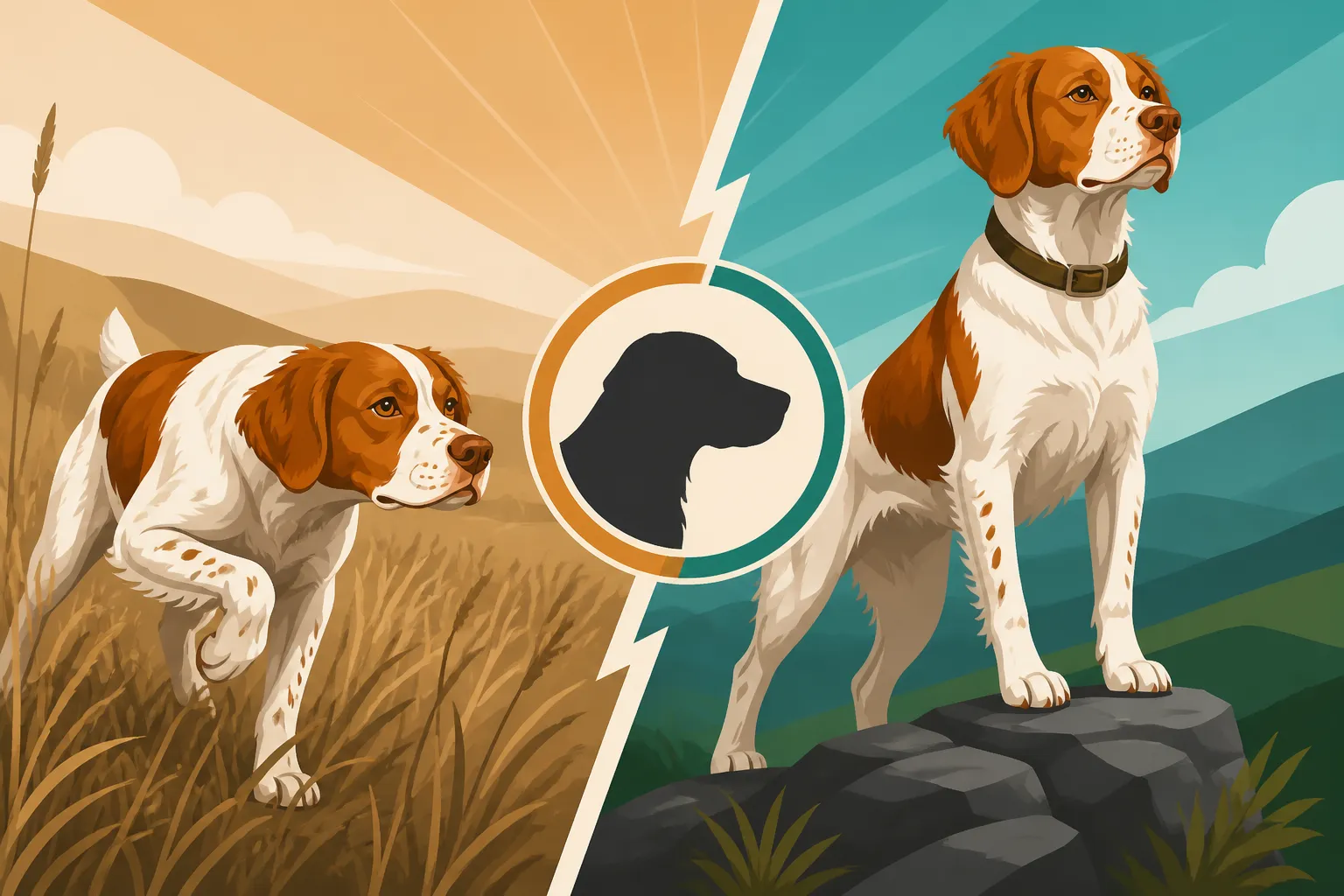
This difference in focus means that, generally, field-bred Brittanys will exhibit higher energy levels, more intense prey drive, and a more "go-go-go" attitude. Their "boldness" is expressed through their relentless pursuit of game and their confidence in covering vast territories. Show-bred Brittanys might be calmer, more inclined to stay close, and often possess a slightly softer, more tractable demeanor, which can be wonderful for a family companion, but perhaps less "bold" in a purely hunting sense. This doesn't mean a show-bred Brittany can't hunt or won't be bold, but the average intensity of these traits is likely to differ.
| Trait | Field-Bred Brittany | Show-Bred Brittany |
|---|---|---|
| Energy Level | Very High; requires significant daily exercise. | Moderate to High; still active but may settle more easily. |
| Prey Drive | Extremely strong, highly focused on birds. | Strong, but may be less intense or focused purely on game. |
| Range (in field) | Wider ranging, covers ground quickly and independently. | Tends to hunt closer, more focused on handler. |
| Sensitivity | Sensitive to harsh correction, but resilient in the field. | Highly sensitive, may be more prone to shyness if not well socialized. |
| "Boldness" Aspect | Confidence in working cover, unwavering drive, resilience to field challenges. | Confidence in new social situations, composed demeanor in crowds. |
| Trainability | Highly intelligent and eager, but needs consistent, positive methods to channel drive. | Intelligent, typically very biddable, may adapt more easily to diverse training. |
The Spectrum of "Boldness" in Both Lines
It's crucial to remember that "field-bred" and "show-bred" aren't always black and white, and there's a wide spectrum within each. You can find very bold and driven show-bred Brittanys, just as you might find a field-bred dog with a more reserved personality. Individual genetics play a huge role, and early experiences are paramount. A field-bred Brittany might be inherently "bolder" in its drive to hunt, but if it's poorly socialized, it might be shy or fearful around strangers or new environments. Conversely, a show-bred Brittany with excellent genetics and extensive positive socialization could be incredibly confident and well-adjusted in a variety of situations.
The type of boldness we're discussing often depends on context. A field-bred dog might be bolder in terms of pushing through brush and ranging widely, as highlighted in An American Brittany Ranges Wide and a French One Stays Close. A show-bred dog might be bolder in its ability to navigate a crowded dog show or a busy town square with aplomb, showing no fear of novel sights and sounds. Both are valuable forms of confidence, just expressed differently based on their primary purpose.
Matching a Brittany's Temperament to Your Lifestyle
Ultimately, whether a field-bred Brittany is "bolder" in a way that matters to you depends entirely on your lifestyle and expectations. If your primary goal is a hard-charging, wide-ranging hunting companion for wild birds, then a field-bred Brittany will likely have the inherent drive and "boldness" you're looking for. These dogs thrive on intense activity and a job to do. Their energy isn't just a switch you can turn off; it's a fundamental part of who they are.
If you're a walking hunter, or you're looking for a dedicated family companion who might also hunt casually, a show-bred Brittany or even a field-bred dog from a line known for being slightly less intense might be a better fit. These dogs still have tremendous drive, but they might be easier to live with for someone who can't offer several hours of intense exercise every single day. The key is to be honest about the time and energy you can commit. A "bolder", high-drive field dog can become a handful if their needs aren't met, leading to behavioral issues that might make them seem anything but confident. Think about Whether a Brittany Suits a First Time Owner when making your choice.
Cultivating Courage and Confidence in Any Brittany
Regardless of whether your Brittany comes from field or show lines, you have a significant role to play in nurturing its confidence and ensuring it grows into a well-adjusted, "bold" companion. While genetics lay the groundwork, environment and training build the house.
The Critical Period: Socialization for a Well-Adjusted Dog
As mentioned earlier, early and ongoing socialization is the bedrock of confidence for any Brittany. This means more than just having them meet a few friendly dogs. It's about a systematic exposure to a vast array of positive experiences. Take your puppy to different places: pet-friendly stores (once fully vaccinated), parks, even just sitting outside a coffee shop to watch people and cars go by. Introduce them to different surfaces like grass, concrete, gravel, and wood. Let them hear different sounds, from traffic to household appliances to, yes, even distant gunshots (gradually and positively, if you plan to hunt).
The goal isn't to desensitize them to everything, but to teach them that novel things are often interesting, not scary. Use high-value treats and praise during these exposures to create positive associations. Enrolling in a well-run puppy class is invaluable, as it provides structured socialization opportunities. Remember, a sensitive breed like the Brittany benefits immensely from a thoughtful approach to meeting the world. Programs like those offered by BAXTER & Bella can provide structured guidance for this critical period, helping you navigate puppyhood with confidence and build a strong foundation.
Building Trust Through Positive and Consistent Training
Training is not just about teaching commands; it's about building a language and a trusting relationship with your dog. For a sensitive Brittany, positive reinforcement methods are not just preferred, they are essential. Using rewards like treats, toys, and enthusiastic praise motivates them without breaking their spirit. Harsh corrections, yelling, or physical punishment can erode trust and lead to a shy, insecure dog, regardless of its breeding.
Consistency is also key. Brittanys are intelligent and eager to please, but they need clear rules and expectations. Short, engaging training sessions, perhaps 10-15 minutes a few times a day, are far more effective than long, drawn-out drills. They learn quickly, but they also get bored easily. By making training a positive, predictable, and rewarding experience, you empower your Brittany to make good choices and trust your guidance, which translates directly into a more confident dog. If you're looking for reliable training equipment to help with positive reinforcement, checking out options on Amazon for clickers, treat pouches, and durable leashes can be a good start. For more on training duration, see How Long a Brittany's Training Session Should Be.
Providing Outlets for Physical and Mental Energy
A confident Brittany is often a tired Brittany, but not just physically tired—mentally stimulated as well. Field-bred Brittanys, especially, have an abundance of energy and an intelligent mind that needs to be challenged. Providing sufficient physical exercise is non-negotiable. This isn't just a walk around the block; it means off-leash running in safe areas, retrieving games, or even running alongside a bicycle (once they are mature and conditioned).
Beyond physical exercise, mental stimulation is crucial. Interactive puzzle toys, scent work games (which they naturally excel at), and ongoing training challenges keep their keen minds engaged. If you don't provide appropriate outlets for their energy and intelligence, a Brittany can invent its own "jobs," which often manifest as destructive behaviors, excessive barking, or anxiety. A dog that is constantly seeking an outlet can appear restless and unconfident, whereas a dog whose needs are met is calm, focused, and truly "bolder" in its ability to relax and engage appropriately. A well-exercised Brittany is a happier, more settled dog at home, and that foundation of contentment builds real confidence.
Disclaimer
This article is for general informational purposes only and does not constitute professional advice. Laws, prices and regulations vary by location and change over time. Consult a qualified professional for guidance on your specific situation.