What Training Birds Cost a Brittany Owner
Bringing a Brittany Spaniel into your life is an absolute joy, but for those of us with hunting dreams, there's often a bit of sticker shock when we start planning out their gun dog education. Many new Brittany owners, full of enthusiasm, dive headfirst into puppy training, only to realize that mastering bird work goes beyond basic obedience and requires a very specific, and often surprising, investment in actual birds. It's a crucial part of unlocking their natural potential, but the costs involved can feel like a moving target. This guide is here to break down exactly what you can expect to spend on training birds for your Brittany, helping you budget wisely and make informed decisions on your journey to a finished gun dog.
Why Training Birds Are an Essential Investment for Your Brittany
It's tempting to think you can train a bird dog with a wing on a string and plenty of praise, and while those tools have their place, nothing truly replaces the experience of live birds. For a Brittany, whose very essence is tied to finding and pointing game, real birds are the textbooks, the classrooms, and the final exams all rolled into one. You're not just teaching a dog tricks; you're cultivating an instinct.
The Instinctual Drive of a Brittany
Brittanys are, at their core, pointing dogs. They were bred for generations to locate upland game, lock onto scent, and hold a staunch point until the hunter arrives. This isn't something you install; it's something you awaken and refine. A Brittany puppy might show glimpses of this instinct early on, perhaps by pointing a leaf blowing in the wind or freezing on a bird feeder, but these natural tendencies need to be channeled and strengthened.
Using live birds allows your Brittany to truly understand their purpose. It’s one thing to sniff out a static pheasant wing, it's quite another to work a running bird in varied cover, deciphering complex scent patterns and holding steady despite the temptation to chase. Live birds engage all their senses – sight, scent, and hearing – in a way that artificial training aids simply cannot. They teach your dog the difference between a real bird and a toy, and they solidify that innate understanding of what it means to be a bird dog. This deep-seated instinct to find and point is a defining characteristic of the breed, and it's what makes a Brittany such a joy in the field. After all, The Brittany Points, It Does Not Flush, and live birds are key to cementing that behavior.
Building Foundational Skills and Confidence
Beyond simply confirming their pointing instinct, training with live birds is fundamental for building crucial skills like steadiness, flushing, and retrieving. Imagine trying to teach a dog to hold point for an extended period if they've never actually experienced the exhilarating scent and potential flush of a live bird. It's an abstract concept without the real-world stimulus.
Live birds provide the necessary temptation and reward for your Brittany to learn control. They teach them to honor the point, to remain still even when the bird flushes, and to retrieve only on command. This takes countless repetitions, and each successful interaction with a bird builds your dog's confidence. They learn to trust their nose, trust their training, and trust you, their handler.
For younger Brittanys, early exposure to birds in a controlled, positive environment is paramount. It helps them develop a strong bird drive without becoming overwhelmed or gun-shy. You want to see that spark ignite, that intense focus that says, "I know what I'm here for!" We often talk about starting puppies early; remember, When a Brittany Puppy Should Meet Its First Bird is a question many new owners ponder, and the answer almost always involves introducing them to real birds in a low-pressure setting.
Simulating Real-World Hunting Scenarios
The ultimate goal for most Brittany owners is to hunt over their dog in real-world conditions. Training birds bridge the gap between backyard drills and challenging field environments. While pen-raised birds might not have the same flight patterns or wariness as truly wild birds, they offer an invaluable simulation.
You can set up scenarios that mimic dense cover, open fields, and various wind conditions. Your Brittany learns to work different types of terrain, adjust their range, and follow scent trails that are far more complex than a simple drag. They learn patience, persistence, and problem-solving. This progressive exposure ensures that when they encounter their first wild pheasant or quail, they're not surprised or unsure; they're ready. The subtle differences in scent, movement, and how a bird holds tight or runs can only be truly learned through repeated interactions with live game. Without this crucial step, your Brittany might have the instinct, but they won't have the experience or the honed skills to be a truly effective hunting partner.
Types of Training Birds and Their Associated Costs
When it comes to training birds, you have several options, each with its own advantages and cost implications. The choice often depends on your Brittany's training stage, your budget, and what game you eventually plan to hunt.
Pigeons: The Affordable and Readily Available Option
Pigeons are often the first birds introduced to a young Brittany, and for good reason. They are generally the most affordable and easiest to acquire. You can often find breeders selling them locally, or even trap wild ones (though local regulations vary, so always check!).
Pigeons are fantastic for:
- Introducing bird scent: Their strong scent helps a young dog understand what they're looking for.
- Developing point: They tend to hold reasonably well, allowing a puppy to establish a staunch point.
- Building retrieve drive: Many pigeons are flight-clipped or dizzied for early retrieve work.
- Gun introduction: Their flight is less explosive than a pheasant, making them gentler for early gun exposure.
The cost for pigeons is usually per bird, and it's significantly less than upland game birds. Many trainers keep a small flock of pigeons, as they are relatively easy to house and maintain, allowing for repeated use. You can also buy them a dozen at a time from a supplier. The key is their reusability, which helps offset their initial purchase price. For details on getting started, you might find our article How to Start a Brittany on Pigeons particularly helpful.
Quail: The Next Step in Realistic Bird Work
Once your Brittany has a solid foundation with pigeons, quail are usually the next step. They offer a more realistic upland bird experience and are crucial for developing a Brittany's hunting instincts further. There are two main types you'll encounter for training:
- Coturnix Quail: These are smaller, often cheaper, and have a more explosive flush. They are excellent for teaching steadiness to wing and shot.
- Bobwhite Quail: These are larger, hold scent incredibly well, and tend to run more on the ground before flushing, simulating wild bird behavior more closely. They are often pricier.
Quail typically cost more per bird than pigeons, but less than pheasants. They require more specific housing if you plan to keep them, as they can be delicate. Many owners buy quail a day or two before a training session and release them, rather than maintaining a large covey. Quail's flight is faster and more direct than a pigeon's, presenting a greater challenge for a dog to remain steady. You'll quickly see the difference in your dog's reaction compared to pigeons. This step is a natural progression, and many owners weigh their options between these birds, which is why we've explored Whether Pigeons Are Cheaper Than Quail for Training a Brittany.
Chukar and Pheasant: Preparing for Upland Game
For the serious upland hunter, chukar and pheasant are indispensable for later-stage training. These birds offer the closest simulation to the actual game your Brittany will encounter in the wild.
- Chukar Partridges: These are often used as a bridge between quail and pheasant. They are strong fliers, often run uphill, and offer a robust scent. They're excellent for challenging a dog's range and persistence.
- Pheasants: The "king of upland birds," pheasants are large, hardy, and notoriously clever. They can run for great distances, hold tight in heavy cover, and explode into flight with a powerful, noisy flush. Training with pheasants prepares your Brittany for the ultimate test of their pointing and retrieving skills.
Both chukar and pheasant are the most expensive training birds. Their cost per bird is significantly higher, and they require substantial pens if you intend to keep them for any length of time. Most trainers purchase these birds specifically for advanced training sessions or for use in hunt tests and field trials. They are not as "reusable" as pigeons, often being flushed and shot during training scenarios. Because of their size and flight pattern, they introduce a completely different dynamic that really tests a Brittany's mettle. Thinking about the order of bird introduction is important, and you might wonder Whether a Brittany Should See Quail Before Pheasant as you progress.
Here’s a general overview of the characteristics and cost shape of common training birds:
| Bird Type | Typical Use | Availability & Housing | Relative Cost per Bird |
|---|---|---|---|
| Pigeon | Early scent introduction, point development, basic retrieve, gun intro. | Widely available, easy to house, can be reused. | Low |
| Coturnix Quail | Next step after pigeons, building steadiness to wing/shot, explosive flush. | Readily available, moderate housing needs, less reusable. | Moderate |
| Bobwhite Quail | More realistic upland experience, running birds, strong scent, good holders. | Moderate availability, specific housing, less reusable. | Moderate to High |
| Chukar Partridge | Advanced running bird work, strong fliers, good for varied terrain, scent. | Moderate availability, larger housing needs, often one-time use. | High |
| Pheasant | Full upland simulation, challenging runners, powerful flush, scent work. | Seasonal/moderate availability, large housing needs, often one-time use. | Very High |
Beyond the Birds: Hidden Costs and Smart Savings
The birds themselves are just one piece of the puzzle. There are other associated expenses that often catch new Brittany owners by surprise, but with a bit of foresight, you can manage these costs effectively.
Housing and Care for Training Birds
If you plan to keep training birds on your property, even temporarily, you'll need proper housing. This isn't just a cardboard box. Birds need secure, clean coops or flight pens to stay healthy and safe from predators.
- Coop construction: Materials for a secure, predator-proof coop can add up. Think about wood, wire mesh, roofing, and hardware.
- Feed and water: Just like your Brittany, training birds need regular food and fresh water. This is an ongoing expense.
- Maintenance: Cleaning coops, monitoring bird health, and managing bedding all take time and resources.
Many owners find that unless they are training multiple dogs frequently or have dedicated space and time, maintaining a large flock of birds isn't practical. Instead, they opt to purchase birds as needed for specific training sessions. This might mean a higher per-bird cost for each session, but it eliminates the ongoing expenses and labor of care. It's a trade-off that often makes sense for the average hunter.
Equipment That Augments Bird Training
While birds are the stars, a supporting cast of equipment is essential for effective training. These tools can represent a significant upfront investment.
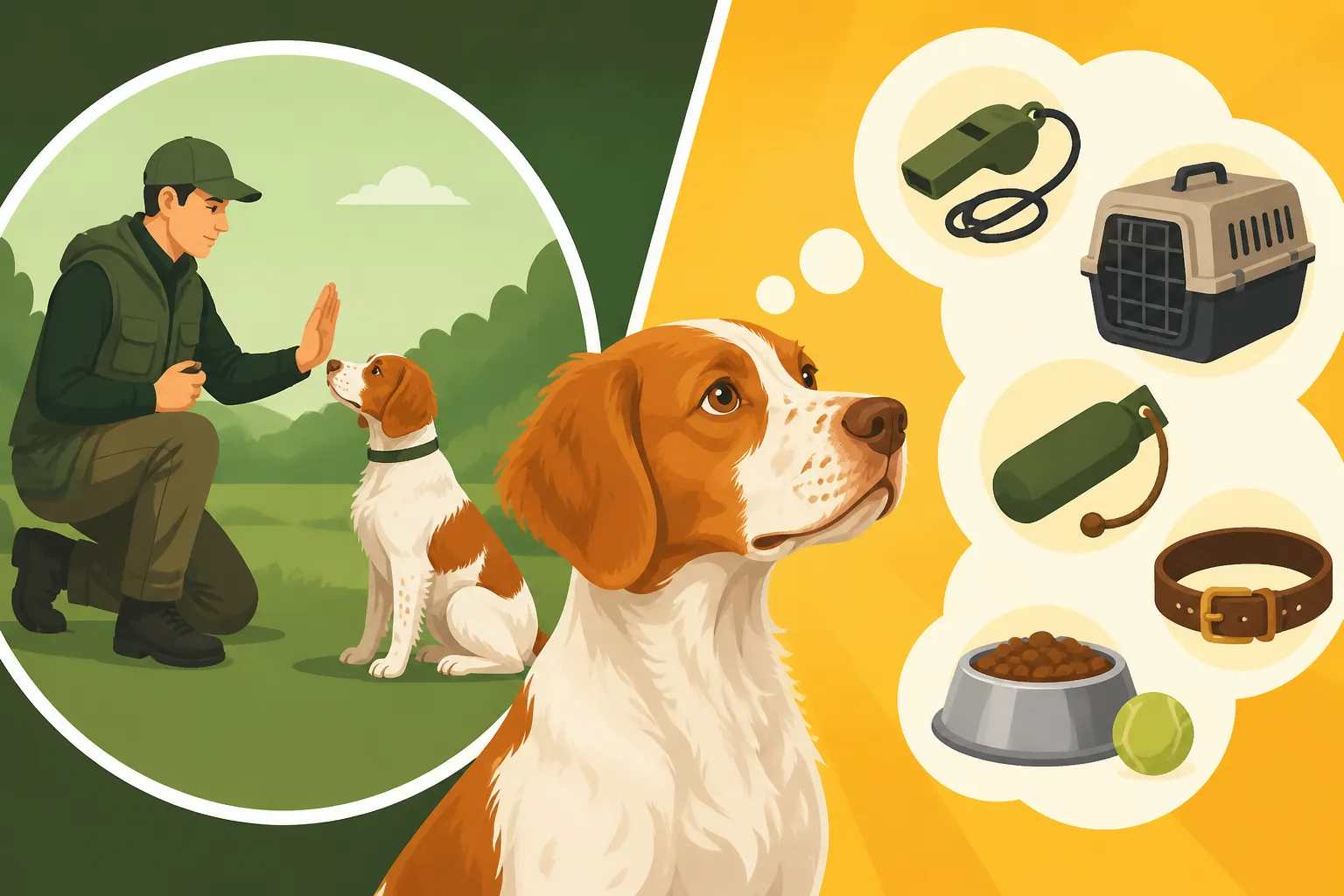
- Bird launchers: These devices, ranging from simple foot-operated traps to remote-controlled automatic launchers, are invaluable for controlling bird presentations and teaching steadiness. They allow you to simulate a flush precisely when you want it, helping your Brittany become steady to wing and shot. A basic manual launcher can be quite affordable, but advanced remote launchers, especially those that can hold multiple birds, represent a more substantial cost. You can get an idea of the expense in our article What a Bird Launcher Costs a Brittany Owner.
- Check cords and whistles: These fundamental tools help with command reinforcement and recall, especially when working around exciting birds. A long check cord is vital for teaching "whoa" and preventing premature chasing. You'll definitely want to budget for these essentials, as explored in What a Check Cord and Whistle Cost a Brittany Owner.
- E-collars: While controversial for some, electronic collars are highly effective tools for long-distance communication and safety, particularly when your Brittany is ranging wide on a bird hunt. They provide a reliable way to reinforce commands when your voice can't reach, or when your dog is highly focused on a bird. Investing in a good quality e-collar that is humane and durable is crucial. We delve deeper into their use in Which E Collar Suits a Brittany.
- Training dummies and scents: While not live birds, these are excellent for teaching basic retrieving and conditioning your dog to bird scent indoors or in a backyard setting before moving to live birds.
- First aid supplies: Accidents happen, especially in the field. Having a well-stocked dog first aid kit is non-negotiable. You can find out more about what to include in What a First Aid Kit for a Brittany Should Hold.
When purchasing training equipment, it's worth looking at reputable pet supply retailers. Companies like Chewy offer a wide selection of dog training gear, from check cords to e-collars and even bird launchers, often at competitive prices. You can frequently find bundles or sales that help bring down the overall cost.
Professional Guidance and Field Time
Sometimes, the best investment isn't in more birds or fancier gear, but in expertise.
- Professional trainers: If you're new to gun dog training or hit a plateau, a professional trainer can be invaluable. They have access to training grounds, birds, and years of experience. They can diagnose issues, refine techniques, and accelerate your Brittany's progress. While the cost of sending your dog away to a pro can be substantial, it often yields results that are hard to achieve on your own. Many ask Whether Sending a Brittany Away to Train Is Worth It, and for many, the answer is a resounding yes.
- Training grounds and hunt clubs: Accessing suitable land for bird training can be a challenge. Many private hunt clubs or public training grounds charge fees for day use or annual memberships. These fees cover the cost of maintaining the land, stocking birds, and providing a safe training environment.
- Travel expenses: Getting to training grounds, bird suppliers, or professional trainers can involve significant travel, adding fuel costs and time to your overall investment.
Maximizing Your Investment in Training Birds
Training a Brittany with live birds is a commitment, both in time and money. But there are ways to ensure you're getting the most bang for your buck and making every training session count.
Sourcing and Releasing Strategies
Smart sourcing and effective release techniques can significantly extend your training bird budget and improve your sessions.
- Local breeders and co-ops: Seek out local game bird breeders or even co-ops among fellow bird dog enthusiasts. Buying in bulk or directly from a local source often reduces costs compared to specialized sporting dog suppliers who might ship birds. Building relationships with these suppliers can lead to better prices and healthier birds.
- "Dizzying" or "wing-clipping" pigeons: For early-stage work, especially with puppies, temporarily disorienting or clipping a pigeon's wing can prevent it from flying too far. This allows for repeated retrieves and controlled flushes, making one bird last for multiple lessons. Always prioritize the bird's welfare and ensure it recovers quickly.
- Utilize bird launchers: As mentioned, launchers are critical. They protect your birds from premature flushing and allow you to control the exact moment of the flush, maximizing the impact of each bird. This means you use fewer birds per session to achieve your training goals.
- Vary cover and wind: Don't always train in the same spot. Varying the cover (tall grass, sparse woods, open fields) and working with different wind conditions forces your Brittany to adapt and truly use its nose and intelligence, making each bird interaction a richer learning experience.
Health and Safety Considerations for Your Brittany
Working with live birds and in various field environments introduces potential health risks for your Brittany. Protecting your investment in your dog means prioritizing their well-being.
- Parasite prevention: Live birds and their environments can carry parasites like fleas, ticks, and internal worms. Ensure your Brittany is on a robust, veterinarian-approved parasite prevention program, especially during hunting season. This includes tick prevention, which is vital when your dog is working through heavy cover.
- Vaccinations: Keep your Brittany up-to-date on all recommended vaccinations, including those for diseases that might be more prevalent in field environments, such as Leptospirosis.
- Field first aid: Minor scrapes, cuts, and even thorn punctures are common. Learn basic field first aid and carry a well-stocked kit. Knowing how to quickly address these issues can prevent them from becoming more serious and costly veterinary emergencies.
- Nutrition for performance: A working Brittany burns a lot of calories. Ensure they are on a high-quality, performance-oriented dog food that provides adequate protein and fat to support their energy levels and recovery. Brands like Ollie, which focus on fresh, human-grade ingredients, can be an excellent choice to support the rigorous demands of bird work and maintain your Brittany's peak physical condition.
- Hydration: Always have plenty of fresh water available for your Brittany during training sessions. Dehydration is a serious concern, especially in warmer weather. A portable water setup is a must; check out What a Brittany's Field Water Setup Costs for ideas.
- Pet insurance: For unexpected injuries or illnesses that can arise from field work, pet insurance can be a lifesaver. Policies from providers like Healthy Paws can help cover a significant portion of veterinary bills, turning a potentially devastating financial hit into a manageable expense, especially when dealing with unforeseen accidents or injuries sustained during a strenuous training session.
Long-Term Benefits of Bird Work
The costs and effort involved in training your Brittany with live birds might seem daunting, but the long-term rewards are immeasurable.
- A truly finished gun dog: There's immense satisfaction in watching your Brittany execute a perfect point, hold steady, and make a retrieve. This is the culmination of their natural instincts and your dedicated training, something only achievable with realistic bird exposure.
- Strengthened bond: The shared experiences in the field, the successes, and even the challenges, forge an incredible bond between you and your Brittany. You learn to read each other, anticipate actions, and work as a seamless team.
- Fulfilling their purpose: Brittanys thrive when they are given a job to do, and bird work allows them to fulfill their deepest genetic purpose. A well-trained, working Brittany is a happy Brittany, exhibiting confidence and contentment that comes from doing what they were bred to do. The joy of seeing your dog perform as a true partner in the field is a profound experience that makes every penny spent on training birds feel worthwhile. It's the path to a harmonious relationship and the potential for titles, like those discussed in What Training a Dual Champion Brittany Takes.
Disclaimer
This article is for general informational purposes only and does not constitute professional advice. Laws, prices and regulations vary by location and change over time. Consult a qualified professional for guidance on your specific situation.