What a Foxtail Removal Costs on a Brittany
Oh, the dreaded foxtail! If you're a Brittany owner, especially one who loves to get out in the field, you know that heart-sinking feeling when you suspect your beloved companion has picked up one of these nasty little hitchhikers. These innocent-looking grass awns can transform a joyful outdoor adventure into a serious veterinary emergency, leading to significant discomfort for your dog and unexpected costs for your wallet. This comprehensive guide will walk you through everything you need to know about foxtail removal, from understanding the threat to recognizing symptoms, navigating vet visits, breaking down potential expenses, and most importantly, preventing these prickly problems in the first place.
Understanding the Foxtail Threat to Your Brittany
Foxtails are truly insidious, and if you haven't encountered them yet, consider yourself lucky! They're a prime example of nature's design causing absolute havoc for our active, curious Brittanys. Knowing what you're up against is the first step in protecting your dog.
What Exactly Are Foxtails?
Foxtails aren't just any old seed or bit of grass; they're the barbed, arrow-shaped seed heads from certain types of grasses, particularly common in western and central parts of North America. Think of them as tiny, natural harpoons. Once they latch onto fur, they don't just sit there; their unique structure, with microscopic barbs, allows them to only move in one direction: forward. Every movement your dog makes – walking, shaking their head, scratching – pushes the foxtail deeper into the skin, ear canal, nose, or even between their toes. It’s a one-way trip, and because they can't back out, they become trapped, causing irritation, infection, and potential migration into vital organs. They are, quite simply, a real menace to any dog that loves to explore.
Where Brittanys Encounter Foxtails
Our Brittanys are natural athletes, built for speed and endurance in a variety of terrains. This is precisely what makes them so vulnerable to foxtails. These grasses thrive in dry, grassy fields, open prairies, alongside hiking trails, and even in untended backyard areas. They're especially prevalent during the late spring and summer months when the grasses dry out and the seed heads become brittle and easily detached. Imagine your Brittany bounding through a field, nose to the ground, flushing birds. Each dash through tall, dry grass is an opportunity for hundreds of these little barbs to latch onto their coat. They become embedded in their dense feathering, between their toes, or, most notoriously, right into their ear canals as they push through cover. It's almost impossible to avoid them completely if you're hunting or exercising in these areas. For more on the types of dangers your active dog faces, check out "The Injuries a Brittany Picks Up in the Field".
Why Foxtails Are So Dangerous for Brittanys
The danger of foxtails lies in their migratory nature and their ability to carry bacteria deep into tissues. For a Brittany, with their long, pendulous ears, feathered legs, and habit of sniffing every interesting scent, specific areas are high-risk.
- Ears: A common entry point. A foxtail can quickly work its way down the ear canal, causing intense pain, head shaking, and even a ruptured eardrum. This can lead to serious ear infections that are difficult to treat.
- Nose: Brittanys constantly use their noses, sniffing deeply. A foxtail inhaled can lodge in the nasal passages, causing violent sneezing, nosebleeds, and severe discomfort. From there, it could even migrate into the lungs or brain, though thankfully that's rarer.
- Paws: The spaces between their paw pads are warm and moist, making them a perfect spot for foxtails to burrow. They can cause painful abscesses and lameness, making every step agony.
- Eyes: Less common, but a foxtail can get under an eyelid, scratching the cornea and leading to severe irritation or infection.
- Skin: Anywhere on the body, especially in the feathery 'skirts' or armpits, foxtails can penetrate the skin, creating painful lumps, swelling, and deep-seated infections. These can be particularly tricky to locate, as the entrance wound might heal over, leaving the foxtail to travel beneath the skin.
Because Brittanys are so active and spend so much time running through dense cover, these risks are amplified. Their natural drive means they often ignore initial discomfort, allowing the foxtail to burrow deeper before you even notice a problem. Knowing "Where a Foxtail Lodges in a Brittany" is key to quick detection.
Recognizing the Signs of a Foxtail Problem
Spotting a foxtail issue early is paramount. The longer these barbs remain embedded, the more damage they can do and the more complicated and costly the removal becomes. Your Brittany might not always be obvious about their discomfort, but subtle changes in behavior are usually the first clue.
Common Entry Points and Initial Symptoms
Brittanys, like many sporting breeds, are tough, but even they can't ignore the persistent irritation of a migrating foxtail. You need to become an expert at checking your dog, especially after time spent outdoors.
- Ears: If your Brittany suddenly starts shaking their head violently, tilting it to one side, scratching at an ear with a paw, or rubbing their head along the carpet, a foxtail is a prime suspect. You might also notice redness, swelling, or a foul odor from the ear canal. This can quickly escalate to a full-blown ear infection, making the situation even worse. For more information on preventing ear problems, consider reading "Why a Brittany's Ears Get Infected Every Season".
- Nose: Repeated, intense sneezing fits, often with a bloody discharge from one nostril, is a huge red flag for a foxtail up the nose. Your dog might also paw at their face or seem generally agitated.
- Paws: If your Brittany is limping, constantly licking or chewing at a paw, or you notice swelling, redness, or a small draining wound between their toes, it's time for a thorough paw inspection. This is a very common spot for foxtails to embed because they get pushed deep with every step.
- Eyes: Squinting, excessive tearing, pawing at the eye, or a visible foreign object are all signs. An embedded foxtail can cause corneal abrasions.
- Skin: You might discover a small, red bump that looks like an insect bite, but it will often be more painful and may develop into an abscess. Your Brittany might lick or chew at the area persistently. This is often the hardest to spot until it becomes quite advanced.
When to Suspect a Deeper Migration
While the initial symptoms are often localized and quite dramatic, sometimes a foxtail can burrow deeper before it causes obvious trouble, or the initial entry point is missed. This is when things get really serious and expensive.
- Abscesses: If a foxtail has entered the skin and migrated, it often causes a deep, painful abscess. You'll feel a hot, swollen lump, and it might eventually rupture and drain pus. These can occur almost anywhere on the body, including under the armpits, in the groin, or along the flank.
- Respiratory Issues: A foxtail that has been inhaled and gone past the nasal passages can cause coughing, gagging, difficulty breathing, or even pneumonia if it reaches the lungs. This can mimic other respiratory illnesses, making diagnosis tricky without a history of foxtail exposure.
- Neurological Signs: In extremely rare and severe cases, a foxtail migrating into the spinal cord or brain can cause neurological symptoms like ataxia (wobbliness), pain, or seizures. This is thankfully not common but highlights the extreme danger.
- Limping/Pain: If the foxtail is deep in a joint or muscle tissue, your Brittany might show lameness that is difficult to pinpoint, or generalized pain, lethargy, and a loss of appetite.
Always remember that for an active Brittany, even minor discomfort should be investigated. They are experts at hiding pain, especially when they think it might mean missing out on fun.
Why Early Detection is Crucial
The single biggest factor in the cost and complexity of foxtail removal is how quickly the problem is identified and addressed.
- Simpler Removal: A foxtail caught in the outer ear canal, superficial skin, or easily visible in the nose or paw can often be removed quickly and with minimal intervention, sometimes even without sedation. This is typically a lower-cost vet visit.
- Preventing Infection: Early removal prevents bacteria from being carried deep into tissues, avoiding secondary infections that require antibiotics, additional pain relief, and potentially longer recovery times.
- Avoiding Migration: The longer a foxtail remains, the further it can travel. A foxtail in the ear can rupture an eardrum; one in the paw can cause a chronic draining tract that requires complex surgery. A simple problem can quickly become a systemic nightmare, escalating from a routine office visit to specialized surgery or even hospitalization.
- Minimizing Pain: No one wants their dog to suffer. Early detection means your Brittany experiences less pain and discomfort overall, getting back to their happy, energetic self much faster.
The Veterinary Process for Foxtail Removal
Once you suspect a foxtail, a vet visit isn't just recommended, it's essential. This isn't something you can effectively treat at home, as the barbed nature of the foxtail means it almost always requires professional extraction.
Initial Examination and Diagnostic Steps
When you bring your Brittany in with suspected foxtail issues, your vet will perform a thorough physical examination, focusing on the areas of concern.
- Visual Inspection: For superficial foxtails, the vet might be able to see it with the naked eye, particularly if it's in the fur or just under the skin.
- Otoscopic Examination: If an ear is involved, the vet will use an otoscope to look deep into the ear canal. This is where most ear foxtails are found. Brittanys might need light sedation for this if they are in a lot of pain or discomfort, as a thorough examination can be uncomfortable.
- Nasal Exam: For suspected nasal foxtails, the vet might use a specialized scope to examine the nasal passages. This almost always requires sedation.
- Palpation and Probing: For skin abscesses or swelling, the vet will feel the area to determine the extent of the inflammation. They might use a small probe to try and locate the draining tract.
- Imaging: If the foxtail has migrated deep into tissue, or if there are concerns about its location (e.g., near lungs, abdomen, or sensitive areas), imaging may be necessary.
- X-rays: While foxtails are organic and don't show up on X-rays themselves, an X-ray can reveal secondary issues like inflammation, fluid accumulation, or changes in lung tissue that might indicate the foxtail's presence or the damage it has caused.
- Ultrasound: This can be useful for locating foxtails in soft tissues, especially if they're causing an abscess.
- Endoscopy: For nasal or bronchial foxtails, a flexible endoscope can be advanced into the body cavity to visually locate and sometimes retrieve the foxtail. This is a more specialized procedure, often requiring a referral to a veterinary specialist.
Removal Procedures
The method of removal depends entirely on the foxtail's location and depth.
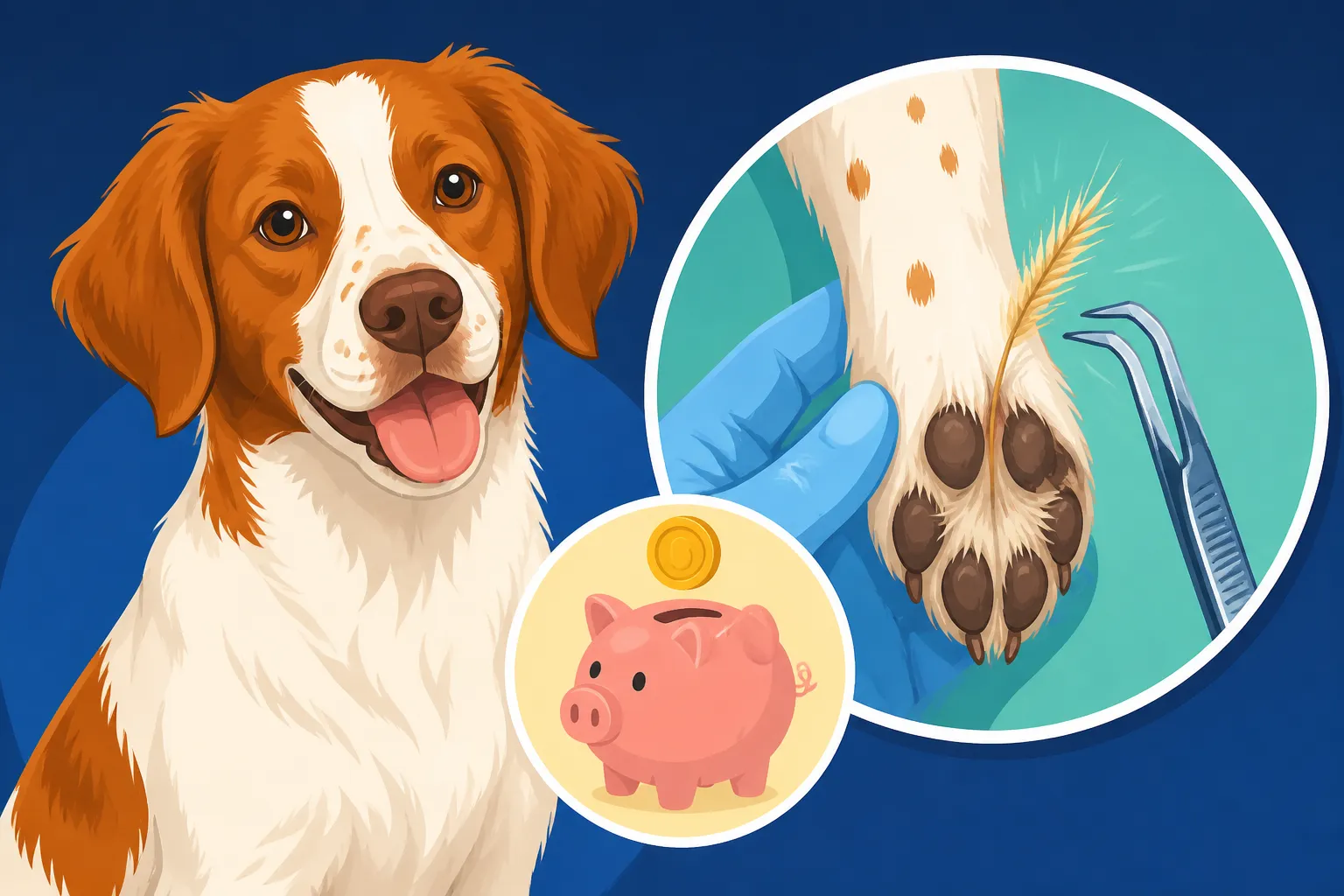
- Manual Extraction: If the foxtail is visible and easily accessible, such as in the outer ear, superficial skin, or between paw pads, the vet can often remove it with forceps or tweezers. This might be done with the dog awake, or with minimal sedation if the dog is painful or uncooperative. For some tips on checking your Brittany's paws, see "How to Check a Brittany Between the Toes".
- Sedation/Anesthesia: Most foxtail removals, especially from ears, nasal passages, or requiring deeper exploration, will require sedation or full general anesthesia. This ensures the dog is still and comfortable, allowing the vet to work precisely and thoroughly without causing further distress or injury.
- Endoscopic Removal: For nasal or bronchial foxtails, a specialized endoscope can be used to visualize the foxtail and then retrieve it with tiny grasping tools passed through the scope. This is a highly skilled procedure.
- Surgical Excision: If the foxtail has burrowed deep, caused a significant abscess, or migrated into more complex tissues, surgical removal may be necessary. This involves making an incision, carefully exploring the tissue to locate the foxtail (which can be like finding a needle in a haystack, as they can break into pieces or be surrounded by scar tissue), and removing it. This is the most invasive and costly type of removal.
Post-Removal Care and Follow-Up
Once the foxtail is removed, the care doesn't stop there.
- Medication: Your vet will likely prescribe antibiotics to combat any infection that was present or to prevent secondary infections. Pain medication will also be given to help your Brittany recover comfortably. Anti-inflammatory drugs might also be used to reduce swelling.
- Wound Care: If surgery was performed, you'll have specific instructions for cleaning the incision site and monitoring for signs of infection. Keeping the area clean and dry is crucial.
- E-Collar: An Elizabethan collar (cone of shame) might be necessary to prevent your Brittany from licking or chewing at the wound site, which could delay healing or introduce new bacteria.
- Follow-Up Appointments: Your vet may want to see your Brittany for a follow-up appointment to check the healing progress, ensure the infection has cleared, and confirm no new foxtail issues have arisen. This is especially important for deep-seated or difficult removals.
- Monitoring at Home: You'll need to keep a close eye on your Brittany for any lingering symptoms, changes in behavior, or signs that another foxtail might be present elsewhere.
Breaking Down the Costs of Foxtail Removal
This is where the rubber meets the road for many owners. The cost of foxtail removal can vary dramatically, making it a source of significant financial stress if you're not prepared. There's no single price tag because every situation is unique.
Factors Influencing the Total Bill
Several variables come into play when estimating the cost of foxtail removal.
- Location of the Foxtail: A foxtail in the outer ear or paw is generally easier and cheaper to remove than one that has migrated deep into the nasal cavity or caused a serious internal abscess.
- Complexity of Removal: A simple manual extraction from a cooperative dog is the least expensive. Procedures requiring sedation, endoscopy, or full surgery will incur higher costs due to additional staff, specialized equipment, monitoring, and surgical time.
- Diagnostic Tests: If the foxtail isn't immediately visible, diagnostic tools like X-rays, ultrasound, or advanced endoscopy add to the bill.
- Anesthesia and Monitoring: Any procedure requiring sedation or general anesthesia includes costs for the anesthetic drugs, the time of the veterinary technician to monitor your dog's vital signs throughout the procedure, and recovery care.
- Medications: Post-removal medications such as antibiotics, pain relievers, and anti-inflammatories will add to the final cost.
- Veterinary Clinic Location and Type: Prices can vary significantly between geographic regions (e.g., urban vs. rural clinics), and specialty clinics (e.g., those with internal medicine or surgical specialists) will naturally charge more than a general practice.
- Complications: If the foxtail has caused a severe infection, ruptured an eardrum, or led to pneumonia, the treatment will be more extensive and thus more costly. This can include hospitalization, intravenous fluids, and more intensive medication regimens.
- Follow-Up Care: Additional vet visits to check healing or address complications will also contribute to the overall expense.
Typical Cost Ranges for Different Scenarios
While I can't give you exact figures, I can give you a general idea of how the costs typically scale. These are broad ranges and you should always call your local veterinarian for their specific pricing.
| Scenario | Complexity Level | Typical Procedures Involved | General Cost Shape (Relative) |
|---|---|---|---|
| Simple Ear/Paw Foxtail | Low (visible/superficial) | Exam, conscious or light sedation removal, basic pain meds | Entry-level to Moderate |
| Deeper Ear/Nasal Foxtail | Moderate | Exam, sedation/anesthesia, otoscopy/rhinoscopy, forceps/endoscopy, antibiotics, pain meds | Moderate to Significant |
| Skin Abscess (Simple) | Moderate | Exam, sedation/anesthesia, lancing abscess, drainage, exploration, antibiotics, pain meds | Moderate to Significant |
| Deep Skin Abscess/Migration | High | Exam, sedation/anesthesia, ultrasound/X-ray, surgical exploration/removal, extensive antibiotics, wound care, pain meds | Significant to High |
| Internal Migration (Lung/Abdomen) | Very High | Exam, advanced imaging (CT/MRI), specialist consultation, endoscopy/major surgery, hospitalization, intensive care | Very High (Potentially Thousands) |
A simple, straightforward removal might only set you back a few hundred dollars, whereas a complex surgical removal or an internal migration could easily climb into the thousands. It’s a stark reminder of why prevention and early detection are so important. Remember, this is one of those unexpected bills that contribute to "What a Brittany's Field Injuries Cost in a Season".
The Role of Pet Insurance
This is where pet insurance can truly be a lifesaver. Many owners often wonder if it's worth it, and incidents like foxtail removal are a perfect example of when it pays off.
- Coverage: Most comprehensive pet insurance plans, like those offered by providers such as Healthy Paws, will cover the costs associated with accidental injuries, which certainly includes foxtail removals. This can encompass everything from the initial exam and diagnostics to anesthesia, surgery, medications, and follow-up care.
- Deductibles and Reimbursement: You'll typically pay a deductible first, and then the insurance company will reimburse you for a percentage of the remaining bill (often 70-90%). While you still pay something out of pocket, it's usually a fraction of the total. For more on the ongoing costs, consider "What Insuring a Brittany Costs a Month".
- Peace of Mind: Knowing you have coverage can remove a huge amount of stress during an emergency. Instead of agonizing over the cost, you can focus on getting your Brittany the best possible care without delay.
- Pre-existing Conditions: Just like human insurance, pet insurance generally doesn't cover pre-existing conditions. So, it's best to enroll your Brittany before any issues arise. If your dog already has a chronic ear problem, for example, future ear-related foxtail issues might be excluded.
When choosing a policy, read the fine print carefully. Look for clear coverage details regarding accidental injury, emergency care, and specialist referrals. Healthy Paws is one of the many providers that can offer a safety net for these kinds of unexpected veterinary expenses.
Preventing Foxtail Encounters and Minimizing Risk
While foxtails might seem like an unavoidable evil for an active Brittany, there's a lot you can do to reduce the risk. Prevention truly is the best medicine, saving you heartache, stress, and a potentially hefty vet bill.
Proactive Grooming and Field Checks
This is your first and most effective line of defense. A diligent routine after every outdoor excursion, especially during foxtail season, is crucial.
- Full-Body Scan: Immediately after coming in from a walk, hike, or hunt, dedicate time to thoroughly inspect your Brittany. Start at the nose and systematically work your way back.
- Ears: Pay special attention to the ears, both the outer flaps and, gently, the inner ear canal. The long, floppy ears of a Brittany are prime targets. Lift them, look inside, and gently feel for any foreign objects. A good ear cleaning routine, as described in "How Often a Brittany's Ears Need Cleaning", can also help you become more familiar with what's normal.
- Paws: Thoroughly check between all toes and paw pads. Foxtails love to burrow here. Spread the toes wide and look for any redness, swelling, or tiny barbs.
- Coat and Feathering: Run your hands through their entire coat, paying close attention to the dense feathering on their legs, belly, and tail. Use a fine-tooth comb or a slicker brush to work through any tangles and remove debris. This is where many foxtails get caught before they have a chance to burrow. Chewy and other pet supply retailers offer a wide array of brushes and combs perfect for maintaining a Brittany's coat and for post-field checks.
- Nose and Eyes: Quickly check the nostrils for any foreign material and inspect the eyes for irritation or embedded particles.
- Armpits and Groin: These areas are often overlooked but can collect foxtails due to friction and moisture.
- The Power of a Grooming Vac: Some owners even use a specialized low-noise grooming vacuum to suck out loose debris from their dog's coat after a field outing. It’s not for every dog, but can be remarkably effective.
Managing Your Brittany's Environment
Beyond personal checks, you can take steps to manage the areas where your Brittany spends time.
- Mow Your Yard: Keep your own yard meticulously mowed, especially during late spring and summer. This eliminates foxtail grasses before they can go to seed. Don't let tall, dry grass accumulate.
- Avoid High-Risk Areas: When out on walks or hunts, try to steer clear of known foxtail-infested areas. If you're hiking in a new spot, look for mown trails or paved paths rather than dense, overgrown fields.
- Scout Ahead: If you're hunting a new preserve or wild bird area, do a quick scout for patches of foxtails. Sometimes a slight detour can save a lot of trouble.
- Consider Protective Gear: While not always practical for hunting, if you're walking through a known problem area, dog boots can offer protection for paws. Similarly, some owners use snoods or ear wraps for dogs prone to ear foxtails, though this is less common for active hunting Brittanys. For more on protecting your Brittany's feet, read "Whether a Brittany Needs Boots in the Field".
Essential Field First Aid Kit
While an emergency foxtail removal always requires a vet, a well-stocked first aid kit can help with immediate care and make your post-hunt checks easier.
- Forceps/Tweezers: For removing superficial burrs and occasionally a very visible, surface-level foxtail before it has a chance to embed. Never try to dig for a foxtail; if it's not easily grabbed, leave it for the vet.
- Flashlight/Headlamp: Crucial for thorough inspections in low light, especially in ears and between toes.
- Saline Solution: For rinsing eyes or minor wounds.
- Antiseptic Wipes: For cleaning minor scrapes or skin irritation.
- Paw Balm: Can help keep pads healthy and prevent cracking, which might make them slightly less susceptible to foxtails burrowing into compromised skin.
- Magnifying Glass: Can be incredibly helpful for spotting those tiny barbs in fur or on skin.
- Small Comb/Brush: For working out tangles and debris.
- Cell Phone with Vet's Number: Always have your vet's number programmed for emergencies.
Having a good first aid kit is essential for any Brittany owner. You can find more comprehensive advice in "What a First Aid Kit for a Brittany Should Hold".
Long-Term Outlook and What to Expect
Even after a successful foxtail removal, the journey isn't always over. Understanding the potential recovery and the need for ongoing vigilance is part of being a responsible Brittany owner.
Recovery Times and Potential Complications
The recovery period for your Brittany will vary greatly depending on the severity and location of the foxtail.
- Simple Removals: For superficial foxtails removed without extensive intervention, your Brittany might be back to normal within a day or two, once any residual pain or sedation wears off.
- Surgical Removals: If surgery was required, especially for deep abscesses or internal migration, recovery can take weeks. This will involve managing pain, antibiotics, restricting activity, and diligent wound care. Your Brittany might need an Elizabethan collar for an extended period.
- Infection: Despite antibiotics, secondary infections can sometimes be stubborn or require a change in medication. You'll need to monitor for signs like continued swelling, redness, pus, fever, or lethargy.
- Repeat Removals: It's not unheard of for a foxtail to break into pieces during removal, or for the vet to miss a tiny fragment, leading to continued irritation or a new abscess weeks or months later. This is why thoroughness in the initial removal is so critical.
- Chronic Issues: In rare cases, a severe foxtail injury can lead to chronic problems, such as ongoing ear infections, nasal discharge, or a persistent draining tract if all fragments weren't removed. This underscores the importance of follow-up care and communicating any lingering concerns to your vet.
Importance of Continued Vigilance
Even after your Brittany has fully recovered from a foxtail incident, you can't let your guard down.
- Seasonal Awareness: Foxtail season comes around every year. You need to be particularly vigilant during late spring, summer, and early fall when these grasses are dry and pose the highest risk.
- Routine Checks: Make your post-outing check a non-negotiable routine. It only takes a few minutes, but those minutes can prevent hours of suffering and hundreds, if not thousands, of dollars in vet bills.
- Know Your Hunting Grounds: Keep track of areas where you've encountered foxtails before. If possible, avoid them, or at least be extra cautious when hunting or walking there.
- Behavioral Monitoring: Get to know your Brittany's normal behavior. Any sudden head shaking, pawing, licking, sneezing, or limping should immediately trigger a foxtail investigation. Brittanys are often stoic, so subtle changes are important cues.
The Value of a Prepared Owner
Ultimately, being a prepared owner is your best defense against foxtails. It's about combining knowledge, vigilance, and the right tools.
- Proactive Care: Beyond just foxtails, a holistically healthy Brittany is a resilient Brittany. Ensuring your dog gets good nutrition, like that offered by services like Ollie, can help maintain a strong immune system, which is vital for fighting off any infections that might arise from a foxtail encounter. A healthy dog often recovers more quickly.
- Financial Preparedness: Whether through pet insurance or a dedicated savings fund, having a plan for unexpected veterinary expenses provides immense peace of mind.
- Advocacy: Don't hesitate to advocate for your dog at the vet. Ask questions, understand the procedures, and follow all aftercare instructions diligently. You are your Brittany's best advocate.
Living with an active, bird-crazy Brittany means embracing their adventurous spirit, but it also means being prepared for the potential hazards that come with it. Foxtails are a prime example of such a hazard, but with awareness and proactive measures, you can keep your hunting companion safe and ready for the next adventure.
Disclaimer
This article is for general informational purposes only and does not constitute professional advice. Laws, prices and regulations vary by location and change over time. Consult a qualified professional for guidance on your specific situation.