Whether a Brittany Bloats
One of the most terrifying things a dog owner can face is the sudden, life-threatening emergency of bloat, also known as Gastric Dilatation-Volvulus (GDV). The sheer speed with which this condition can turn deadly leaves many of us feeling helpless and anxious, wondering if our beloved Brittany is at risk. This comprehensive guide is here to walk you through everything you need to know about bloat in Brittanys, from understanding what it is to prevention and emergency response, helping you feel more prepared and less overwhelmed.
Understanding Gastric Dilatation-Volvulus GDV
Let's start by demystifying "bloat" because it's a term often used broadly, but in the veterinary world, it refers to something very specific and dangerous. When we talk about bloat as a critical emergency, we're talking about Gastric Dilatation-Volvulus, or GDV. This isn't just an upset tummy or a bit of gas; it's a condition where a dog's stomach fills with gas, food, or fluid (dilatation) and then twists on itself (volvulus).
What Exactly Is Bloat?
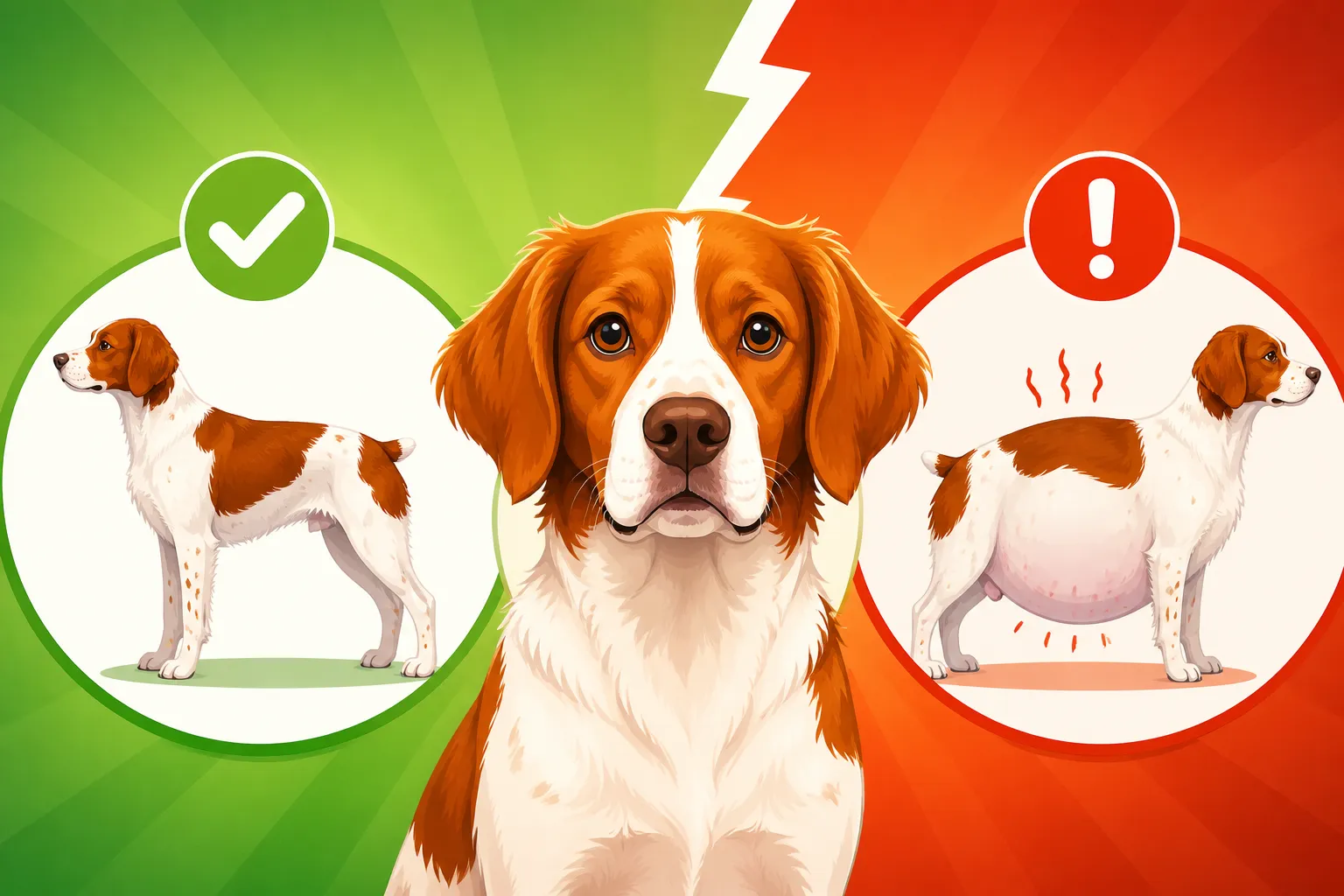
Imagine your dog's stomach like a balloon. In normal digestion, food and water pass through without much fuss. But in GDV, that "balloon" inflates rapidly, putting immense pressure on other organs and the diaphragm, making it hard for your Brittany to breathe. The twisting (volvulus) is the really devastating part. This torsion cuts off blood supply to the stomach and often the spleen, causing tissue death and shock. It's an agonizing condition that can lead to death within hours if not treated immediately. It's not just discomfort; it's a race against time, where every minute counts. Owners often express immense guilt and confusion because their dog seemed fine moments before, only to suddenly enter this critical state. Understanding this distinction—that not all bloating is GDV—is crucial for knowing when to panic and when to simply observe.
Why Certain Breeds Are More Susceptible
It’s a cruel twist of fate that some of our most active, energetic breeds are predisposed to GDV. Brittanys, with their deep chests and lean builds, unfortunately fall into this category. The prevailing theory suggests that the deep, narrow chest conformation allows the stomach more room to swing and twist, rather than being snugly held in place by surrounding organs. This isn't to say every deep-chested dog will bloat, or that shallow-chested dogs are immune, but the risk factor is significantly elevated.
Genetics also play a role; if a dog's parents or siblings have bloated, their risk increases. Age is another factor, with middle-aged and senior dogs being more prone, though it can strike at any age. While we celebrate that the Brittany is one of the healthiest sporting breeds, GDV remains a significant concern for their owners. It's a sobering thought that despite their robust health in many areas, this silent threat looms. It's also worth noting that male dogs seem to be slightly more prone than females, though the reasons aren't entirely clear.
The Urgency of GDV
This cannot be stressed enough: GDV is a medical emergency that demands immediate veterinary intervention. There's no waiting it out, no home remedies, no "let's see how they are in an hour." If you suspect bloat, you need to be on your way to an emergency vet right now. The statistics are grim: without surgery, GDV is almost always fatal. Even with surgery, the survival rate hovers around 75-85%, and complications can be severe. The twisted stomach rapidly starves of blood, leading to tissue necrosis, and the pressure on the diaphragm makes breathing nearly impossible. Furthermore, toxins build up in the dying tissue and can flood the bloodstream when the stomach is untwisted, leading to further complications or even death. This is why knowing the signs and acting swiftly is paramount to giving your Brittany the best chance. It’s a terrifying prospect, but recognizing the signs can make all the difference between life and death.
Identifying the Signs of Bloat in Your Brittany
Recognizing the signs of bloat in its earliest stages is perhaps the most critical thing you can do as a Brittany owner. Our dogs are often stoic, especially our tough, field-bred Brittanys, and they might try to hide their pain until it becomes unbearable. However, bloat progresses incredibly fast, so being vigilant and knowing what to look for can literally save their life.
Early Warning Signals
The very first signs of GDV can be subtle, easily mistaken for general discomfort or a bit of indigestion. You might notice your Brittany acting restless, pacing nervously, or unable to settle down. They might try to vomit but nothing comes up, or only foamy saliva. This unproductive retching is a hallmark sign and should send immediate alarm bells ringing. They might also appear anxious, constantly looking at their abdomen, or have excessive drooling. Some dogs might stand with an arched back or refuse to lie down comfortably.
Consider your Brittany's typical temperament. If your usually laid-back companion is suddenly agitated, or your normally boisterous pup is unusually quiet and uncomfortable, pay close attention. Often, these early signs appear within an hour or two of eating, but not always. If your dog exhibits any combination of these behaviors, it's wise to start considering the possibility of bloat. This is particularly true for active breeds like Brittanys, whose normal high energy might mask initial discomfort.
Advanced Symptoms
As bloat progresses, the signs become much more pronounced and alarming. The most obvious sign is a distended, hard, and painful abdomen. It might feel drum-tight when you gently press on it, especially on the left side behind the last rib. Your Brittany will likely be visibly distressed, panting heavily, and possibly whimpering or groaning with pain. Their gums might become pale or bluish, indicating poor circulation, and their heart rate will likely be elevated.
In severe cases, your dog might collapse, become weak, or enter shock. Their breathing will become shallow and rapid as the enlarged stomach presses against their lungs. At this point, they are in critical condition, and time is running out. This progression can happen with terrifying speed – sometimes within minutes of the first subtle signs. This is why it’s not enough to just know the signs; you must be prepared to act on them immediately. Don't wait until the distension is obvious; by then, the situation is dire.
When to Seek Immediate Veterinary Care
The moment you suspect bloat, even if you’re unsure, it’s time to call your emergency veterinarian and head straight there. Do not try to induce vomiting, give medications, or attempt any home remedies you might read about online. These actions can often do more harm than good and waste precious time. Seriously, just get in the car.
If your Brittany exhibits any unproductive retching, a swollen or hard abdomen, signs of severe pain, restlessness, or collapse, assume it's bloat and seek immediate veterinary attention. Tell the veterinary staff your dog might have GDV as soon as you call and upon arrival, so they can prioritize your pet. Knowing the What a Brittany's Field Injuries Cost in a Season can sometimes prompt owners to hesitate, but for bloat, the cost of waiting is far greater than the cost of an urgent vet visit. Even if it turns out to be a false alarm, the peace of mind is invaluable, and you'll be thankful you acted swiftly.
Here's a quick reference table for common bloat symptoms:
| Symptom Category | Early Warning Signs | Advanced/Critical Signs |
|---|---|---|
| Behavioral | Restlessness, pacing, anxiety, whining | Extreme pain, collapse, lethargy, unresponsiveness |
| Gastrointestinal | Unproductive retching (trying to vomit, but nothing comes up or only foamy saliva), excessive drooling, looking at abdomen | Distended/hard abdomen, refusal to eat/drink, painful to touch |
| Respiratory | Panting, shallow breathing | Rapid, shallow breathing, labored breathing |
| Circulatory | Pale gums, rapid heart rate | Bluish gums, weak pulse, signs of shock |
| Posture | Arched back, reluctant to lie down, standing stiffly | Difficulty standing, staggering, unable to stand |
Risk Factors Specific to Brittanys and Active Dogs
While bloat can technically affect any dog, Brittanys and other active, deep-chested breeds carry a higher inherent risk. Understanding these specific risk factors can help you tailor your management strategies to keep your energetic companion safe. It’s not just about their body shape; their lifestyle, temperament, and even feeding habits all play a role.
Deep Chest Conformation
As we touched on earlier, the Brittany's athletic, deep-chested build is a primary anatomical risk factor. This conformation provides more space for the stomach to distend and twist. Breeds like Great Danes, Weimaraners, German Shepherds, and Setters share this characteristic and similar high GDV rates. It’s simply the way their internal anatomy is structured.
While you can't change your Brittany's genetics or conformation, recognizing this predisposition is the first step toward proactive prevention. It means that for a Brittany owner, awareness and preventive measures are not optional – they are essential aspects of responsible care. Because their chest is relatively narrow but deep, gravity and movement can contribute to the stomach's rotation when it's full of gas or food. This is a fundamental reason why the discussion around preventing bloat focuses so heavily on managing feeding and activity.
Eating Habits and Exercise
How and when your Brittany eats can significantly impact their risk. Eating one large meal a day, especially if they gulp it down quickly, can increase the chances of the stomach filling rapidly with food and air. Dogs that eat fast tend to ingest more air, which contributes to stomach distension. Similarly, exercising vigorously right before or right after eating is a well-documented risk factor. The churning and jostling motion can, in theory, contribute to the stomach's twisting.
Many Brittanys are working dogs, and their lives revolve around high-intensity activity. It's common for a Brittany to be revved up before a hunt or starving after an intense training session. This combination of extreme hunger, rapid eating, and immediate activity is a recipe for increased risk. Consider Whether a Working Brittany Needs a Performance Food and how that food is delivered. High-fat diets, while providing necessary energy, might also take longer to digest, potentially keeping the stomach full for longer. Breaking up meals and ensuring adequate rest periods around feeding times are crucial adjustments. How Much Exercise a Brittany Needs Off Season also plays a role, as consistent conditioning helps maintain overall health and digestion, but careful timing is key.
Stress and Genetics
While not as tangible as physical conformation or eating habits, stress and anxiety are also thought to contribute to GDV risk. A highly stressed or anxious dog might gulp air more often, leading to gas buildup. For a breed like the Brittany, which can be sensitive and responsive, managing their emotional well-being is part of their overall health strategy. Knowing What a Brittany's Temperament Is Really Like can help you identify when they might be experiencing stress that could elevate risk.
Furthermore, genetics play a non-trivial role. If your Brittany comes from a lineage with a history of GDV, their risk is inherently higher. A reputable breeder should be transparent about any instances of bloat in their lines, but it's not always discussed openly. This is why thorough research into your pup's ancestry is vital when bringing home a new dog, and why the question of How Long a Brittany Spaniel Lives on Average often includes underlying health predispositions. If you're considering buying a Brittany, understanding What a Brittany Spaniel Costs to Buy in 2026 should include factoring in the potential for these kinds of genetic health concerns. Unfortunately, we can't change genetics, but we can be extra vigilant if we know there's a family history.
Preventive Measures to Protect Your Brittany from Bloat
While GDV is a terrifying prospect, there are concrete steps you can take to significantly reduce your Brittany's risk. These measures often involve simple adjustments to their daily routine and feeding habits, as well as considering medical options where appropriate. Proactivity is your best friend when it comes to bloat.
Smart Feeding Practices
How and when you feed your Brittany can be a game-changer. Instead of one large meal, break their daily food allowance into two or three smaller meals. This reduces the amount of food and air in the stomach at any one time. Using a slow feeder bowl, a puzzle feeder, or even scattering their kibble in a clean, designated area can encourage them to eat more slowly, minimizing air intake. Some owners swear by elevated food bowls, believing it helps digestion, though scientific evidence on its bloat-preventative benefits is mixed and some studies even suggest it might increase risk in certain breeds. It's best to discuss this with your vet.
Hydration is also important. Ensure your Brittany has access to fresh water throughout the day, but avoid letting them gulp down large quantities immediately before or after meals, especially if the water is cold. A small amount of water during meals is fine, but intense drinking should be separated from feeding times. If your Brittany is very active, such as after a long hunt, make sure they cool down and drink water in moderation. Remember, How Much a Brittany Should Drink on a Hunt needs to be managed carefully to avoid over-consumption after strenuous exercise.
Managing Exercise Around Mealtimes
This is a crucial area for Brittanys. Avoid vigorous exercise, intense play, or high-stress situations for at least one hour before and two hours after meals. A gentle potty walk is usually fine, but leave the running, jumping, and retrieving for other times of the day. This quiet period allows the stomach to digest food without being jostled or stressed.
Think about your Brittany's schedule. If they’re a morning hunter, feed them a small meal well before their outing, or wait until they’ve had a chance to rest and recover afterwards. The same goes for evening walks or training sessions. This simple timing adjustment can dramatically lower the risk associated with activity. For dogs that are always on the go, this might require a bit more planning, but it's a small price to pay for their safety. Consistent, moderate exercise helps keep them fit and healthy, but timing is key to preventing bloat.
The Role of Gastropexy
For high-risk breeds like Brittanys, especially those with a family history of GDV, a prophylactic gastropexy is a preventive surgical procedure worth discussing with your veterinarian. During a gastropexy, the stomach is surgically attached to the abdominal wall, preventing it from twisting. It won't prevent the stomach from distending with gas, but it will prevent the deadly volvulus.
Many owners choose to have this procedure done at the same time as spaying or neutering, as it only requires one anesthetic event. The cost of a prophylactic gastropexy is significantly less than emergency GDV surgery, which can be thousands of dollars. While no surgery is without risk, the benefits of gastropexy for high-risk dogs often far outweigh the potential complications. It's a decision that provides immense peace of mind. For an owner asking Whether a Brittany Is Expensive to Own, considering this upfront cost can be a wise investment in their long-term health and your peace of mind.
Monitoring and Regular Health Checks
Even with all the preventive measures in place, vigilance is key. Regularly observe your Brittany's eating habits, energy levels, and general demeanor. Any sudden changes warrant attention. Make sure to schedule Whether a Brittany Needs a Preseason Vet Check and regular wellness exams, including What a Brittany's Yearly Bloodwork Should Cover. Your vet can assess your dog's overall health and discuss any concerns you might have regarding bloat risk.
Being acutely aware of your dog's body language and health signals is a constant, ongoing preventive measure. The more you know your Brittany, the quicker you'll spot when something is "off." This proactive approach is part of ensuring The Twelve to Fourteen Years a Brittany Gets are as healthy and happy as possible.
What to Do in a Bloat Emergency
Despite all your best efforts, emergencies can still happen. Knowing exactly what to do if you suspect your Brittany is bloating is crucial. Panic is a natural reaction, but quick, decisive action is what will give your dog the best chance of survival.
First Steps at Home
The absolute first step is to immediately call your emergency veterinarian or the nearest animal emergency hospital. Describe your Brittany's symptoms clearly and tell them you suspect bloat (GDV). This allows them to prepare for your arrival, saving critical minutes. Don't waste time looking for information online or trying to contact your regular vet if they aren't equipped for emergencies after hours.
Once you’ve made the call, get your dog into your vehicle as safely and calmly as possible. Avoid any rough handling or trying to force them into positions. The less stress and movement, the better. Have someone else drive if possible so you can comfort your dog or keep an eye on their condition. Remember, there are no effective home treatments for bloat, and attempting any could cause further harm or delay professional help. Your only job is to get your Brittany to expert medical care as quickly as humanly possible. Having a first aid kit (What a First Aid Kit for a Brittany Should Hold) is important for many field injuries, but for bloat, it's about getting to the vet.
What to Expect at the Vet
When you arrive at the emergency clinic, your Brittany will be immediately triaged. The veterinary team will quickly assess their condition, checking vital signs, and typically take X-rays to confirm GDV. These X-rays will show a characteristic "double bubble" appearance if the stomach is twisted. They'll also likely start intravenous fluids to combat shock and administer pain medication.
If GDV is confirmed, surgery is the only definitive treatment. This involves untwisting the stomach (derotation) and assessing the damage. Any necrotic (dead) tissue on the stomach wall may need to be removed. As mentioned earlier, a gastropexy is typically performed at this stage to prevent future episodes of volvulus. The surgery is complex and carries risks, but it is necessary to save your dog's life. The veterinary team will explain all the procedures and risks involved.
Post-Operative Care and Recovery
After a successful surgery, your Brittany will require intensive post-operative care, usually involving a stay in the hospital for several days. They'll be monitored closely for complications such as cardiac arrhythmias (irregular heartbeats), peritonitis (inflammation of the abdominal lining), or further issues with stomach motility. They'll receive pain medication, antibiotics, and intravenous fluids.
Once home, your Brittany will need a period of restricted activity and a modified diet. This typically involves small, frequent meals of easily digestible food, gradually transitioning back to their regular diet. You’ll need to closely monitor their incision site for any signs of infection and follow all medication instructions. Full recovery can take several weeks, but with diligent care, most dogs go on to live full, active lives. The long-term health and well-being of your dog are paramount, and the dedicated care given during this recovery period directly impacts The Twelve to Fourteen Years a Brittany Gets.
Financial Considerations and Pet Insurance
Facing a bloat emergency is not only emotionally taxing but also financially demanding. The cost of veterinary emergency care, particularly for a complex surgical procedure like GDV, can be substantial. Understanding these costs and planning for them can alleviate some of the burden during an already stressful time.
The Cost of Emergency Bloat Treatment
Emergency GDV surgery is one of the most expensive veterinary procedures. The total cost can easily range from $3,000 to $8,000 or more, depending on your geographic location, the specific veterinary hospital, the severity of the bloat, and any complications that arise. This comprehensive fee typically includes:
- Emergency examination and diagnostics: X-rays, blood work, initial stabilization.
- Surgery: Anesthesia, surgical fees, removal of any damaged tissue, gastropexy.
- Post-operative care: Several days of hospitalization, intensive monitoring, medications (pain relief, antibiotics), intravenous fluids.
- Potential complications: Additional tests or treatments if issues like cardiac arrhythmias or further tissue damage occur.
These costs are a significant unexpected expense for many owners, adding to the distress of the situation. It’s a stark reminder that Whether a Brittany Is Expensive to Own extends far beyond the initial purchase price.
How Pet Insurance Can Help
This is where pet insurance can be a genuine lifesaver. Policies from providers like Healthy Paws are designed to help cover the costs of unexpected veterinary emergencies, including GDV. Having pet insurance means that instead of facing a daunting bill during an already traumatic time, you can focus on your Brittany's recovery. Most comprehensive pet insurance plans will cover a significant percentage of emergency surgery and hospitalization costs, after your deductible has been met.
When considering pet insurance, look closely at what's covered for emergencies, the deductible options, and the reimbursement percentage. Some plans might have waiting periods for certain conditions, so it's best to enroll your Brittany when they are young and healthy. While What Insuring a Brittany Costs a Month is an ongoing expense, it pales in comparison to the potential one-time cost of an emergency like bloat. Healthy Paws, for instance, offers customizable plans that can provide substantial financial relief for unforeseen medical needs. It's a responsible part of planning for the entire lifespan of your active companion.
Planning for the Unexpected
Even if you have pet insurance, it’s always wise to have an emergency fund set aside for your Brittany’s health needs. Not all procedures or medications may be fully covered, or you might need to cover costs upfront before reimbursement. This financial preparedness allows you to make medical decisions based on what’s best for your dog, rather than being constrained by budget.
Beyond financial planning, simply being informed is a powerful tool. Knowing the signs of bloat, having your emergency vet’s number readily available, and discussing preventive gastropexy with your regular veterinarian are all forms of planning for the unexpected. What a Brittany's Yearly Vaccinations Cost and other routine expenses are predictable, but the truly impactful costs often come from sudden emergencies. Being financially and mentally prepared for a bloat emergency is one of the kindest things you can do for your Brittany.
Disclaimer
This article is intended for informational purposes only and does not constitute medical advice. Always consult with a qualified veterinarian for any health concerns or before making any decisions about your Brittany's care. In the event of a suspected emergency like bloat, seek immediate veterinary attention.