Whether the Brittany Is Popular in Europe
The Brittany is well known in parts of Europe, especially in its native France, but it is not equally familiar in every country. Breed names, hunting traditions, and local preferences all affect how often people see one. This guide explains where the Brittany has the strongest presence, why its European reputation varies, and what popularity does—and does not—tell you about the breed.
The Brittany’s strongest European roots are in France
A French gundog with a regional identity
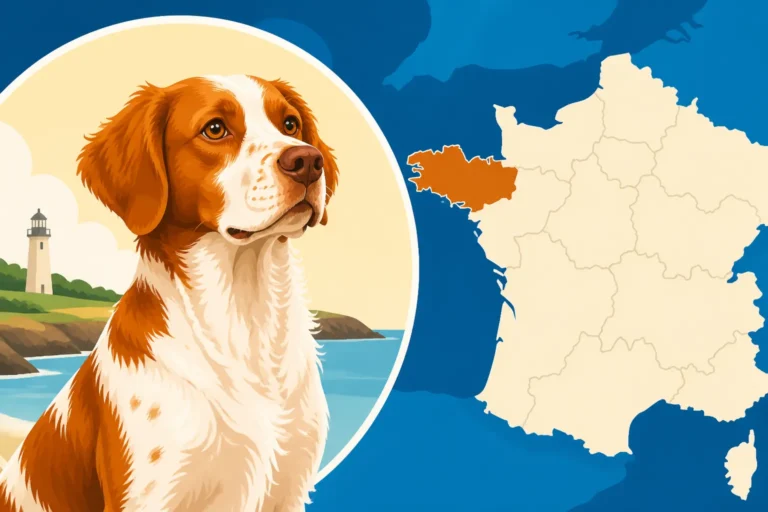
The Brittany comes from the Brittany region in northwestern France, and its French name, Épagneul Breton, is still widely used in its country of origin. That local history gives the breed a natural foothold there: it is not simply an imported dog with a foreign-sounding name, but a French hunting breed with a long connection to the country’s countryside and sporting culture. For background on that origin, see Where the Brittany Comes From and How Old the Brittany Breed Is.
The name can cause a little confusion for people who know the dog mainly as the Brittany or Brittany Spaniel. In France, Épagneul Breton is the familiar name; in North America, “Brittany” is standard, and the American Kennel Club dropped “Spaniel” from the breed’s official name. The breed is a pointing dog, despite the word épagneul, which may lead newcomers to imagine a flushing spaniel. What Epagneul Breton Means explains the name more fully, while The Brittany Points, It Does Not Flush covers the dog’s working style.
That distinction matters when judging popularity. A French hunter searching for an Épagneul Breton may be looking for the same breed an American hunter calls a Brittany, but a casual search for “Brittany Spaniel” may not reveal the full French conversation around it. Breed visibility depends partly on the words people use, not just on how many dogs are present.
A familiar working dog, not necessarily a ubiquitous pet
In France, the Brittany is best understood as a recognized sporting breed with a practical job behind its reputation. Its compact size, energy, and pointing ability have made it a familiar choice among people who hunt and work with versatile gundogs. That does not mean every French household knows the breed well or that it ranks among the most common companion dogs nationwide. Recognition within hunting circles is different from broad popularity among all dog owners.
The same distinction applies elsewhere in Europe. A breed can have a devoted following among hunters and breeders while remaining relatively uncommon in city parks or general pet-owner conversations. Someone living in a rural area with a strong shooting-dog tradition may encounter Brittanys regularly; someone in a large city may rarely meet one, even in a country where the breed has a meaningful sporting presence.
So, is the Brittany popular in Europe? The most accurate answer is that it is established and especially well rooted in France, with interest beyond France shaped by local hunting traditions and breeder communities. It is not accurate to treat Europe as one uniform market or assume that a breed’s French heritage makes it equally common from Lisbon to Helsinki.
Popularity varies across Europe
The same breed meets different local preferences
European dog culture is not one single thing. Hunting regulations, the birds and terrain available, the popularity of different sporting activities, and established national breeds can all influence which gundogs people choose. In one region, hunters may value a close-working dog suited to walking; elsewhere, a different range, style, or breed tradition may be preferred. The Brittany’s suitability for a particular person depends on those needs as much as on its reputation. Whether the Brittany Is a Versatile Breed offers more context about the range of work associated with the breed.
France is the clearest center of the Brittany’s European identity, but the breed is also known among sporting-dog enthusiasts in other countries. Interest may be concentrated in clubs, working kennels, and hunting networks rather than spread evenly through the general population. It is therefore possible for a breed to be recognizable to a field-trial handler or hunter in one country and unfamiliar to many ordinary pet owners in the same place.
Language adds another layer. A breed’s name may be translated, shortened, or used differently by national kennel organizations and local clubs. Someone looking for a French Brittany, an Épagneul Breton, or an American Brittany may be encountering different descriptions of closely related breed populations, not necessarily searching for completely unrelated dogs. For an overview of those distinctions, see How a French Brittany Differs From an American One and Whether a French Brittany Is a Separate Breed.
European visibility is not the same as a continent-wide ranking
It is tempting to ask whether the Brittany is “one of Europe’s most popular dogs,” but that question needs a clear measure. Does popularity mean annual registrations, number of active breeders, how often the breed appears in hunting, or how frequently people keep it as a companion? Each measure can tell a different story. A breed with a strong working community may have fewer household pets than a fashionable companion breed, yet be much more prominent within its specialist world.
Without comparing consistent registration data across countries and years, broad ranking claims can be misleading. Kennel organizations may count registrations differently, and not every dog is registered through the same organization. Working dogs can also be valued by hunters who care more about ability, health, and lineage than show-ring visibility. A simple ranking may miss that practical reputation.
| What you are measuring | What it can reveal | What it may miss |
|---|---|---|
| National kennel registrations | How many dogs are registered through a particular organization | Unregistered dogs and differences in registration rules |
| Breeder activity | Whether puppies are available and breeding communities are active | How many owners keep the breed outside those networks |
| Hunting and field participation | How visible the Brittany is among working-dog enthusiasts | Its popularity as a general household companion |
| Public familiarity | Whether people commonly recognize the breed | The depth of its reputation among specialist owners |
A more useful question is often, “Where would I find Brittany owners and knowledgeable breeders?” In France, the breed’s home-country identity makes that search more intuitive. In other countries, a prospective owner may need to look through sporting-dog clubs or breed-specific communities instead of assuming that a general pet directory will show the whole picture.
What the Brittany’s European reputation says about the dog
A working reputation can outlast passing trends
The Brittany’s appeal is tied closely to its character as an active pointing dog. It is commonly described as energetic, responsive, and versatile, but those traits are not a promise that every individual will suit every household. A dog bred for working ability still needs thoughtful exercise, training, and time with its people. Popularity among hunters does not automatically mean an easy fit for someone who wants a low-exercise companion.
For a hunter, the breed’s reputation may be a reason to investigate it further, not a substitute for choosing carefully. Ask what a particular line is bred to do, how the dogs work in the terrain you expect to hunt, and what the breeder knows about their temperaments and health. American and French Brittany lines can differ in typical style and selection priorities, although individual dogs vary. Which Brittany Type Suits a Foot Hunter Better can help frame that decision.
For a non-hunting household, it is worth looking beyond the breed’s European reputation and asking what daily life with a Brittany actually involves. A dog that is content after a brisk walk and engaging training session may still struggle if left without meaningful activity for long stretches. The right match depends on the individual dog, the owner’s routine, and whether the household can provide both physical exercise and mental work.
Popularity should not be confused with availability or quality
A breed’s visibility in a country does not guarantee that a suitable puppy will be easy to find. A smaller, specialist breeding community may mean fewer litters, longer searches, or greater travel for a prospective owner. Conversely, a larger number of breeders does not automatically mean that every litter is carefully planned. Popularity is only one part of the picture; health testing, temperament, working goals, and responsible placement matter more.
If you are searching in Europe, start by learning the local name used for the breed and the organizations that serve the relevant community. Ask whether the breeder’s dogs are selected primarily for hunting, conformation, companionship, or a combination. A conversation about the parents’ everyday behavior and working experience can tell you more than a broad claim that the breed is especially popular in a particular country.
It also helps to remember that “European Brittany” is not a single uniform description. Breed standards, kennel systems, and breeder priorities can vary, and the American and French populations have their own histories. That does not make one automatically better. It means prospective owners should describe what they need—such as a closer-working dog for walking hunts, a particular style of field work, or an active family companion—and evaluate individual breeding programs against that goal.
How to judge whether the Brittany is popular where you live
Look for local evidence rather than relying on a broad label
If you are considering a Brittany in a European country, check whether there are active national or regional breed clubs, working-dog events, and breeders who can explain the breed’s local role. These are practical signs of an established community. The presence of a club does not prove that Brittanys are common everywhere in the country, but it can help you find people with direct experience and learn which name is used locally.
You can also ask veterinarians, trainers, and hunting-dog handlers whether they regularly work with the breed. Their answers may differ from general public awareness, and that difference is useful: it shows whether the Brittany has a specialist following even if it is not a familiar household name. If you are comparing local visibility with North American usage, Whether a French Brittany Is Rarer in America provides a related perspective.
A quick way to organize your research is to separate three questions: Are Brittanys known in the country? Are there breeders and owners nearby? And are the dogs bred for the kind of life you can offer? The first question is about reputation, the second about access, and the third about fit. A “yes” to one does not automatically answer the others.
Choose for fit, not for popularity
If you are a hunter, talk with people who have seen the dogs work in terrain and conditions similar to yours. Ask how the dog searches, how it responds to handling, and how its energy holds up over a day. If you are seeking a companion, speak with owners about settling indoors, daily exercise, training needs, and how the dog behaves when its routine is quiet. Whether the Brittany Is Still a Hunter's Dog is useful background if you are weighing the breed’s working identity against its life as a companion.
If you are choosing between French and American lines, avoid treating country of origin as a shortcut for predicting an individual dog. Ask about the parents, the breeder’s goals, and the kind of home or work the puppies are expected to suit. A thoughtful breeder should be able to discuss both strengths and trade-offs, rather than promising that every puppy will naturally match a particular hunting style or household.
In the end, the Brittany is popular in Europe in a qualified sense: it has a strong home-country identity and a meaningful place in sporting-dog communities, but its visibility differs by country and by audience. For prospective owners, that nuanced answer is more useful than a blanket claim that it is either common everywhere or rare across the continent. Research the local community, learn the name used where you live, and focus on the individual dog and breeding program that fit your life.
Disclaimer
This article is for general informational purposes only and does not constitute professional advice. Laws, prices and regulations vary by location and change over time. Consult a qualified professional for guidance on your specific situation.