Whether an Orange Brittany Is Easier to See in Cover
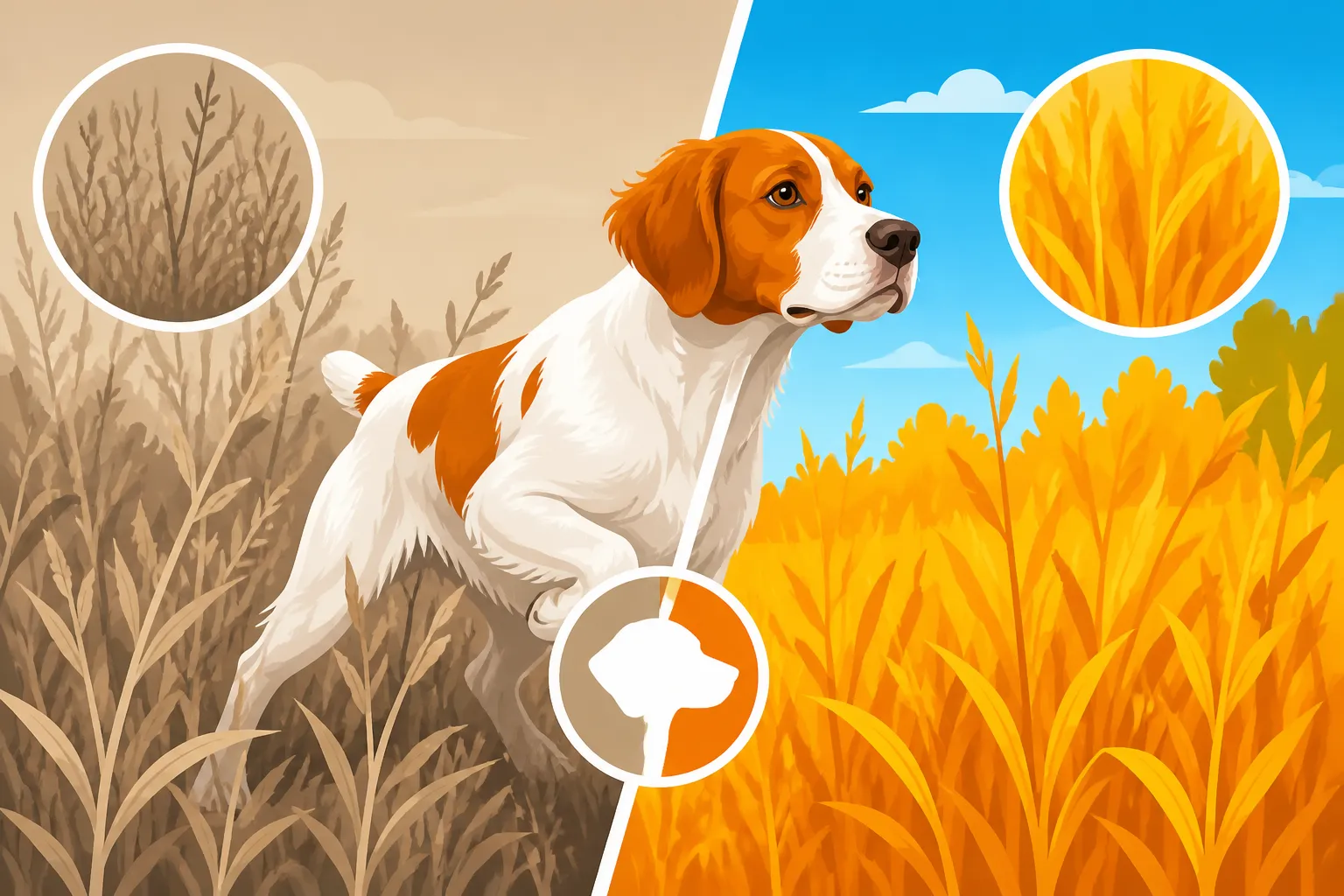
An orange Brittany can look strikingly easy to spot in an open field, then seem to disappear the moment it runs into golden grass, autumn leaves, or shadowed brush. Coat color helps, but it is not a dependable safety signal by itself. This guide explains when orange may improve visibility, what can make a dog hard to see, and how to add practical safeguards in the field.
Does an orange coat make a Brittany easier to see
Sometimes—but the answer depends on what is behind the dog, how much light there is, and how the coat is marked. “Orange” covers a range of shades, and an orange-and-white Brittany presents a different pattern from one with broad, dense patches of color.
Orange against grass, leaves, and brush
In a green field or against dark, wet brush, a warm orange coat may contrast enough to catch your eye. That contrast can help when your Brittany pauses or moves through a relatively open patch. But in dry grass, crop stubble, or a carpet of fall leaves, orange and brown tones may blend together. A dog that is easy to see beside a green hedgerow may be surprisingly difficult to pick out against tawny vegetation just a few yards away.
Movement can make a dog easier to notice, but it is not something to rely on. A Brittany may hold still on point, crouch into cover, or disappear behind a clump of grass while you are watching the wrong part of the field. Distance matters, too: fine coat details disappear first, so the orange-and-white pattern that seems obvious nearby can blur into a single muted shape farther away.
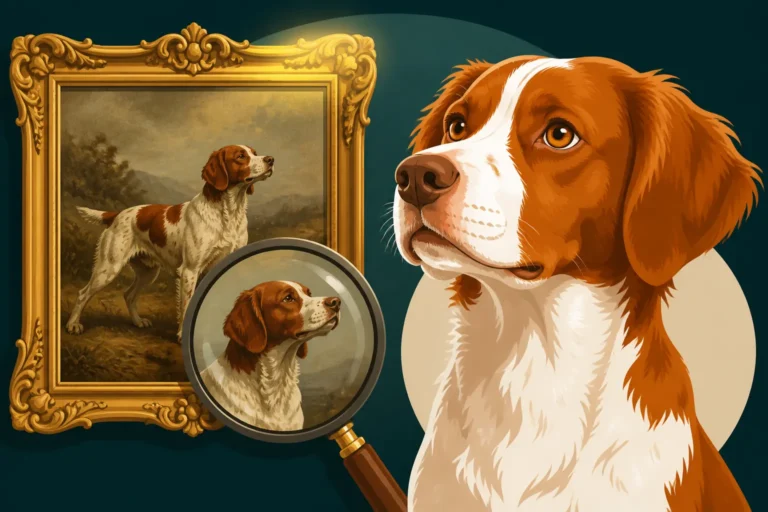
A dog’s individual coat also matters. The description “orange and white” doesn’t tell you how much of each color is present or where the patches fall. For a sense of how those patterns can vary, see What an Orange and White Brittany Looks Like. The broader range of shades and patterns is covered in Which Colors a Brittany Comes In.
Why the coat can look different from one outing to another
The same Brittany may look vivid in bright sunlight and subdued under cloud, in shade, or at dusk. Wet fur can lie flatter and appear darker; dust, burrs, and dried grass can alter the look of the coat. From your position, a dog’s orange markings may also be hidden by vegetation even when its body is technically in view.
Age and coat development can affect appearance as well. A puppy’s coloring may shift as its coat changes, and the amount of ticking or visible white can make the pattern look different over time. If you’re comparing photographs or trying to predict how a puppy will look as an adult, Whether a Brittany's Color Changes as It Grows offers related context.
The practical takeaway is simple: treat coat color as one visual cue, not a guarantee. If you have ever scanned a field, spotted a patch of orange, and had it turn out to be a clump of leaves—or looked away for a second and lost track of your dog—you already know why relying on color alone can feel frustrating.
Why visibility depends on more than coat color
A Brittany is bred to work through cover, and the very places that make a hunt productive can make visual contact difficult. The dog’s coat is only one factor in whether you can follow its location safely and confidently.
Habitat, light, and the dog’s position
Tall grass can hide a dog’s legs and lower body. Brush can break up its outline, while a ridge, ditch, or field edge can block your view altogether. Sunlight behind the dog may leave its body in shadow; low light can flatten the difference between coat colors. Even an open field can become visually confusing when the dog is moving quickly across uneven ground.
It helps to notice the conditions before you start. In a stubble field, dry prairie grass, or leaf-covered woodland, expect orange fur to blend more than it might against green vegetation. In thick cover, assume that your Brittany may vanish from sight even if you’ve chosen a bright coat color. How a dog works through different terrain is another piece of the picture; Whether a Brittany Adjusts Its Range to Cover explores how cover can influence a dog’s working range.
The setting can also change during a single outing. A dog may be plainly visible while crossing an open lane, then disappear as soon as it enters a cattail edge or brushy draw. Before moving into that kind of terrain, agree on how you’ll keep track of the dog and where other people in the party will be positioned.
Human visibility is not the same as canine color vision
A color that stands out to you may not look equally distinct to your dog. Dogs do not see color exactly as humans do; their color perception is more limited, so a bright orange object may appear less vividly orange to them than it does to you. That does not mean an orange coat is useless, but it does mean you should choose safety equipment for the visibility it provides to people—not because you expect the dog to recognize its own color.
This distinction matters when choosing equipment. A high-visibility vest or panel is intended to help people see the dog, while a tracking collar or other locating tool can help you keep tabs on a dog you cannot see. Those tools address different problems: bright material can improve visual contrast, but it cannot tell you where a dog is behind a rise or deep in cover.
If you’re weighing equipment for dense terrain, Whether a Brittany Needs a Tracking Collar in Heavy Cover is a relevant next read. And if you want to understand why the dog’s coat alone doesn’t predict how it will work in a particular environment, Whether a Brittany Hunts Differently on Wild Birds provides additional context.
Practical ways to make an orange Brittany easier to locate
You don’t need to turn every outing into a complicated gear checklist. A few deliberate habits can make it easier to keep track of your Brittany, especially when the landscape is working against you.
Use visible gear suited to the outing
A bright, well-fitting vest can add a high-contrast patch that is easier to distinguish from natural cover than fur alone. Choose gear that stays secure without restricting movement, and check that it is comfortable across the chest and under the legs. A loose or poorly fitted vest can shift, snag, or rub during a long day. Inspect it before heading out, particularly if it has been stored since the previous season.
Visibility gear should be appropriate for the activity and local rules. If you’re hunting with other people, coordinate what each person and dog will wear, and check the applicable requirements for the area. Don’t assume that a dog’s orange coat satisfies a rule intended for people, or that every kind of orange accessory meets a specific requirement.
For everyday walks, a reflective collar, harness, or leash can help make a dog easier to notice near roads or in low light. If you’re comparing options, you can browse product descriptions at Chewy and check details such as sizing, reflective coverage, and care instructions. For field use, inspect the fit and durability of any item before relying on it. Chewy can also be one place to compare basic visibility accessories for routine outings, but choose equipment based on the conditions and activity rather than the retailer.
Pair visual checks with a repeatable routine
A routine is particularly helpful when the dog is moving in and out of cover. Before starting, make sure you know which direction the dog is working and where the other people in your group are. Pause regularly to scan likely routes and cover edges instead of waiting until you have completely lost sight of the dog.
For a practical field check, use these steps:
- Look before moving: Before crossing a field edge or entering thicker cover, pause and locate your dog.
- Check the terrain: Notice ditches, brush lines, tall grass, and rises that could hide the dog.
- Keep the group coordinated: Make sure everyone knows where the dog and other people are before changing position.
- Use your agreed locating method: Follow the training and equipment routine you have established rather than making a sudden move based on a fleeting glimpse.
- Recheck gear afterward: Look for loosened straps, snagged fabric, or damage that could affect the next outing.
These habits are useful whether your Brittany is wearing bright gear or not. They also reduce the tendency to mistake a flash of color for the dog’s actual position—an easy mistake when you’re scanning quickly through moving grass or brush.
Choosing visibility gear without relying on coat color
The best setup depends on where and how you’re using your Brittany. A neighborhood walk at dusk creates different visibility needs from a hunt in dense cover, and a tracking device does a different job from a reflective strap.
| Situation | What can make the Brittany hard to see | Helpful approach |
|---|---|---|
| Green field or open ground | Distance, fast movement, or glare | Use a clear visual check routine and consider high-contrast field gear |
| Dry grass, stubble, or fallen leaves | Orange and brown surroundings can blend with coat tones | Add a distinct visible panel and scan the dog’s route, not just the open field |
| Dense brush or tall cover | Vegetation blocks the dog’s outline | Combine visual checks with an agreed locating method |
| Dusk or roadside walking | Low light reduces color contrast | Consider reflective accessories and keep the dog close and controlled |
| Wet conditions | Fur and gear may look darker or become obscured | Check the fit and condition of the gear, and recheck the dog after the outing |
Match the accessory to the problem
If the main problem is that your dog blends into the landscape, a bright panel or vest may improve contrast. If the problem is that terrain blocks your view, a tracking method may be more useful. If you are walking near traffic in low light, reflective details may help drivers notice movement. No single accessory solves every visibility problem, so start by naming the situation that worries you most.
Product descriptions can help you compare fit, fastening style, and reflective or high-visibility details. Chewy may be useful for browsing everyday collars, harnesses, and related accessories, but read the specifications carefully and check whether an item is intended for routine walks or more demanding field use. A piece of gear that works well on a short neighborhood walk is not automatically suited to brush, water, or repeated wear in the field.
Whatever you choose, test it in a safe, familiar place before depending on it in unfamiliar terrain. Watch how it sits when your dog turns, runs, and lowers its head. Make sure it doesn’t interfere with movement or rub under the legs. After a field outing, inspect the material and fastenings for snags or wear; if it no longer stays put, replace or adjust it before the next trip.
Don’t confuse appearance with safety
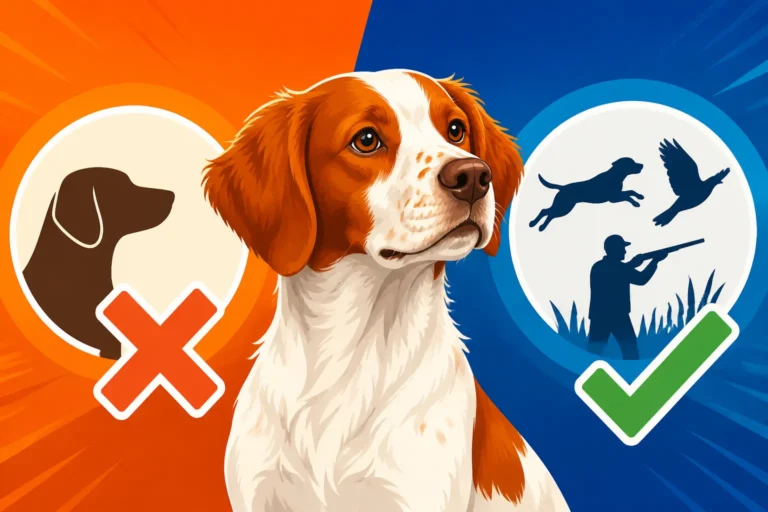
Orange coloring can be helpful, but the Brittany’s coat is not safety equipment. A dog may be difficult to see in cover regardless of its coloring, and no shade can replace supervision, training, coordination, or equipment suited to the outing. The realistic expectation is modest: an orange coat may give you an advantage in some backgrounds, while a visible accessory and a consistent locating routine can provide additional help.
That is especially important because Brittanys may work at a distance or move through cover faster than a person can walk. Their hunting style and your terrain affect how often you have a clear view; they’re not problems that can be solved simply by choosing a particular coat color. For more on the breed’s coat itself, see Whether a Brittany's Coat Is Flat or Wavy, and for related field preparation, What a Brittany's Orange Vest Costs.
An orange Brittany can be easier to spot in some settings, particularly when the coat contrasts with the surroundings. In dry grass, autumn leaves, thick brush, shadow, or low light, that advantage can shrink or disappear. Think of color as a helpful clue, then build your visibility plan around the landscape, suitable gear, and a routine for keeping track of your dog.
Disclaimer
This article is for general informational purposes only and does not constitute professional advice. Laws, prices and regulations vary by location and change over time. Consult a qualified professional for guidance on your specific situation.