Whether a Brittany Should Be Square
A Brittany can look square in one photo and noticeably long-backed in another, especially when the dog is standing casually or its feathering hides the outline. The short answer is that the Brittany is generally expected to have a square, balanced outline: its body length and height at the withers should be approximately equal. Here’s how to understand that proportion without mistaking pose, coat, or puppy growth for poor structure.
What square means in a Brittany
How height and body length are compared
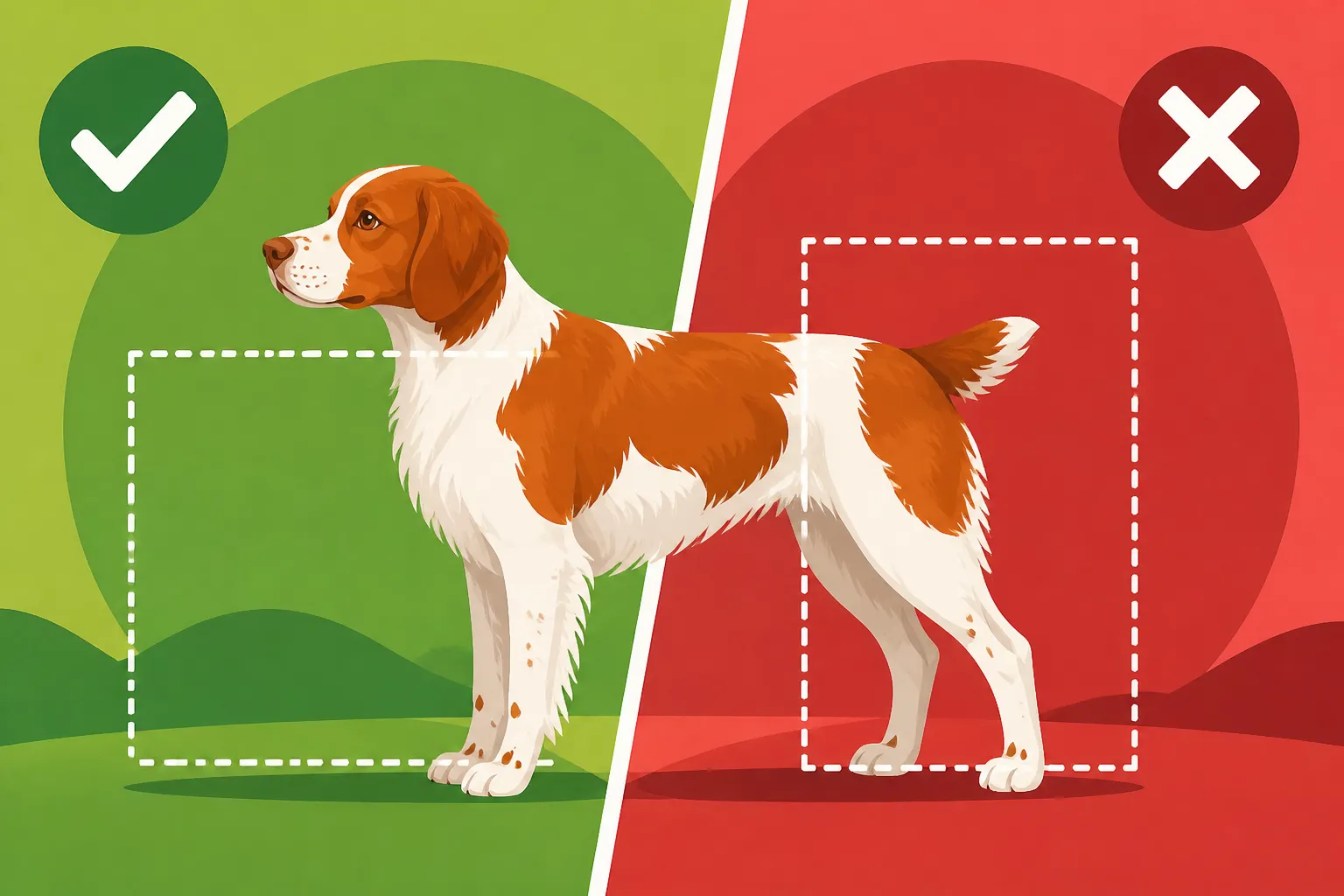
When people describe a Brittany as square, they mean its overall body proportions: the dog’s height at the withers is roughly equal to its body length. The withers are the highest point of the shoulders, where the neck meets the back. Body length is generally considered from the point of the shoulder to the rear of the body, rather than from the nose to the tail.
Imagine a simple outline around a standing Brittany. If the outline is close to as tall as it is long, the dog appears square. That does not mean every measurement will match down to a fraction, or that the dog should look like a perfectly geometric box. The word describes a general balance, not a demand for mathematical exactness.
It also does not mean the dog should look short-legged, heavy, or compact in the way some other breeds might. Brittanys are known for an athletic, leggy impression. Their square outline works together with a relatively light, active build, so a well-proportioned dog can look both square and ready to move. For more on the breed’s proportions and size, see What a Brittany Weighs and How Tall It Stands.
What should be included in the measurement
For a practical at-home estimate, have the dog stand naturally on a firm, level surface. Measure height from the ground to the top of the withers, then measure body length from the point of the shoulder to the rear of the body. A soft measuring tape can help with length, while a measuring stick or a level held carefully can make the height measurement more consistent.
The dog’s posture matters. A Brittany leaning forward, stretching its neck, crouching, or standing with its rear legs tucked underneath can appear longer or shorter than it really is. So can an uneven floor. Take a few measurements while the dog is standing comfortably, and don’t treat one hurried reading as a verdict on its structure.
A casual home measurement is useful for understanding proportions, but it is not a formal conformation assessment. Different people may identify landmarks slightly differently, and movement, balance, and overall construction matter too. If you are evaluating a show prospect or comparing a dog with a breed standard, ask an experienced breeder, judge, or qualified professional to assess the dog in person.
Why the square outline matters
Balance is about the whole dog
A square outline is valued because it contributes to the Brittany’s characteristic balance. The dog should look coordinated from front to rear, rather than stretched out through the body or disproportionately tall and narrow. That balance is part of the breed’s athletic appearance and is considered alongside the dog’s proportions, angulation, topline, movement, and general condition.
No single measurement tells the whole story. A dog can measure close to square but still look unbalanced because of its stance, body condition, or other structural features. Another dog might appear a little longer in a photograph because it is standing unevenly, even though its proportions look balanced when assessed in person.
This is why a square Brittany should not be judged by a single snapshot or a tape measure alone. The standard’s overall picture matters more than isolating one feature. The breed is a compact, versatile pointing dog, and its outline is only one part of what makes it look and move like a Brittany. The article The Brittany Is the Smallest of the Versatile Pointing Breeds provides more context for that athletic, practical build.
Square does not mean a rigid or bulky body
It is easy to misunderstand “square” as meaning short, stocky, or thick-bodied. That is not the intended idea. A Brittany should retain an active, agile look; a heavy body or a low, cumbersome silhouette is not automatically better just because the dog appears less long.
Likewise, square does not mean the dog should have no visible length through the ribs or loin. A working dog needs a functional body, and a natural outline includes curves and angles rather than straight lines like a cardboard box. Coat feathering can soften those lines, particularly around the chest, belly, and legs.
If you are comparing photographs, look for a dog standing naturally from the side and assess the outline from the shoulder to the rear, not the shape made by its coat alone. A neat trim or a wind-blown fringe can change the visual impression without changing the dog’s underlying structure. For more on how the breed’s coat affects its silhouette, see The Feathering on a Brittany's Legs and Ears.
Why a Brittany may not look square
Pose, camera angle, and coat can fool the eye
A side-on photo is usually more helpful than a picture taken from above, below, or at an angle. A camera close to the dog’s face can distort proportions, while a dog standing diagonally may appear longer through the body. Even a small shift in where the front and rear feet are placed can change the outline.
Coat can be misleading too. Brittanys may have feathering on the legs and other areas, and that hair can blur where the body ends and the limbs begin. A dog with a full coat may look longer or heavier than it does after grooming, while a clipped coat can make the body appear more sharply defined. Grooming changes the presentation, not the skeleton.
When taking a comparison photo, stand the dog on level ground and photograph it from the side at roughly its body height. Keep the camera level, avoid a wide-angle close-up, and let the dog stand comfortably rather than pulling it into an exaggerated pose. If you are preparing for a show, an experienced handler can help present the dog without making its stance look artificial.
Age and condition change the appearance
Puppies and adolescents can look awkward as they grow. Their legs may seem to lengthen before the rest of the body catches up, or they may go through a lanky phase that makes the outline look less balanced. That temporary appearance does not necessarily predict the adult dog’s final proportions. Growth is uneven, and a young dog should not be assessed as if it were fully mature.
Body condition also affects what you see. Extra weight can soften the waist and make a dog look longer or heavier, while a very lean dog may appear unusually leggy. Neither impression changes the actual measurement from the withers to the ground or from shoulder to rear, but both can affect the outline. If the dog’s weight or growth seems concerning, discuss it with a veterinarian rather than trying to correct its shape through restrictive feeding or forced exercise.
A well-fitting harness can make walks more comfortable, but harness fit should be based on the individual dog’s measurements—not on whether the dog looks square. If you are shopping through a retailer such as Chewy, compare the product’s measuring guidance with your dog’s chest and neck measurements. A harness that shifts, rubs, or restricts movement deserves a different size or style. For general breed size context, How Tall a Brittany Stands is a useful companion topic.
How to assess your Brittany’s proportions sensibly
A simple measurement and observation routine
If you want a clearer picture of your dog’s outline, use a calm, repeatable method rather than repeatedly measuring from different points. Have someone gently keep the dog standing on a level surface. Measure height at the withers and body length from the point of the shoulder to the rear, using the same landmarks each time.
Write down the measurements and note the dog’s age, stance, and body condition. If you repeat the process later, try to use the same surface and positioning. The goal is not to chase a perfect ratio at home; it is to understand the dog’s general proportions and avoid being misled by a single pose or photograph.
For ordinary care, there is no need to measure your Brittany regularly unless you have a reason, such as tracking growth or choosing equipment. A retailer such as Chewy may be convenient when you need everyday supplies, but a product chart cannot diagnose a structural issue. If a veterinarian has raised a concern about gait, discomfort, or growth, follow that professional’s advice rather than relying on an online size guide.
| What you are checking | What to look for | What can make it misleading |
|---|---|---|
| Height | Ground to the top of the withers | Uneven ground, crouching, or leaning |
| Body length | Point of shoulder to rear of the body | Unclear landmarks or a twisted stance |
| Side outline | A balanced shape that is roughly as tall as it is long | Camera angle, coat, and foot placement |
| Movement | Comfortable, coordinated motion | A still photograph cannot show movement |
| Overall condition | Athletic appearance without excess weight or marked thinness | Coat volume and body condition can alter the silhouette |
When to ask someone experienced
If you are choosing a puppy, ask the breeder how they evaluate structure and how the parents compare with the breed’s expected outline. A responsible conversation should include more than a claim that a puppy is “perfectly square.” Ask to see the dog standing naturally and, if possible, moving. Consider the whole animal—health, temperament, function, and fit for your household—rather than selecting on one proportion alone. Which Questions to Ask a Brittany Breeder can help you prepare for that discussion.
If you already own a Brittany and simply wonder whether its body looks too long, begin with a neutral photo and a careful measurement, but keep the result in perspective. Dogs vary, and everyday stance can make ordinary differences look dramatic. If the concern is cosmetic, a knowledgeable Brittany breeder or conformation mentor may be able to explain what you are seeing.
If the dog is moving stiffly, seems reluctant to jump or run, or shows signs of pain, that is a health question rather than a “square” question. Arrange a veterinary assessment instead of trying to judge the issue from body shape. Proportions alone do not diagnose hip or joint problems; for related background, see How Common Hip Dysplasia Is in Brittany Spaniels.
A Brittany’s square outline is best understood as one part of a balanced, athletic appearance—not as a rigid measurement test. Measure consistently if you are curious, account for stance and coat, and seek an in-person assessment when you need a reliable conformation opinion. If you are buying a harness or other equipment, use the maker’s fit instructions and your dog’s actual measurements; Chewy or another retailer can help you browse options, but fit and comfort should guide the choice.
Disclaimer
This article is for general informational purposes only and does not constitute professional advice. Laws, prices and regulations vary by location and change over time. Consult a qualified professional for guidance on your specific situation.