How C3 Deficiency Is Inherited in Brittanys
It's a heartbreaking moment when you realize that the energetic, loving Brittany you've brought into your home might be facing an invisible threat – a genetic condition passed down through generations. For Brittany owners, especially, the phrase "C3 Deficiency" can spark immediate concern. This guide is here to shed light on exactly how this immune system disorder is inherited, giving you the critical knowledge to navigate breeding decisions, understand your dog's health risks, and advocate for a healthier future for our beloved breed.
Understanding C3 Deficiency in Brittanys
C3 Deficiency isn't just a fancy medical term; it's a profound weakness in a Brittany's immune system that leaves them incredibly vulnerable. It's unique to our breed, which means understanding its specific mechanisms is crucial for anyone who loves these dogs.
What is Complement Component 3 (C3)?
Imagine your dog's immune system as a highly trained army, constantly on patrol for invaders like bacteria, viruses, and fungi. Within this army, there's a critical component known as the "complement system." This isn't just one thing, but a whole cascade of proteins that work together to identify and eliminate threats. Among these proteins, Complement Component 3, or C3, is like the central command or the main general. It's absolutely essential because it acts as a central hub, activating both the classical and alternative pathways of the complement system. Without sufficient C3, the entire system falters.
When everything is working as it should, C3 plays several vital roles. It helps tag foreign invaders for destruction by other immune cells (a process called opsonization), directly punches holes in bacterial cell walls (lysis), and even acts as a chemical signal to attract more immune cells to the site of an infection (chemotaxis). Think of it this way: if C3 is missing or severely reduced, the immune army can't effectively communicate, identify its targets, or launch a coordinated attack. This isn't a minor flaw; it's a gaping hole in the dog's defense, leaving them susceptible to almost any pathogen they encounter. It's a truly debilitating condition that has devastating consequences, as covered in detail in our post, What C3 Deficiency Does to a Brittany.
The Impact of C3 Deficiency on Your Brittany’s Health
For a Brittany living with C3 Deficiency, life is a constant battle against infection. They are unable to mount a robust immune response to common bacteria and viruses that a healthy dog would easily shrug off. This means they often suffer from recurrent, severe, and sometimes life-threatening bacterial infections, particularly affecting their kidneys, skin, and respiratory system. We're not talking about a mild cough here and there; we're talking about deep, persistent infections that require aggressive and often long-term treatment. Owners report seeing Signs a Brittany Puppy Has an Immune Problem very early on, often when they are still quite young.
One of the most concerning aspects is how these dogs struggle to fight off even routine pathogens. A simple cut might become a raging abscess, or a mild cold could quickly escalate into pneumonia. Their bodies simply lack the fundamental tools to clear these invaders efficiently. Tragically, many C3 deficient Brittanys don't live to adulthood, succumbing to overwhelming infections or developing severe kidney disease. It's a stark reminder of how critical a fully functional immune system is, and why understanding the inheritance of this condition, truly C3 Deficiency Is the Brittany's Own Genetic Disease, is so vital for the breed's well-being. The financial burden of managing a C3 deficient dog can be immense, with frequent vet visits, specialized treatments, and medications. This is where comprehensive pet insurance, like a plan from Healthy Paws, can offer a significant safety net, helping owners cover the extensive costs of chronic care.
The Autosomal Recessive Inheritance Pattern
When we talk about C3 Deficiency being inherited, we're dealing with a specific type of genetic transmission called "autosomal recessive." This term sounds complicated, but breaking it down makes it much easier to understand how it impacts our Brittanys.
How Genes and Alleles Play a Role
Every single trait your Brittany possesses, from the color of their coat to how well their immune system functions, is determined by genes. Genes are like instruction manuals, carried on chromosomes within every cell of their body. For most genes, including the one responsible for C3, a dog inherits two copies – one from their mother and one from their father. These copies aren't always identical; different versions of a gene are called alleles.
In the case of C3 Deficiency, there are two main alleles we're concerned with: the "normal" allele (let's use 'N' to represent it) which codes for a healthy, functioning C3 protein, and the "mutated" or "deficient" allele (let's use 'c' for deficient, as it's recessive). The key here is the "recessive" part. This means that a single copy of the normal allele ('N') is usually enough to ensure the dog produces enough functional C3. The mutated allele ('c') only expresses its effect – the deficiency – if a dog inherits two copies of it. This is a common pattern in many genetic diseases and explains why a dog can carry the gene without showing any symptoms themselves.
Understanding Carriers, Affected, and Clear Brittanys
Based on which combination of alleles a Brittany inherits, we categorize them into three genetic types related to C3 Deficiency:
- Clear (NN): These dogs have inherited two normal alleles, one from each parent. They produce plenty of functional C3, have a healthy immune system concerning this gene, and cannot pass on the deficient allele to their offspring. They are completely free of the genetic mutation.
- Carrier (Nc): These dogs have inherited one normal allele ('N') and one deficient allele ('c'). Because the normal allele is dominant, these dogs typically produce enough C3 to remain perfectly healthy themselves. They show no clinical signs of C3 Deficiency. However, they are "carriers" because they carry the deficient allele and can pass it on to their puppies. This is why carriers are so important in understanding inheritance – they appear healthy, but they contribute to the presence of the gene in the breed. This raises important questions about Whether Two Brittany C3 Carriers Should Be Bred.
- Affected (cc): These dogs have inherited two copies of the deficient allele ('c'), one from each parent. Since there's no normal allele to compensate, their bodies are unable to produce functional C3, leading to the severe immune system problems we discussed earlier. These are the dogs that suffer from C3 Deficiency.
It's crucial to remember that a carrier dog is not a sick dog. They are genetically distinct from an affected dog, even though they carry the same problematic gene. The problem arises when two carriers are bred together, which can lead to affected puppies.
Probability of Inheritance: The Punnett Square in Action
Understanding autosomal recessive inheritance becomes much clearer when we look at the probabilities using a simple tool called a Punnett Square. This helps visualize the possible genetic combinations for offspring based on the parents' genotypes.
Let's look at the different mating scenarios:
- Clear (NN) x Clear (NN): All puppies will be NN (clear). No risk.
- Clear (NN) x Carrier (Nc): 50% of puppies will be NN (clear), and 50% will be Nc (carrier). No affected puppies, but the carrier status continues.
- Clear (NN) x Affected (cc): All puppies will be Nc (carrier). This breeding guarantees all offspring will carry the gene, even though they will be healthy.
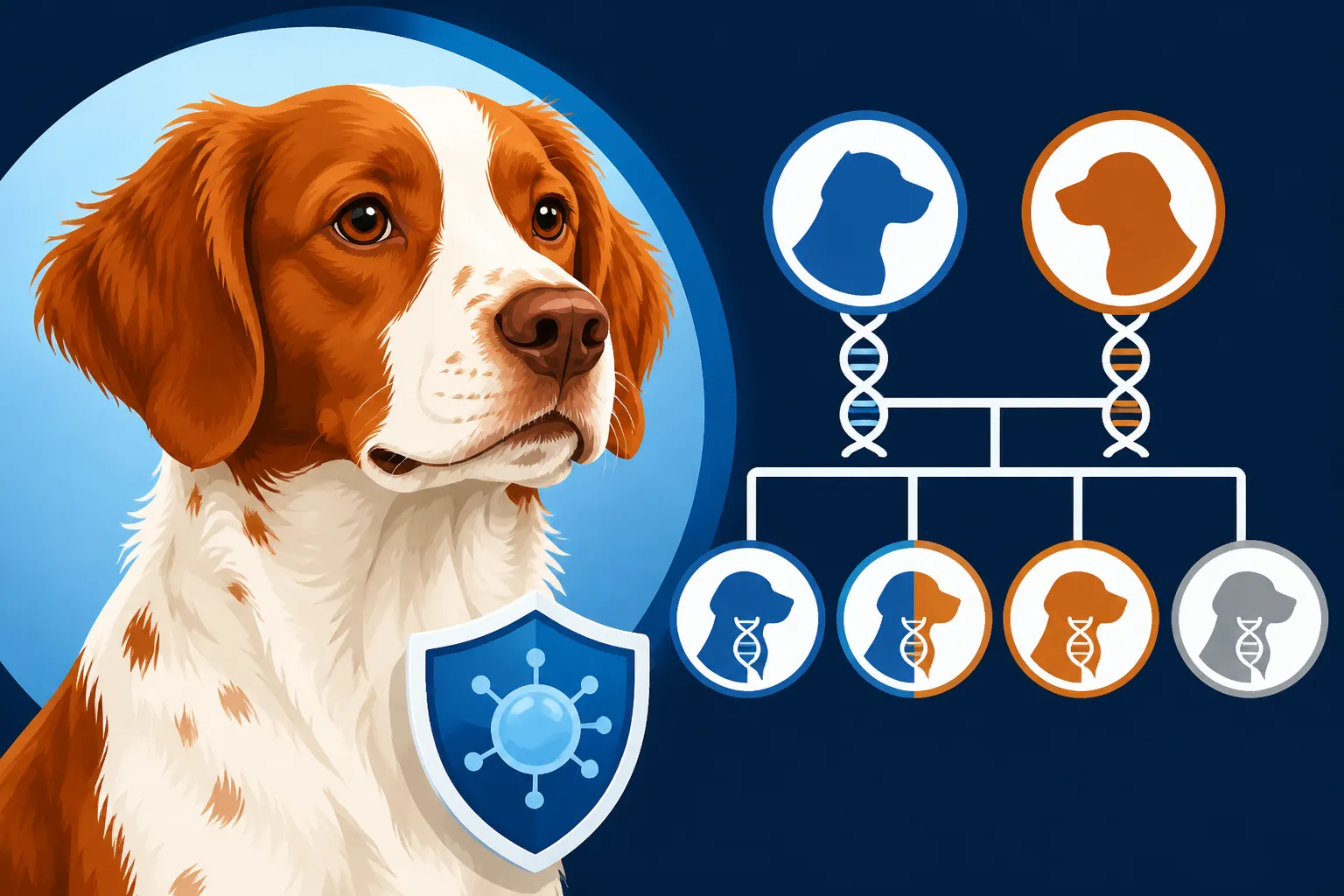
- Carrier (Nc) x Carrier (Nc): This is the mating that produces affected puppies. On average, the litter will be:
- 25% NN (clear)
- 50% Nc (carrier)
- 25% cc (affected)
- Carrier (Nc) x Affected (cc): 50% of puppies will be Nc (carrier), and 50% will be cc (affected). A high risk of affected puppies.
- Affected (cc) x Affected (cc): All puppies will be cc (affected). This breeding should absolutely never happen.
Here's a handy table to summarize these probabilities:
| Parent 1 Genetic Status | Parent 2 Genetic Status | Probability of Clear (NN) Offspring | Probability of Carrier (Nc) Offspring | Probability of Affected (cc) Offspring |
|---|---|---|---|---|
| Clear (NN) | Clear (NN) | 100% | 0% | 0% |
| Clear (NN) | Carrier (Nc) | 50% | 50% | 0% |
| Clear (NN) | Affected (cc) | 0% | 100% | 0% |
| Carrier (Nc) | Carrier (Nc) | 25% | 50% | 25% |
| Carrier (Nc) | Affected (cc) | 0% | 50% | 50% |
| Affected (cc) | Affected (cc) | 0% | 0% | 100% |
This table clearly illustrates why testing parents is so critical. A mating between two healthy-looking carrier Brittanys can unknowingly produce affected puppies, leading to significant heartache and health challenges. This is why understanding this inheritance pattern is the first step in making truly responsible breeding choices.
Testing for C3 Deficiency: Empowering Breeders and Owners
Knowing the inheritance pattern is powerful, but it's only truly useful if you can identify which Brittanys are carriers or affected. Thankfully, modern veterinary science provides reliable tools to do just that.
The Importance of DNA Screening
Given that C3 Deficiency is an autosomal recessive genetic disease, the only way to definitively know a dog's genetic status (clear, carrier, or affected) is through DNA testing. You cannot tell by looking at a dog, or even by observing its health, if it is a carrier. A carrier dog will appear perfectly healthy, just like a clear dog. This is why DNA screening is so incredibly important, especially for breeding animals. Without it, you are essentially breeding blind, relying on chance to avoid producing affected puppies.
For breeders, proactive DNA screening is an ethical imperative. It allows them to make informed decisions about mating pairs, ensuring they never accidentally pair two carriers. If a breeder tells you they don't test for C3 Deficiency because "all their dogs are healthy," they are missing the point entirely. A healthy appearance does not equal a clear genetic status. Reputable breeders understand that What a Brittany Spaniel Breeder Should Have Tested includes a comprehensive panel of genetic screenings, with C3 Deficiency being paramount for our breed. DNA tests are readily available, relatively inexpensive, and require only a simple cheek swab or blood sample, making them accessible to almost anyone. We have more details about this in our article Whether a DNA Test for Brittany C3 Deficiency Exists.
Interpreting Test Results
Once you receive your Brittany's C3 Deficiency DNA test results, you'll see one of three designations:
- "N/N" or "Clear": This is the best possible result. Your Brittany has two normal copies of the gene and is genetically clear of C3 Deficiency. They cannot develop the disease and will not pass the deficient allele to any offspring.
- "N/c" or "Carrier": Your Brittany has one normal copy and one deficient copy. They are healthy themselves but carry the gene. If bred, they will pass the deficient allele to approximately half of their puppies. This means they should only be bred to a proven "Clear" (N/N) dog to ensure no affected puppies are produced.
- "c/c" or "Affected": Your Brittany has two copies of the deficient gene. This means they are genetically affected with C3 Deficiency. These dogs will suffer from the immune system disorder and should absolutely not be bred.
Understanding these results is straightforward, but acting on them is where responsibility truly lies. For a prospective puppy buyer, always ask to see the C3 Deficiency test results for both parents. A responsible breeder will be transparent and proud to show you these certificates. If they hedge or say it's not necessary, that should be a significant red flag. Choosing a puppy from parents with clear genetic screening results for C3 Deficiency can save you and your future companion from immense heartache and veterinary bills. Many owners find peace of mind with pet insurance like Healthy Paws, knowing that unexpected health issues are covered, but preventing predictable genetic problems is always the first and best defense.
Responsible Breeding Practices and C3 Deficiency
The existence of C3 Deficiency in the Brittany breed places a significant responsibility on breeders. Their choices directly impact the health and future of individual dogs and the breed as a whole.
Ethical Considerations for Breeding Carriers
The primary goal of any responsible breeder should be to produce healthy puppies. When dealing with an autosomal recessive disease like C3 Deficiency, this means avoiding matings that can produce affected offspring. This doesn't necessarily mean that carrier dogs should be immediately removed from the breeding pool. In a breed where the carrier rate might be significant – and indeed, for C3 Deficiency in Brittanys, How Many Brittanys Carry C3 Deficiency is a figure that highlights this challenge – removing all carriers could drastically reduce genetic diversity, potentially introducing other health problems.
Therefore, the ethical approach is not to eliminate all carriers but to manage them responsibly. A carrier dog (Nc) can still be bred, but only to a clear dog (NN). In this scenario, while approximately 50% of the puppies will still be carriers, none will be affected. Any puppies born from a carrier parent should then be DNA tested themselves to determine their C3 status before they are considered for future breeding. The critical, non-negotiable rule is: never breed two carriers together. Doing so knowingly produces affected dogs, which is both unethical and irresponsible. Breeders who are committed to the health of the breed understand this distinction and prioritize the well-being of their puppies above all else. This proactive screening is part of What a Brittany Spaniel Breeder Should Have Tested before any mating takes place.
Strategies for Reducing C3 Deficiency in the Gene Pool
Beyond avoiding affected offspring in individual litters, responsible breeders have a collective responsibility to work towards reducing the overall prevalence of the C3 Deficiency gene within the Brittany gene pool. This is a long-term strategy that requires careful planning and cooperation.
One effective strategy involves judiciously selecting breeding stock. If a carrier dog possesses exceptional qualities – such as outstanding conformation, temperament, or hunting ability – that are valuable to the breed, it might be bred to a clear partner. However, any puppies retained for breeding from that litter should ideally be clear of the C3 gene themselves. Over time, as more clear dogs are identified and preferred for breeding, the frequency of the 'c' allele in the population will naturally decrease. This is how conditions like C3 Deficiency can eventually be Whether C3 Deficiency Has Been Bred Out of Brittanys over generations.
Another crucial strategy is transparency and data sharing among breeders. When breeders openly share their C3 test results, it creates a more informed community and helps identify lines that might have a higher prevalence of the gene. Organizations like the Orthopedic Foundation for Animals (OFA) often maintain public databases for genetic health clearances, allowing prospective buyers and other breeders to verify test results. Collaboration and a commitment to health testing, including the C3 DNA test, are key to safeguarding the future health of the Brittany breed. Any breeder worth their salt will enthusiastically answer Which Questions to Ask a Brittany Breeder, especially about health testing.
Living with a C3 Deficient Brittany
For families who, through unfortunate circumstances, find themselves with a C3 deficient Brittany, life becomes a dedicated effort to manage health challenges and provide the best possible quality of life. It's a journey filled with unique medical needs and constant vigilance.
Managing Health Challenges and Preventing Infections
Living with a C3 deficient Brittany means being perpetually aware of their compromised immune system. The primary goal is to minimize their exposure to pathogens and aggressively treat any infections that arise, because their body simply cannot fight effectively on its own. This means meticulous hygiene – keeping their living environment clean, regular grooming, and careful monitoring of any cuts or scrapes that could turn into serious infections. Because they cannot fight infection, Why a C3 Deficient Brittany Cannot Fight Infection, even minor issues can become critical.
Veterinary care will be a frequent and essential part of your routine. These dogs often require long courses of antibiotics for bacterial infections, and your vet might suggest preventative measures, although a C3 deficient Brittany’s response to vaccines can be unpredictable. Close communication with your veterinarian, who understands the specific challenges of C3 Deficiency, is paramount. They might recommend specific dietary supplements to support overall health or advise on environmental controls to reduce exposure risks. Vigilance for signs of infection, such as lethargy, fever, loss of appetite, coughing, or skin lesions, is critical for early intervention. For many, a good pet insurance policy, such as one from Healthy Paws, is invaluable for managing the potentially astronomical costs associated with treating a dog with chronic, severe infections.
Prognosis and Quality of Life for Affected Dogs
The prognosis for C3 deficient Brittanys is unfortunately guarded. Many affected dogs do not live long, often succumbing to kidney disease or overwhelming infections at a young age, often before they reach adulthood. The constant battle against infection takes a heavy toll on their bodies and their overall quality of life. For these dogs, The Age C3 Deficiency Shows in a Brittany is usually early, and sadly, their lifespan is often tragically short.
However, with dedicated and proactive care, some C3 deficient Brittanys can live longer, relatively comfortable lives. This requires an owner who is deeply committed to their dog's health, willing to manage ongoing medical needs, and prepared for the emotional and financial investment. The quality of life for an affected dog depends heavily on the severity of their symptoms, the effectiveness of medical management, and the support system they have at home. It's a testament to the resilience of these dogs and the love of their owners that they can still find joy and companionship despite their profound health challenges. Understanding Whether a C3 Deficient Brittany Reaches Adulthood helps owners prepare for the difficult journey ahead.
The Road Ahead: Eradicating C3 Deficiency
While living with an affected Brittany is a reality for some, the ultimate goal for the breed community is to eradicate C3 Deficiency entirely. This ambitious but achievable goal relies on ongoing research and the unwavering commitment of breeders and owners alike.
Ongoing Research and Breeder Collaboration
The initial identification of C3 Deficiency and the development of the DNA test were significant breakthroughs, largely driven by dedicated researchers and collaborative efforts within the Brittany community. This research is vital not only for understanding the genetic basis of the disease but also for potentially exploring advanced therapies or preventative measures in the future. The initial studies that identified the specific gene mutation and developed the test for Brittanys provided crucial insights into this breed-specific challenge, and you can learn more about Where the Brittany C3 Research Was Done.
Continued collaboration between breed clubs, veterinary geneticists, and individual breeders is essential. Sharing data, participating in research studies, and maintaining open communication about genetic health issues help build a comprehensive picture of the breed's genetic landscape. This collective effort allows for more informed decisions, helps track the progress of reducing the C3 allele frequency, and ensures that the focus remains on producing healthier generations of Brittanys. It’s a powerful example of how a dedicated community can work together for the greater good of their beloved dogs.
The Role of Owners in a Healthier Future
While breeders are at the forefront of genetic health management, individual Brittany owners also play a crucial role in safeguarding the breed's future. The most impactful action an owner can take is to demand health testing. When acquiring a puppy, insist on seeing documented C3 Deficiency DNA test results for both parents. Don't settle for "they look healthy" or "it's not common in my lines." A truly responsible breeder will readily provide this information. This demand from puppy buyers incentivizes breeders to test and prioritize genetic health.
Furthermore, if you own a Brittany that you plan to breed, ensure it is fully screened for C3 Deficiency, along with other recommended health clearances. Even if your dog is a carrier, understanding its genetic status allows for responsible breeding choices that prevent the creation of affected puppies. Supporting ethical breeders and advocating for genetic health awareness within the Brittany community helps to ensure that this beautiful and versatile breed remains one of The Brittany Is One of the Healthiest Sporting Breeds for generations to come. Your vigilance, coupled with the foresight of a good pet insurance plan from a company like Healthy Paws, helps ensure that both individual dogs and the breed as a whole can thrive.
Disclaimer
Please remember that this article is intended for informational purposes only and should not be considered a substitute for professional veterinary advice. Always consult with a qualified veterinarian for any health concerns or before making any decisions about your Brittany’s medical care or breeding plans.