Whether the Two Brittany Types Will Split Formally
The question of whether American and French Brittanys will become separate breeds comes up whenever buyers compare pedigrees, conformation, or hunting style. The short answer is that they have developed recognizable differences, but that does not automatically mean a formal split is coming. This guide explains how the types are recognized, what separates them, and what owners should watch for.
Are American and French Brittanys separate breeds
What official breed recognition says
In the United States, the American Kennel Club recognizes the Brittany. In France and much of the international dog world, the breed is known as the Epagneul Breton. Those names can make the dogs sound like distinct breeds, but a difference in naming or national registry does not, by itself, create a formal separation.
The Fédération Cynologique Internationale recognizes the Epagneul Breton as a breed. The AKC uses Brittany and has its own breed standard and registration rules. Each organization determines which dogs qualify under its system, and registration in one system does not necessarily settle how another organization will classify a dog.
The history of the American name helps explain some of the confusion. The AKC dropped “Spaniel” from the breed’s name in 1982, reflecting that the Brittany is a pointing dog rather than a flushing spaniel. The name change did not create a new breed. For more background, see Why the AKC Dropped Spaniel From the Brittany's Name in 1982 and Whether the Brittany Is a Spaniel at All.
Why people talk about a possible split
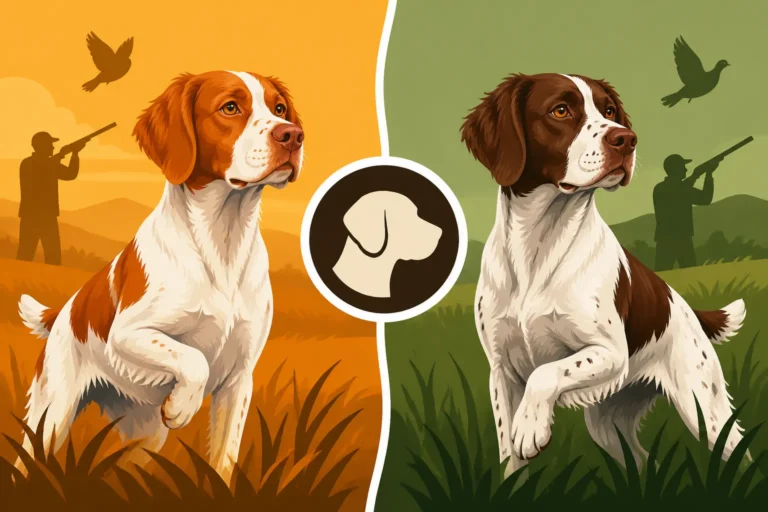
The American and French populations have been bred under different standards and preferences for generations. That can produce visible and practical differences in size, build, style, and the way individual dogs hunt. Breeders and hunters may therefore refer to an “American Brittany” and a “French Brittany” as types, even when a registry treats them within the same broader breed identity.
This distinction matters most when someone is choosing a puppy or evaluating a pedigree. A person looking for a compact dog that tends to hunt within closer walking range may be drawn to particular French lines. Someone seeking a dog for a broader-ranging style may prefer certain American field lines. Those are tendencies shaped by breeding choices, not guarantees that every dog of one type behaves alike.
A formal split would require more than owners using different labels. It would involve clear decisions by relevant breed organizations about separate recognition, standards, or registration pathways. The terms “American” and “French” are useful shorthand, but they do not prove that an official separation has occurred or that one is inevitable.
What differences are associated with each type
Appearance and breed standards
The two types may differ in overall proportions and preferred expression, but there is variation within both populations. Some French-bred dogs look noticeably compact, while some American-bred dogs are also relatively small and close-coupled. A dog’s appearance is shaped by its individual ancestry, the breeder’s goals, and the standard used in the registry where it is shown.
Coat color is another source of discussion. Standards and accepted registration practices can differ across organizations, and color alone is not enough to establish whether a dog is a separate breed or even predict how it will hunt. If color is part of your decision, confirm the rules with the specific registry and event organization rather than relying on a breeder’s informal label. The breed’s recognized shades and patterns are covered in Orange, Liver and the Colors a Brittany Comes In.
It is also easy to confuse a country-of-origin label with a complete description of a dog. “French Brittany” may refer to a dog bred in France, a dog from French lines, or a dog registered through a French-oriented organization. Ask which meaning the breeder intends and request the dog’s pedigree and registration documents.
Hunting range and working style
Hunters often describe French Brittanys as closer-working and American Brittanys as wider-ranging. These descriptions reflect tendencies some people see in particular breeding populations, not fixed rules. A dog’s range can be influenced by inherited traits, experience, training, cover, wind, terrain, and the handler’s expectations.
A Brittany working a small, brushy parcel on foot may naturally hunt differently from one running across open country. Even littermates can develop distinct patterns: one may check in frequently, while another needs more deliberate training to stay within a comfortable distance. The comparison in How a French Brittany Differs From an American One provides useful context, but it should not replace meeting dogs from the lines you are considering.
If a hunting style matters to you, ask to see adult relatives work in conditions similar to your own. Talk with the breeder about how range is developed and managed, and ask what “close” or “wide” means in practical terms. A broad label may sound reassuring, but observing the dam, sire, or close relatives gives you a more concrete picture.
| Question | What the label may suggest | What to confirm |
|---|---|---|
| Registry identity | American or French registration traditions | Which organization issued the papers and what registrations are available |
| Appearance | A population shaped by different standards and breeding preferences | The actual parents, pedigree, and applicable show standard |
| Hunting range | A tendency associated with some lines | How relatives work in terrain and conditions like yours |
| Breed status | A commonly used type description | Whether the relevant organization recognizes a separate breed or maintains one breed with different populations |
Could the two types split formally
What a formal split would involve
A genuine formal split would require action by the organizations responsible for breed recognition and registration. Depending on the organization, that could mean establishing separate standards, treating the populations as different breeds, changing registration eligibility, or creating distinct competition categories. The details would not be identical everywhere because registries operate independently.
A change in one organization would not automatically rewrite the rules of another. A registry might recognize a separate breed while another continues to register both populations under one name. That is why a breeder’s prediction that “the split is happening” should be treated as an opinion unless it is supported by an official policy announcement from the relevant organization.
Even if a formal split were proposed, it would not instantly erase shared ancestry or make every dog easy to classify. Breeding populations overlap, pedigrees can cross national boundaries, and individual dogs do not always match the type people expect from their labels. The real-world result would depend on the rules adopted and how breeders and owners respond.
What is known versus what is speculation
It is reasonable to say that American and French Brittany populations have developed identifiable differences in selection and presentation. It is also reasonable for owners to use “type” as a practical description. But claims that the dogs are already universally recognized as separate breeds, or that a formal split is certain, go beyond what those labels alone establish.
For puppy buyers, the useful question is usually not “Which type will win the argument?” It is “What do I want this dog to do, and what are these particular parents like?” Consider temperament, health information, working ability, structure, and the breeder’s goals. A dog’s country of origin cannot substitute for those details. If you are comparing pedigrees, Whether the Two Brittany Types Are Bred Together and Whether a French Brittany Is a Separate Breed can help frame the registry and breeding questions.
Keep the distinction between registry status and everyday usage clear. A hunter may say “French Brittany” to describe a close-working dog, while a registry may use a different formal classification. Both statements can make sense in context, but they answer different questions.
How to choose a Brittany without getting caught up in labels
Ask specific questions about the dog
When speaking with a breeder, ask which registry the puppy will be registered with, what the parents’ registered names are, and whether the pedigree includes dogs from both American and French lines. Ask how the parents work in the field, how far they tend to range, and how they behave in the home. These questions are more helpful than relying on a broad type label.
If you plan to hunt on foot, explain the cover and terrain you expect to encounter. A dog suited to tight woodland or small fields may not be the best match for expansive, open ground, and vice versa. Ask for examples rather than general assurances. “The sire hunts close” is less informative than hearing how he checks in, responds to handling, and works around a walking hunter.
For a household companion, also discuss daily exercise, trainability, and settling indoors. A dog from a particular line is not automatically easy to live with simply because it is described as French or American. Whether a French Brittany Suits an American Hunter and Which Brittany Type Suits a Foot Hunter Better offer related perspectives to consider.
Evaluate health, temperament, and registration paperwork
Ask for health records and the screening information relevant to the parents. Request documents rather than relying only on a verbal description, and take time to understand what each test does and does not tell you. What a Brittany Spaniel Breeder Should Have Tested and Which Health Results a Brittany Breeder Must Show are useful starting points for a broader conversation about responsible breeding.
Read the contract carefully, including any terms about registration, breeding rights, and health guarantees. If a puppy is being marketed as a rare or unusually valuable type, ask what that claim means in measurable terms. The label should not distract from ordinary due diligence: verify the pedigree, understand the registration route, and make sure the breeder can answer questions about the puppy’s family.
Finally, choose for the dog you can care for and train—not for a predicted future breed split. Whether the two populations remain under one formal breed identity or are treated differently by particular organizations, a thoughtful match depends on the individual dog, your goals, and the quality of the breeder’s information. For another perspective on the breed’s shared working heritage, see American Brittany and Epagneul Breton Went Separate Ways.
Disclaimer
This article is for general informational purposes only and does not constitute professional advice. Laws, prices and regulations vary by location and change over time. Consult a qualified professional for guidance on your specific situation.