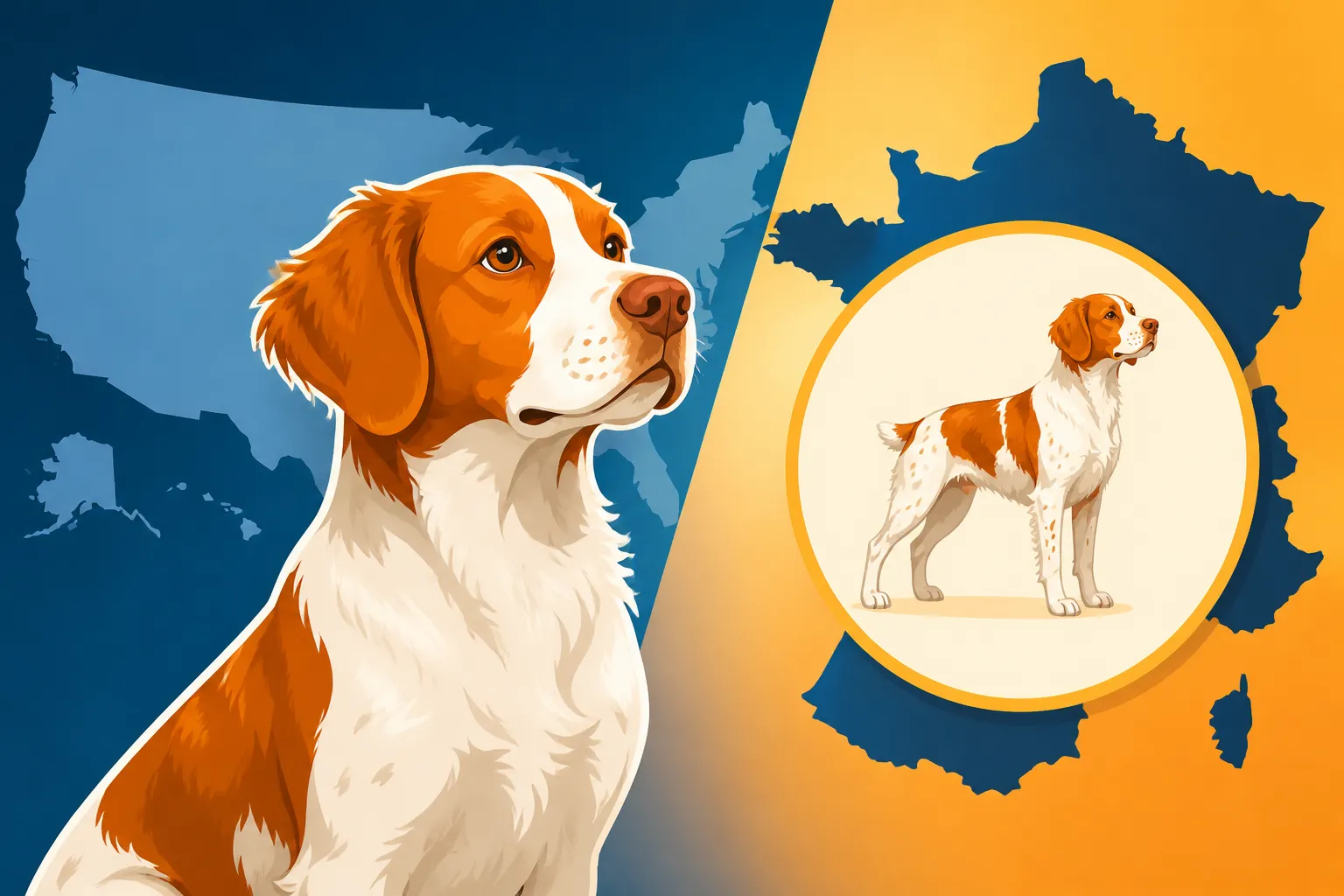
Whether a French Brittany Is Rarer in America
A French Brittany can be harder to find in the United States than an American-bred Brittany, but “rare” does not necessarily mean impossible to locate. The difference usually comes down to breeder networks, regional demand, and what someone means by “French Brittany.” This guide explains how uncommon these dogs are, where the search can get tricky, and how to assess a breeder without relying on labels alone.
Is a French Brittany rare in the United States
Uncommon is more accurate than impossible to find
French Brittanys are generally less common in the United States than Brittanys bred from established American lines. That can make the search take longer, especially if you have a particular preference for French ancestry, a certain hunting style, or a puppy from a breeder who imports or works closely with French lines.
Still, the word rare can make the situation sound more dramatic than it is. French Brittany breeders and dogs do exist in the United States, and prospective owners may find them through breed communities, referrals, and specialized breeder networks. The challenge is that those sources may be less visible than the broader American Brittany network. You might not find a nearby litter through a quick local search, and a breeder who suits you could be several states away.
Availability also varies by location. Someone searching around a region with active pointing-dog clubs or Brittany breeders may have more leads than someone in an area where upland hunting is less common. Even then, a nearby breeder may not have a litter at the right time—or may not breed the style of dog you want. A search that feels easy for one family can take patience for another.
So, if you are asking, “Can I find a French Brittany in America?” the practical answer is yes, but you may need to widen your search and spend more time evaluating options. “Less common than the American type” is usually a more useful description than “unavailable.”
The label can mean different things
Part of the confusion comes from the phrase French Brittany. In France, the breed is known as the Epagneul Breton. In the United States, people may use “French Brittany” to describe a French-origin dog, a dog bred from French lines, or a Brittany with traits they associate with French dogs. Those uses do not always mean exactly the same thing.
The Brittany’s history and development in France are part of what makes the label attractive to some buyers. But a dog’s ancestry, registration, build, and hunting style are separate details. A puppy described as French may have French ancestry without having been born in France. A dog imported from France may have a different history from an American-bred dog whose pedigree includes French dogs.
It also helps to understand that the French and American types are not always treated as separate breeds in the way casual conversation suggests. If that distinction is central to your search, read Whether a French Brittany Is a Separate Breed and How a French Brittany Differs From an American One. Those details help you ask a breeder what “French” means in their program rather than assuming the label tells the whole story.
Rarity depends on what you are looking for
A French-origin Brittany may be easier to find if you are flexible about age, location, coat markings, sex, or whether you want a puppy versus a started dog. A narrow wish list makes any search harder. For example, a buyer who wants a puppy from particular French lines, available soon, within driving distance, and from parents with a specific field record may have far fewer realistic choices.
The same is true if you are looking for a specific working style. Some people are drawn to French Brittanys because they expect a closer-working dog suited to hunting on foot. But “French” does not guarantee a particular range or temperament. Individual breeding choices, training, experience, and the conditions a dog works in all matter. If hunting style is your main reason for searching, compare the dogs and breeding goals directly; Which Brittany Type Suits a Foot Hunter Better is a useful place to start.
| What you are looking for | How it can affect the search |
|---|---|
| French ancestry or French birth | Ask for the pedigree and the dog’s place of birth rather than relying on a label |
| A closer-working hunting style | Discuss the parents’ actual range and working habits |
| A puppy from a specific litter | Timing and breeder plans may matter more than the dog’s general availability |
| A dog near home | You may need to expand your geographic search |
| A dog eligible for a particular event or registry | Confirm the paperwork and eligibility for that specific dog |
Why French Brittanys can be harder to locate
Smaller or less visible breeder networks
A breed can be uncommon in a region even when it is well established elsewhere. French Brittanys may be represented by a smaller set of breeders or by breeders whose programs are not as easy to discover through general puppy listings. Some prospective owners find leads through referrals from hunters, trainers, or breed clubs rather than through a broad local marketplace.
That can create a frustrating first impression: you search for a French Brittany nearby, see very few results, and wonder whether the dog is genuinely rare or whether you are simply looking in the wrong places. Often, the answer is some of both. A specialized group may know of breeders that do not advertise widely, while a general search may bring up outdated listings or sellers who use “French” loosely.
It is reasonable to ask for referrals, but a referral should be a starting point—not a substitute for evaluating the breeder. Ask what the breeder means by French, what the dogs are bred to do, and whether you can learn about the parents’ health, temperament, and working ability. For help assessing the search itself, see Whether a French Brittany Breeder Is Easy to Find.
Geography and timing shape availability
If the right breeder is not close by, distance can become part of the decision. You may need to travel, coordinate a visit, or wait for a future litter. That does not automatically make the dog a poor choice, but it does mean you should plan carefully. Before committing, discuss how the breeder handles visits, meeting the dam when possible, puppy selection, pickup, and transportation.
Timing matters too. A breeder may have a small number of planned litters, or may not have a puppy available when you begin looking. Avoid letting a long search push you into making a rushed decision. A seller who pressures you to send money before answering basic questions is not a safer option just because the dog is described as rare.
If you eventually bring a dog home from a distance, separate the travel plan from routine supply shopping. A national retailer such as Chewy may be one option for ordinary items like food, bowls, or a crate, while you confirm what is appropriate with the breeder and your veterinarian. The retailer cannot answer questions about a puppy’s upbringing or health, but it may help you organize basic supplies when local stores do not carry the particular items you need.
Registration is a separate question from rarity
A French Brittany’s registration status should be checked for the individual dog. The breed’s names, national organizations, and registry systems can be confusing, especially when an imported dog or French paperwork is involved. Do not assume that “French Brittany” automatically tells you which organization recognizes the dog or which events it can enter.
Ask the breeder what registration documents the puppy will have, which organization issued them, and what those documents allow you to do. If you plan to compete, hunt-test, or show the dog, describe your plans clearly and verify eligibility with the relevant organization before making a decision. For background, read Whether a French Brittany Registers With the AKC and What CEB US Is to Brittany Owners.
This is a good example of why “rare” and “complicated” are not the same thing. A dog may be less common in a particular area but have straightforward documentation. Another dog may be easy to find yet come with unclear paperwork. Treat the records as their own part of the evaluation.
How to search for a French Brittany responsibly
Start with the qualities you actually need
Before contacting breeders, write down what matters most to you. Are you looking for a hunting partner, a family companion, a dog to compete with, or some combination? Do you need a dog that works at a particular range, or are you mainly interested in French ancestry? Being specific helps you avoid choosing by label alone.
A useful conversation might sound like this: “I hunt on foot in relatively small cover and want a dog that checks in regularly. What do the sire and dam tend to do in the field?” That question invites a description of real dogs and real behavior. It is more useful than asking only whether the puppy is “close-working,” since different people may use that phrase differently.
If you are a first-time Brittany owner, be honest about your experience and daily routine. A breeder should be willing to discuss energy, training, exercise, and the demands of the dog they produce. If your goal is primarily a walking-hunting companion, compare what you want with the dog in front of you. Whether a French Brittany Suits an American Hunter can help frame that decision.
Ask for evidence, not just a label
A careful breeder should be able to explain the dogs’ background and answer ordinary questions without treating them as an inconvenience. Ask to see available pedigree and health information, learn about the parents’ temperament, and find out how the dogs are raised and socialized. If the breeder describes a dog as a proven hunter, ask what that means in practical terms: where it hunts, what kind of birds it has encountered, and how it behaves in the field.
You can also ask whether you may meet the dam, when that is practical, and what support the breeder provides after the puppy goes home. A breeder may not be able to guarantee every future trait, but should be able to describe the goals of the breeding and the limits of what can be predicted. For a detailed checklist, see Which Questions to Ask a Brittany Breeder.
Be cautious about claims that rely on prestige words—“imported,” “rare,” “exclusive,” or “champion”—without verifiable context. Those words may describe something meaningful, but they do not replace health records, transparent communication, or a good fit between the dog and your household.
Plan for the ordinary costs and logistics too
The puppy’s purchase or adoption decision is only one part of preparing for a dog. Think about travel, training, veterinary care, food, equipment, and the time needed to help a young Brittany settle into your home. A long-distance search can make those practical details feel secondary, especially after months of waiting, but they are still part of choosing responsibly.
For everyday supplies, a retailer such as Chewy may help you compare routine items and arrange delivery where available. Check product suitability, delivery coverage, and current availability rather than assuming a particular food or piece of equipment will be right for your dog. A breeder may send the puppy home eating a specific food, and your veterinarian can help you decide whether and how to make any later change.
If you are buying from a breeder, make a list before you travel or arrange pickup: the puppy’s records, feeding instructions, contract, identification details, and contact information for follow-up. Chewy can be useful for replenishing household basics once you know what the puppy needs, but it is not a substitute for the breeder’s written instructions or veterinary guidance. For owners comparing the American and French types, the broader discussion in How a French Brittany Differs From an American One can help keep the decision focused on the dog’s actual traits and your plans.
What “rare” should mean for a prospective owner
A longer search can be worthwhile, but it should not lower your standards
Finding fewer breeders can mean more waiting and more travel. It can also mean that you need to be especially careful about how a seller uses the French Brittany label. Scarcity should never be a reason to skip basic questions, accept vague paperwork, or pay a deposit before you understand the breeder’s process.
At the same time, a longer search does not mean you should give up if the French type is genuinely what you want. Use the extra time to compare breeding goals, learn about the dogs, and decide whether your lifestyle matches the puppy’s likely needs. A thoughtful wait is often better than choosing the first available dog because the search has become tiring.
Keep breed rarity separate from personal fit
The best choice is not necessarily the rarest or most geographically distant dog. It is the dog whose temperament, activity level, breeding background, and likely working style suit your life. A French Brittany may be an excellent match for one household and a poor match for another; the same is true of an American-bred Brittany.
If you are drawn to a French Brittany because you want a closer-working bird dog, ask about the individual parents and how the breeder selects for range. If you are drawn to French ancestry, confirm the pedigree and origin. If you are drawn to the look or history, be clear with yourself about whether those preferences matter as much as the dog’s needs and behavior.
In the end, French Brittanys are less common than American Brittanys in many parts of the United States, but they are not impossible to find. The most useful approach is to search broadly, verify what the label means, and judge each breeder and dog on evidence rather than rarity alone.
Disclaimer
This article is for general informational purposes only and does not constitute professional advice. Laws, prices and regulations vary by location and change over time. Consult a qualified professional for guidance on your specific situation.