When the American Brittany Club Was Founded
If you are trying to pin down when the American Brittany Club began, the answer is 1942. That date can get blurred with the Brittany’s earlier arrival in the United States and its recognition by the American Kennel Club. This guide separates those milestones and explains why a breed club mattered to hunters, breeders, and Brittany owners.
The American Brittany Club Was Founded in 1942
The American Brittany Club, often shortened to ABC, was founded in 1942. It became a national organization for people devoted to the Brittany in the United States, bringing together owners and breeders who wanted to support the breed and its future.
That was not the same as the breed’s first arrival in America, nor was it the date the American Kennel Club recognized the dog. Those events happened earlier. The club’s founding belongs to a later stage: the point when American Brittany enthusiasts had an organized body focused on the breed.
It is easy to mix up these dates because they all describe the Brittany becoming established in the United States. But each marks something different: dogs arrived, a kennel organization recognized the breed, and then a breed club formed to represent it.
What the founding date tells us
A breed club gives people a shared place to work on the practical and cultural questions that come with maintaining a breed. For the American Brittany Club, that meant supporting the Brittany as a sporting dog and providing a structure through which people could discuss breeding, field work, and the breed’s identity.
A club does not create a breed by itself, and 1942 did not mark the beginning of the Brittany’s history. Instead, it marks an important step in organizing American interest in the breed. The distinction matters if you encounter a timeline that gives an earlier date for the Brittany in America or for its AKC recognition.
Imagine a new owner reading that Brittanys were recognized by the AKC before the American Brittany Club existed. That is not a contradiction. Recognition and club formation are separate processes, carried out by different organizations for different reasons.
The club and the AKC are not the same organization
The American Brittany Club is a breed club. The American Kennel Club is a registry and event organization. A national breed club can represent the interests of a breed community, while AKC recognition places a breed within the AKC system and makes it eligible for associated activities under that system.
The difference is similar to the difference between a local historical society and a city government: both may care about the same place, but they do different jobs. A breed club can focus on the breed’s standards, health priorities, events, and community, while the AKC handles registration and its own rules and programs.
This distinction also helps make sense of other milestones in the Brittany’s history. The AKC recognized the Brittany before the club was founded; the related timeline is covered in When the AKC Recognized the Brittany. The name later changed as well, which is a separate event explained in Why the AKC Dropped Spaniel From the Brittany's Name in 1982.
The Club Came After the Brittany Reached America
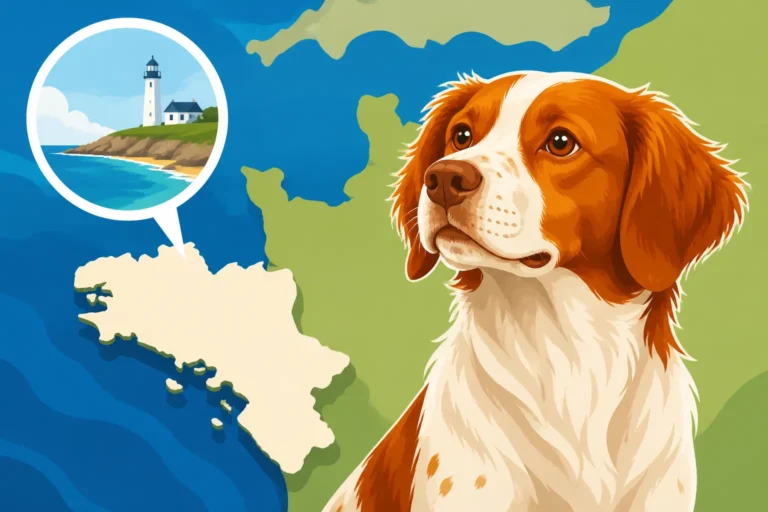
The Brittany’s American story began before 1942. The breed came from France, specifically the historic region of Brittany, and crossed the Atlantic before a national American club existed. The date of the club’s founding therefore should not be used as the date the first Brittany arrived in the country.
People often use “came to America” loosely, but it can refer to several things: the arrival of an individual dog, the start of a small breeding population, or the point at which the breed became more broadly known. Those are not necessarily one event or one year.
For a fuller account of the breed’s origins, see The Brittany Comes From the Northwest Corner of France and When the Brittany Reached America. The important point here is that the club formed after the breed had already begun building a presence in the United States.
Arrival, recognition, and club formation are different milestones
A useful way to keep the dates straight is to think of them as a sequence rather than as competing versions of the same story.
| Milestone | What it means |
|---|---|
| Brittany dogs reach America | Individual dogs and the breed begin establishing a presence in the country |
| AKC recognition | The breed enters the American Kennel Club’s recognition and registry framework |
| American Brittany Club founded in 1942 | American enthusiasts create a national breed organization |
The exact order matters because it explains why the club could not have been responsible for the breed’s first arrival or initial recognition. By 1942, American Brittany owners had reason to organize around a breed that was already known and recognized.
It also helps when you are reading old pedigrees or breed histories. A record might refer to AKC recognition, a club event, or the arrival of early dogs. Unless the record specifies which milestone it means, “the Brittany was established in America” can be too broad to give a precise date.
Why an organized breed club mattered
When a breed is still developing in a country, owners can be scattered. One person may be focused on hunting ability, another on conformation, and another on finding suitable dogs to breed. A club creates a way for those interests to meet and gives people a shared framework for discussing what they want the breed to remain.
For the Brittany, field ability has long been part of the conversation. The dog is a pointing breed, not simply a companion animal with sporting ancestry. Owners who hunt may value range, stamina, bird sense, and trainability; breeders and exhibitors may also consider structure and adherence to a breed standard. A club can help keep these concerns in view together.
That does not mean all members agree on every decision. Breed communities often contain different priorities and opinions. The value of an organization is not that it removes disagreement, but that it gives people a place to work through shared questions and maintain interest in the breed over time.
What the American Brittany Club Has Represented
The American Brittany Club’s founding is best understood as part of the effort to sustain the Brittany in the United States as a recognizable breed with a working identity. That identity has never been only about appearance. The Brittany’s place in American sporting life depends in large part on the qualities that make it useful in the field.
A breed club can support activities that bring people together around those qualities, while also helping owners understand the breed’s standards and traditions. Its work sits within a broader community that includes individual breeders, hunters, handlers, judges, and pet owners.
Keeping field ability part of the breed’s story
The Brittany is known as a versatile pointing dog, and its history is closely tied to hunting. That history helps explain why a breed club would be important even after formal kennel recognition. Registration alone does not ensure that people continue to value the traits for which a breed was developed.
For example, a family might choose a Brittany because it is a manageable size and affectionate at home, then discover that the dog still needs meaningful exercise and mental work. A hunter may be drawn to its bird-finding instinct, while an exhibitor may focus on how closely a dog conforms to the standard. Those everyday differences are part of the ongoing work of maintaining a breed with both home and field roles.
The Brittany’s working reputation is a subject in its own right; Why the Brittany Kept Its Working Ability explores that connection. The American Brittany Club’s history belongs in that larger story because organized breed communities can help keep working qualities visible rather than allowing them to become a footnote.
American and French Brittany communities
The words “American Brittany” and “French Brittany” can refer to distinctions in type, history, and breeding direction. They do not mean the American Brittany Club created a wholly separate breed in 1942. The club was an American organization for people interested in Brittanys, while the breed’s roots remained French.
Over time, different breeding and sporting traditions have shaped the way people describe Brittanys in the United States and France. Owners comparing the two may notice differences in size, style, or typical working range, but individual dogs vary, and labels alone do not tell the whole story.
The history of those distinctions is covered in American Brittany and Epagneul Breton Went Separate Ways. For a related look at how breed organizations developed across the Atlantic, see When the French Brittany Club Was Founded. These comparisons are useful, but they should not be confused with the American Brittany Club’s founding date.
Why 1942 Still Matters to Brittany Owners
For today’s owner, 1942 is more than a trivia answer. It points to the longstanding role of organized breed communities in sharing knowledge, preserving traditions, and supporting activities that bring owners together. Even if you never plan to enter a show or field event, understanding that history can make the breed’s present-day identity easier to understand.
A Brittany’s needs do not come from its club membership, of course. They come from the dog in front of you: its health, temperament, exercise level, training, and family life. Still, breed history can offer helpful context when you are choosing a dog or learning why certain traits appear so consistently in conversations about Brittanys.
What a prospective owner can take from the history
If you are looking for a Brittany puppy, the founding date is not a substitute for evaluating a particular breeder or dog. It is one piece of context. Ask about health testing, temperament, the parents’ work or activity, and what kind of home the breeder believes will suit the puppy. History tells you where the breed community came from; those questions help you decide whether an individual dog fits your life.
If you are a hunter, club history may encourage you to look beyond the puppy’s appearance. Ask what the parents do in the field, how they handle training, and whether their style suits the way you hunt. A dog from a line selected for a particular kind of work may not automatically match every hunter’s expectations.
If you are mainly seeking a companion, it is still worth being honest about the breed’s sporting heritage. A Brittany may settle beautifully indoors after activity, but that does not mean its energy and instincts disappear in a suburban home. The breed’s history can help explain why enrichment, training, and regular movement matter.
A simple way to remember the timeline
The easiest way to keep the story straight is to remember three separate ideas: Brittanys reached America before the American Brittany Club existed; the AKC recognized the breed before the club was founded; and the American Brittany Club began in 1942 as a national organization devoted to the breed.
That sequence avoids a common mistake: treating the club’s founding as the date the Brittany arrived or became recognized. It also leaves room for the larger history, including the breed’s French origins, its working role, and the later changes in how the AKC named it.
The club’s founding is one milestone in a much longer story. It marks the moment American Brittany enthusiasts organized around a breed that was already taking shape in the country, and it helps explain how the Brittany’s sporting identity became part of an enduring community.
Disclaimer
This article is for general informational purposes only and does not constitute professional advice. Laws, prices and regulations vary by location and change over time. Consult a qualified professional for guidance on your specific situation.