Whether Tapestries Record the Brittany
It's such a wonderful thought, isn't it? To imagine our beloved Brittanys, with their eager eyes and tireless energy, scampering through the scenes of ancient tapestries, a living link to a bygone era. Many of us, myself included, have spent countless hours gazing at old paintings or pouring over historical texts, desperately hoping to spot a familiar orange and white flash that confirms our breed's long and storied past. The truth, however, is often a bit more nuanced and, frankly, a little frustrating when it comes to pinpointing specific dog breeds in art as old as tapestries. This guide will delve into why it's so challenging to definitively say "yes, that's a Brittany!" in medieval and Renaissance tapestries, exploring what we can infer and how to appreciate our breed's rich heritage through other historical lenses.
The Allure of Ancient Art and Our Canine Companions
There's a deep, almost primal desire within us dog lovers to trace the lineage of our furry family members back through time. We want to know where they came from, who hunted with them, who loved them, and what their ancestors looked like centuries ago. When we look at magnificent tapestries, often depicting hunting scenes, pastoral life, or noble pursuits, it feels like peering through a window into the past. We see horses, falcons, and dogs, and naturally, our minds leap to the breeds we know and adore today.
Why We Look to History for Our Breeds
This fascination isn't just a casual curiosity; it's a way to deepen our connection with our dogs. Knowing that a dog resembling a Brittany might have trotted beside a medieval hunter or warmed the feet of a Renaissance lady gives our modern companions an extra layer of mystique and gravitas. It speaks to the enduring partnership between humans and dogs, a bond that transcends time and societal changes. For a breed as old and rooted in utility as the Brittany, it feels especially important to find these historical anchors. We often wonder if the same traits we cherish today—their intense bird drive, their affectionate nature, their compact size—were present in those distant relatives, giving us a sense of continuity.
The Challenges of Identifying Breeds in Old Art
Here's where the dream often bumps into a wall of historical reality. The concept of "breed" as we understand it today—with strict genetic lines, written standards, and kennel club registrations—is a relatively modern invention. For most of history, dogs were categorized by their function: "hound," "cur," "mastiff," "terrier," "spaniel-type dog." An artist in the 15th century wasn't necessarily trying to capture the exact anatomical nuances of a specific regional type; they were often depicting a type of hunting dog, a companion, or a guard dog. Their focus was on the overall scene, the narrative, or the symbolic meaning, not creating a precise breed portrait for future generations of dog fanciers. Moreover, artistic styles varied wildly, and realism wasn't always the primary goal. A dog might be elongated, stylized, or given certain features to fit the aesthetic of the piece, making definitive identification incredibly challenging, if not impossible. It's like trying to pick out a specific sub-species of wild bird in a highly stylized medieval illumination – you might see a "bird," but not necessarily a "robin."
Unraveling the Threads: The Brittany and Tapestries
So, given these challenges, where does that leave our beloved Brittany? Can we, with any confidence, point to a dog in a tapestry and declare it an ancestor? The short answer is usually "no" when it comes to definitive identification, but there are important contexts to understand.
What We Know About the Brittany's Origins
The Brittany, or Epagneul Breton as it's known in its homeland, has a rich, albeit somewhat fuzzy, origin story. We generally understand that it developed in the Brittany region of France, a northwest corner known for its rugged terrain and abundant game, likely emerging from a blend of local 'spaniel-type' hunting dogs and possibly some English setters or pointers left behind by visiting sportsmen. The breed as we recognize it today began to solidify in the mid-19th century, with the first written standard appearing around 1907. Before that, it was a regional landrace, a dog bred for its working ability rather than a consistent appearance. You can learn more about What the Peasants of Brittany Used the Dog For and When the First Brittany Was Recorded to get a better sense of their documented history.
Depictions of "Spaniel-Type" Dogs
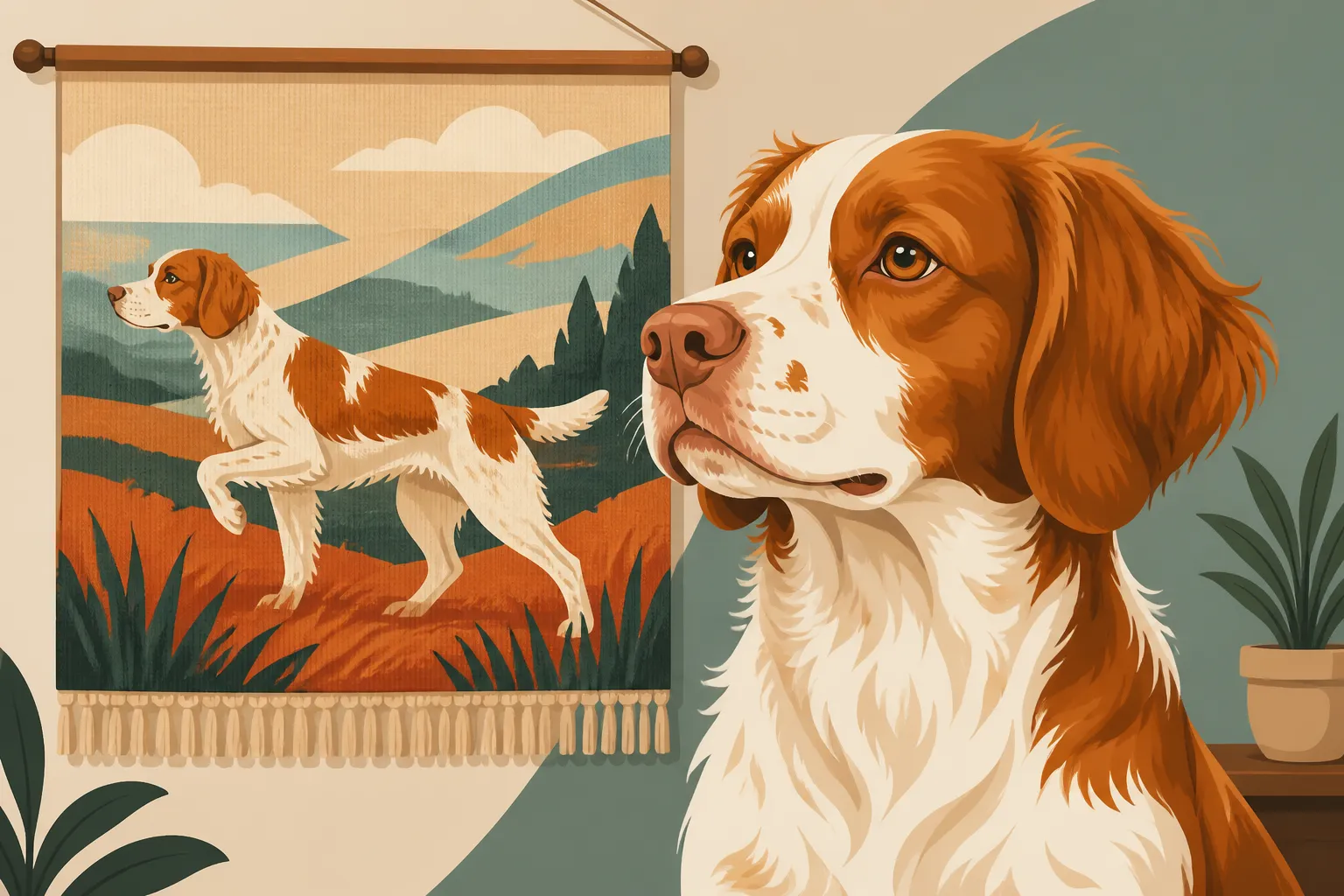
When you look at tapestries from, say, the 14th to 17th centuries, particularly those depicting hunting scenes, you will undoubtedly see dogs that could be broadly described as "spaniel-type." These dogs often have dropped ears, medium build, and perhaps some feathering. They are depicted working birds, retrieving, or accompanying hunters. These dogs represent the general ancestors of many modern pointing and flushing breeds. Could some of them be early prototypes of the Brittany? Absolutely, in the sense that they share a common ancestral pool of European bird dogs. The region of Brittany itself has a long history of hunting with such dogs. However, to say "that specific dog in the tapestry is a Brittany" would be an assumption. Many regions had their own variations of these versatile hunting dogs, and distinguishing them without clear identifiers like a modern breed standard is simply not feasible.
Specific Examples to Consider (or lack thereof)
Unlike some other breeds that have specific, well-documented appearances in paintings from the 17th or 18th centuries, there isn't a universally recognized medieval or Renaissance tapestry that definitively features a dog identifiable as a Brittany. For instance, you might encounter references to a Which Seventeenth Century Painting Shows a Brittany Type Dog, suggesting later artistic representations exist, but tapestries are an earlier and often more generalized art form. The closest you might get is a dog that fits the general description of a medium-sized, short-tailed, biddable bird dog from France.
Consider this: the artists creating these tapestries were often depicting scenes of nobility, mythical tales, or grand historical events. Their canine subjects served primarily as functional elements within these narratives, or as status symbols. The idea of meticulously rendering a specific "breed" wasn't part of their artistic lexicon for working dogs in the way it might be for a noble's prized greyhound or a lapdog.
| Historical Evidence Type | Brittany Recognition in Era | Description | Specificity |
|---|---|---|---|
| Medieval Tapestries | General "Spaniel-Type" | Dogs with dropped ears, often retrieving or pointing in hunting scenes. | Low |
| Early Paintings (pre-19th c.) | Regional "Brittany Dogs" | More detailed depictions of dogs from the Brittany region, showing traits. | Medium |
| 19th Century Writings | Emerging Breed Standard | Descriptions of local hunting dogs, leading to formal breed recognition. | High |
| Modern Photography | Established Breed | Clear, undeniable representations of the Brittany as we know it. | Very High |
This table illustrates the progression from generalized depictions to increasingly specific and identifiable representations as the concept of distinct dog breeds evolved.
Distinguishing Fact from Speculation in Canine History
It's tempting to project our modern understanding of dog breeds onto historical artworks. But doing so can lead us down a path of romanticized inaccuracies rather than genuine historical insight. A diligent look at canine history requires a critical eye and an understanding of how dogs and their roles have evolved alongside human society.
The Evolution of Breed Standards
The formal establishment of dog breeds, complete with written standards, pedigrees, and kennel club registrations, largely took off in the 19th century. This was a period of increasing leisure time, scientific interest, and a desire for specific traits in companion and working animals. Before this, dogs were far more fluid in their appearance and type. A "Brittany dog" might simply have been any good bird dog from Brittany, with variations in size, color, and coat within that regional population. The process of culling and selective breeding to achieve a uniform appearance and consistent temperament—what we now call a "breed"—was still centuries away from the medieval tapestry weavers. The American Kennel Club only recognized the Brittany in 1934, and the "Spaniel" was dropped from its name much later, a significant moment in the breed's identity (you can read more about When the AKC Dropped Spaniel From the Brittany's Name in 1982).
The Importance of Context in Historical Interpretations
When we view old tapestries, it's crucial to consider the context in which they were created. What was the purpose of the tapestry? Who commissioned it? What were the prevailing artistic conventions? Was the artist intimately familiar with specific dog types, or were they simply filling the scene with generic representations? Without contemporary descriptions that explicitly mention dogs from the Brittany region having these specific features, any identification is purely speculative. It's like looking at an ancient carving of a wild cat and trying to determine if it's specifically a bobcat, a lynx, or simply a generic "wild cat." The information isn't there, and the artist wasn't trying to provide it.
Broader Historical Evidence for the Brittany's Presence
While tapestries might not give us the definitive "aha!" moment for the Brittany, other forms of historical evidence offer clearer glimpses into the breed's past. For example, early paintings from the 17th and 18th centuries, particularly those commissioned by landowners or hunters in the Brittany region, sometimes show dogs that bear a striking resemblance to the modern Brittany. These paintings, often more focused on depicting specific animals, offer stronger visual clues. Beyond art, written records of hunting practices, local folklore, and even early dog show records (though much later) provide a more concrete timeline for the breed's development. Studying How Old the Brittany Breed Is and What Epagneul Breton Means helps to cement this understanding. These sources, rather than the broad strokes of tapestries, are where we find the stronger threads of the Brittany's story.
What This Means for Brittany Enthusiasts Today
So, does the lack of clear Brittany depictions in tapestries diminish the breed's history or our appreciation for it? Not at all! In fact, understanding why it's difficult allows for a deeper, more accurate appreciation of their legacy.
Appreciating the Brittany's Legacy
The Brittany doesn't need a definitive appearance in a medieval tapestry to have a rich and noble history. Its true legacy lies in its unbroken line of working ability, its adaptability, and its enduring partnership with hunters and families in its native region. The fact that the dog type persisted, evolving and being refined over centuries, speaks volumes about its utility and charm. We know the breed was developed for a specific purpose: to be an excellent bird dog that could work tirelessly in the field. This functional lineage is far more significant than any fleeting artistic representation. The documented history of the Brittany is rich with tales of dedicated hunters and remarkable dogs, even if the visual proof in very early art remains elusive. For generations, Brittany owners have relied on reputable sources for their dog's needs, whether it's understanding historical context or finding the best food and supplies at places like Chewy.
Connecting with the Past Through Other Means
Instead of searching for our Brittany in every old tapestry, we can connect with their past in more tangible ways. We can appreciate the stories of the French peasants and hunters who first cultivated these dogs. We can look at later paintings and photographs where the Brittany's characteristics become undeniable. We can engage with the breed's modern preservation efforts and acknowledge its place in today's sporting world. Understanding their historical role in hunting, as detailed in What a Brittany Was Bred to Hunt, gives us a far more authentic connection to their past than a speculative glance at a tapestry. Furthermore, ensuring our modern Brittanys are healthy and well-cared for, drawing on the vast resources available today, from veterinary science to quality pet products found at retailers like Chewy, is another way to honor the breed's enduring legacy of companionship and utility. Our connection to these wonderful dogs is built on more than just ancient pictures; it's built on shared history, purpose, and affection.
Disclaimer
This article is for general informational purposes only and does not constitute professional advice. Laws, prices and regulations vary by location and change over time. Consult a qualified professional for guidance on your specific situation.