Signs a Brittany Is Overheating in the Field
There's nothing quite like watching your Brittany spaniel joyfully quartering a field, nose to the ground, but that sheer exuberance can sometimes be their undoing, especially when temperatures climb. Overheating in the field is a real, terrifying concern for any bird dog owner, and recognizing the subtle signs early can literally be the difference between life and death. This guide will walk you through exactly what to watch for.
Why Brittanys Are Prone to Overheating in the Field
It's a cruel irony that the very traits we love in our Brittanys—their boundless energy, unwavering drive, and dense, protective coats—are precisely what can put them at risk for heatstroke. They are dogs built for action, for covering ground tirelessly, and their enthusiasm can sometimes override their instinct for self-preservation, particularly when they're locked onto a scent. As responsible owners and hunting partners, understanding this inherent vulnerability is the first step in protecting them.
High Energy and Drive
Brittanys, by their very nature, are relentless workers. They possess an incredible prey drive and an engine that seems to run on pure joy and a desire to please. When they're out in the field, whether it's an early season hunt or a training session, they are fully immersed in their task. This intense focus means they often push themselves past their limits, ignoring the subtle cues their bodies might be sending them about rising internal temperatures. They aren't going to stop just because they're hot; they're going to keep going as long as there's a bird to find or a command to follow.
This high drive can be a double-edged sword. While it makes them phenomenal hunting companions, it also makes them incredibly susceptible to overexertion, especially in challenging conditions. A Brittany can quite literally run itself into the ground if not carefully managed. It's up to us to be the sensible ones, to monitor their activity and the environment, and to call a halt before they hit a critical point. Their desire to work can mask early signs of fatigue and heat stress, requiring a vigilant eye from their human handler.
Thick Double Coat and Insulating Feathering
While not as heavily coated as some northern breeds, the Brittany's dense double coat provides excellent insulation against cold and offers some protection from thorny cover. However, this same insulating quality can trap heat against their bodies, making it harder for them to cool down effectively, especially in humid conditions where evaporative cooling (panting) is less efficient. Imagine wearing a heavy wool sweater on a warm day—that's somewhat what your Brittany is dealing with.
Their distinctive feathering, particularly on their legs, belly, and ears, while beautiful, can also collect burrs and other debris that further reduce airflow to the skin, compounding the problem. This dense hair acts like a blanket, holding in the heat they generate from their strenuous activity. It's crucial to consider this coat when assessing the risk of overheating, particularly when thinking about What Temperature Is Too Warm to Run a Brittany. Regular grooming and ensuring their coat is free of mats can help a little, but ultimately, the coat is a factor we cannot change, only manage by adjusting their work schedule.
Environmental Factors
Beyond the dog's internal drive and physical characteristics, environmental conditions play a massive role in heat stress. It's not just about the ambient temperature; humidity levels can be an even bigger culprit. When the air is saturated with moisture, the sweat on a dog's tongue and respiratory tract can't evaporate as efficiently, severely hindering their primary cooling mechanism: panting. A seemingly mild 70-degree day with high humidity can be far more dangerous than a dry 80-degree day.
Direct sunlight also dramatically increases body temperature, especially for dogs working in open fields without shade. The intensity and duration of the work itself, coupled with the availability of water, are critical. Are you doing short, intense bursts, or long, steady retrieves? Is fresh, cool water always at hand? Even the ground temperature can contribute; running on hot pavement or baking dry earth can transfer heat to their pads and bodies. All these factors combined create a mosaic of risk that requires constant assessment throughout a hunt or training session.
Early Warning Signs of Overheating You Can't Miss
Catching the signs of overheating early is paramount. Your Brittany might not communicate their distress in words, but their body language and changes in behavior will speak volumes if you know what to look for. Ignoring these subtle shifts can quickly escalate a manageable situation into a life-threatening emergency. Always err on the side of caution.
Changes in Breathing and Panting
A Brittany's normal panting after a strenuous run is usually deep, rhythmic, and purposeful, designed to move air efficiently over the moist surfaces of the mouth and tongue to facilitate evaporative cooling. They might have their mouth open wide, tongue slightly extended, but it shouldn't look labored or distressed. However, as they start to overheat, this changes dramatically.
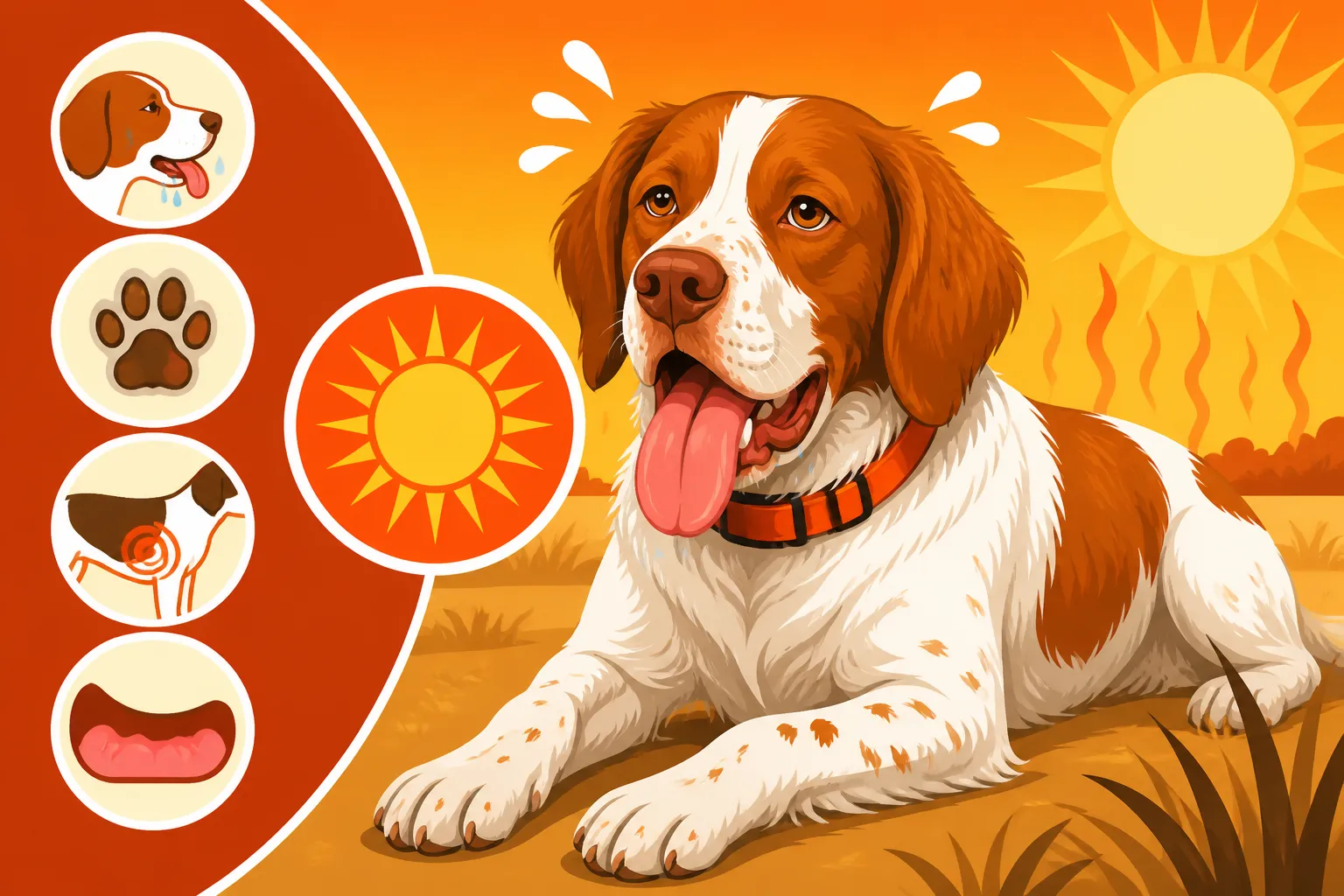
You'll notice their panting becomes more rapid and shallow, almost frantic, often accompanied by a distinct change in sound, perhaps a harsher, raspy noise. It can progress to a point where it looks like they are struggling to breathe, with their chest heaving excessively and their nostrils flaring. At this stage, their body is working overtime, desperately trying to shed heat, but doing so inefficiently. This hyperventilation can lead to further dehydration and electrolyte imbalance, worsening their condition. This is a critical indicator that your dog needs immediate intervention.
Altered Demeanor and Performance
One of the most telling early signs is a change in your Brittany's typical exuberant demeanor. The dog that was just moments ago joyfully quartering and bursting with energy might suddenly seem less interested, or even lethargic. They might start slowing down, lagging behind, or ignoring commands they would normally eagerly obey. Their focus might waver, and their usually keen scenting ability could diminish as their body struggles to cope with the rising temperature.
They might also seek out shade more deliberately, or even lie down in unusual spots, attempting to get off the hot ground or out of the direct sun. A dog that is usually a tenacious retriever might drop birds prematurely or show reluctance to engage. These are not signs of disobedience but rather indicators that their internal comfort has been severely compromised. Pay close attention to these subtle shifts; they are your Brittany's way of saying, "I'm not feeling right." Regularly checking How Long a Brittany Can Hunt in a Day can help manage expectations and prevent overexertion.
Physical Indicators
Beyond breathing and behavior, there are several physical signs that can alert you to overheating. Excessive drooling, often thick and foamy, is a common one, as their body tries to expel heat through moisture. Their gums, which are normally a healthy pink, might become bright cherry red, indicating increased blood flow to the surface in an attempt to cool down. In later stages, the gums can turn pale or even bluish as circulation becomes compromised.
Feeling your dog's ears, belly, or inner thighs can also give you a clue. These areas will feel noticeably hotter to the touch than usual, indicating an elevated core body temperature. While you can't get an accurate internal temperature without a thermometer, these external signs are strong indicators. Their eyes might appear glazed or sunken, and their coordination could start to decline, leading to stumbling or an unsteady gait. This combination of visual and tactile cues provides a comprehensive picture of their deteriorating state.
Advanced Symptoms and Critical Emergency Signals
When early signs are missed or ignored, overheating can rapidly progress to life-threatening heatstroke. At this stage, the body's internal systems begin to shut down, and permanent organ damage or even death can occur very quickly. It's vital to recognize these critical emergency signals, as immediate and aggressive intervention is required.
Gastrointestinal Distress
As a Brittany's body temperature continues to climb uncontrollably, the internal organs begin to suffer damage. One of the common manifestations of severe heatstroke is acute gastrointestinal distress. This can present as profuse vomiting, often containing bile or even blood, and severe diarrhea, which can also be bloody. These symptoms are not just unpleasant; they accelerate dehydration and electrolyte loss, further complicating the dog's condition and making recovery much harder.
The gastrointestinal tract is highly sensitive to heat-induced damage. The lining of the intestines can become compromised, leading to a breakdown of the protective barrier and potential absorption of toxins into the bloodstream, a condition known as endotoxemia. This can lead to systemic inflammatory response syndrome (SIRS) and multi-organ failure. If your Brittany starts to vomit or have diarrhea in the field after showing other signs of heat stress, it's an immediate, critical emergency.
Neurological Signs
Heatstroke can have devastating effects on the brain and central nervous system. As the body temperature reaches dangerous levels, brain cells can begin to swell and die, leading to a range of neurological symptoms. You might notice your Brittany becoming disoriented, confused, or unresponsive to their name or commands. They may appear to "zone out" or stare blankly.
Muscle tremors or uncontrolled shaking are also common. In more severe cases, Brittanys can experience seizures. These seizures can range from mild twitching to full-blown grand mal convulsions, indicating severe brain dysfunction. Any neurological symptom in a hot dog is an extreme emergency and signifies that the brain is being profoundly affected. This requires immediate veterinary attention, without delay.
Collapse and Loss of Consciousness
The most alarming and critical signs of advanced heatstroke are collapse and loss of consciousness. If your Brittany suddenly stumbles, can no longer stand, or simply collapses, they are in immediate peril. This indicates that their circulatory system is failing, their muscles are no longer functioning, and their brain is severely compromised. At this point, their body has completely given up its fight against the heat.
Loss of consciousness means they are no longer able to respond to stimuli, their eyes may be open but unseeing, and their breathing could be very shallow or irregular. This is the absolute final stage before fatal organ failure. There is no time to spare. Every second counts, and the dog needs aggressive cooling and emergency veterinary care right away. Having a plan and knowing where the nearest emergency vet is located, and perhaps even having pet insurance like Healthy Paws, can make a huge difference in these dire moments.
Immediate Actions to Take When Your Brittany Shows Signs of Overheating
Recognizing the signs is only half the battle; knowing exactly what to do and acting quickly is the other, crucial part. Time is of the essence when your Brittany is overheating. Prompt, effective cooling measures can dramatically improve their chances of survival and minimize long-term damage. Don't panic, but act decisively.
Get Them to Shade and Cool Water
The absolute first thing you must do is stop all activity and immediately move your Brittany to the coolest, shadiest spot you can find. This could be under a tree, inside your vehicle with the AC blasting, or even just behind a large bush. Every degree of ambient temperature you can reduce around them helps. Once in the shade, offer them cool (not ice cold) water. Do not force them to drink, but allow them to lap at their own pace. You can also wet down their tongue and gums with a small amount of water if they are too weak to drink.
If you have a cooler with you, you can place cool, wet towels on their body, focusing on areas with major blood vessels like the armpits, groin, and neck. Be sure to replace these towels frequently as they warm up. While it’s important to cool them, avoid using ice or extremely cold water directly on their skin. This can cause the blood vessels to constrict, trapping heat inside the body and potentially inducing shock. The goal is gradual, effective cooling. For ideas on how to manage hydration, you might want to review How Much a Brittany Should Drink on a Hunt.
Active Cooling Techniques
Once your Brittany is in the shade and has access to cool water, you need to actively cool their body. The most effective method is often to wet them down thoroughly with cool water, if available. This means soaking their entire body, not just dabbing. A hose, a bucket of water, or even bottled water poured over their coat will work. Remember, the evaporative process is key, so if possible, use your hands or a fan to create airflow over their wet coat. You can also use rubbing alcohol on their paw pads, as it evaporates quickly and helps draw heat away.
Do not cover them with a blanket or towel once they are wet, as this can trap heat. Your goal is to promote evaporation from the skin and coat. Continuously monitor their condition; if they are still panting heavily or seem distressed, keep up the cooling efforts. Continue to offer small amounts of water, especially if they are able to drink. If you have access to a vehicle with air conditioning, even a few minutes in a cool car can make a significant difference.
When to Seek Veterinary Attention
Even if your Brittany seems to recover quickly after initial cooling efforts, it is always advisable to contact your veterinarian immediately. Heatstroke can cause internal damage that isn't immediately apparent. Organs like the kidneys, liver, and brain can be affected, leading to delayed complications days later. Your vet may want to examine your dog, check their vital signs, and possibly run blood tests to assess for internal organ damage.
If your Brittany shows any of the advanced symptoms—vomiting, diarrhea, disorientation, seizures, or collapses—you need to get them to the nearest emergency veterinary clinic without delay. Continue cooling efforts during transport. Call ahead to the clinic so they can be prepared for your arrival. Emergency care might involve intravenous fluids to combat dehydration, medication to protect organs, and continued active cooling under medical supervision. This is where pet insurance, like a policy from Healthy Paws, can be incredibly helpful, alleviating financial stress during an urgent and potentially expensive emergency. Understanding What a Brittany's Field Injuries Cost in a Season can give you an idea of potential expenses in these situations.
| Sign of Overheating | Description | Immediate Action | Severity |
|---|---|---|---|
| Increased Panting | Faster, shallower, more frantic panting; rasping sounds; chest heaving. | Stop activity, move to shade, offer cool water. | Moderate |
| Lethargy/Slowdown | Lagging, losing interest, ignoring commands, seeking shade. | Stop activity, move to shade, offer cool water. Observe closely. | Moderate |
| Excessive Drooling | Thick, foamy saliva. | Move to shade, wet down entire body with cool water, ensure airflow. | Moderate |
| Bright Red Gums | Gums appear cherry red, indicating increased blood flow. | Active cooling (wetting, fanning). Monitor for paleness. | Moderate/High |
| Hot to Touch | Ears, belly, inner thighs feel unusually warm. | Active cooling (wetting, fanning), focus on major blood vessels. | Moderate/High |
| Vomiting/Diarrhea | Gastrointestinal distress, potentially with blood. | Emergency Vet IMMEDIATELY. Continue cooling during transport. | High/Critical |
| Disorientation/Tremors | Confusion, stumbling, loss of coordination, muscle twitching or shaking. | Emergency Vet IMMEDIATELY. Continue cooling during transport. | Critical |
| Collapse/Unconsciousness | Inability to stand, falling over, unresponsive. | Emergency Vet IMMEDIATELY. Aggressive cooling during transport. | Life-Threatening |
Disclaimer
The information provided in this article is for general informational purposes only and is not intended as a substitute for professional veterinary advice. Always consult with a qualified veterinarian for any health concerns or before making any decisions related to your pet's health and well-being.