Whether Two Bobtail Brittanys Should Be Bred
A Brittany born with a naturally short tail may look like a dog whose tail was docked, but the genetics can be very different. If both prospective parents are bobtails, a litter may carry a serious inherited risk—not just a predictable mix of short and long tails. This guide explains what to check before breeding, how testing helps, and when to pause.
Why breeding two bobtail Brittanys needs careful thought
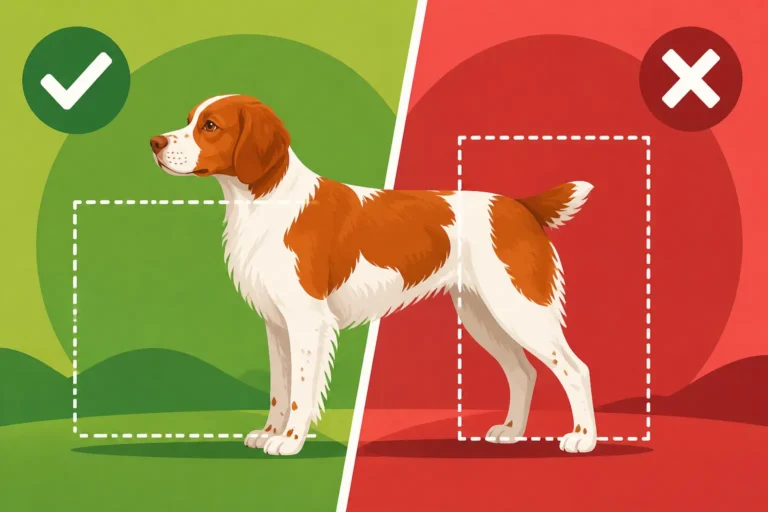
Natural bobtail is not the same as a docked tail
A Brittany may have a short tail because it was born that way, or because its tail was surgically shortened after birth. Those are not interchangeable when planning a litter. Docking does not change the dog’s inherited genes, while a naturally bobtailed dog may carry a genetic variant that can be passed to puppies.
Appearance alone may not settle the question. A short tail can be hard to distinguish from a docked one, particularly if the dog’s history is incomplete. Ask for the breeder’s records, litter information, and veterinary documentation. If the dog is registered, check whether its recorded tail description agrees with its history; registration details are useful records, but they are not a substitute for genetic testing.
The distinction matters because a dog with a docked tail may still have the genes associated with a natural bobtail. For example, a dog with a docked tail could have been born with a full-length tail and carry no bobtail variant, or it could have been naturally bobtailed before docking. A short appearance cannot tell you which is true. The background and, when appropriate, a DNA test are much more informative.
For more context on how these tails occur in the breed, see Why Some Brittanys Are Born Without a Tail and Whether a Brittany's Tail Is Docked. Those are separate questions from whether a particular pair is genetically safe to breed.
The inheritance pattern can create a risk beyond tail length
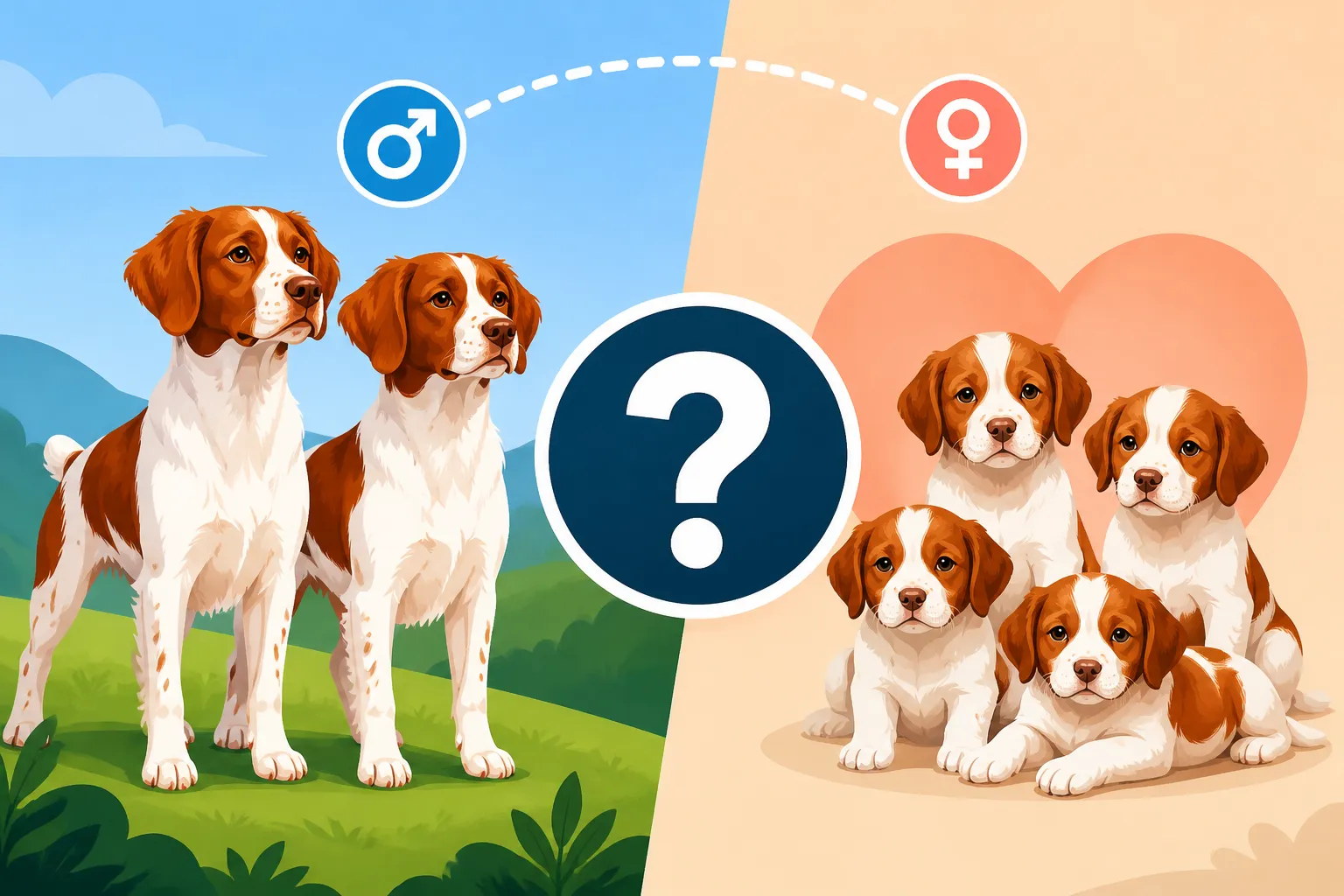
In dogs, a well-known natural-bobtail variant affects the T-box gene. In a simplified inheritance pattern, one copy can be associated with a naturally shortened tail, while inheriting two copies of the variant may be lethal during embryonic development. That means a mating between two dogs carrying the same variant can risk losing some embryos before birth, rather than simply producing puppies with shorter tails.
The exact outcome depends on the parents’ genotypes and on whether the same variant is involved. If both parents carry one copy of the relevant variant, a basic genetic model predicts that some conceptions may inherit two copies, some may inherit one, and some may inherit none. This is a probability across conceptions, not a promise about the final number or appearance of puppies in an actual litter. Early pregnancy loss may not be obvious to an owner, and litter size can be affected by many factors.
This is why “both parents have short tails” is not enough information to estimate risk—and why “some puppies could have long tails” does not make the mating safe. Before breeding, ask a veterinarian or veterinary genetic specialist to interpret the specific test results for both dogs. If the test identifies the same variant in both, do not treat the possibility of a healthy puppy as a reason to disregard the potential for embryonic loss.
A bobtail is not automatically a health problem, but breeding risk still matters
A naturally short tail by itself does not establish that a dog is unhealthy or unsuitable as a companion. Many dogs with natural bobtails live ordinary, active lives. The breeding concern is about the genetic combination that could occur when two dogs carrying the relevant variant are paired, not about blaming an individual dog for its appearance.
That distinction can be emotionally difficult. Owners may adore their Brittany and feel that a warning about breeding is a judgment on the dog. It is not. A responsible breeding decision looks at inherited risks for the future litter, including risks that are invisible in the two adult dogs. A healthy, athletic parent can still pass on a genetic combination that creates problems for embryos or puppies.
For a broader view of what responsible health planning involves, read What a Brittany Spaniel Breeder Should Have Tested and The CHIC Panel a Brittany Breeder Should Have Run. A bobtail test does not replace screening for other relevant inherited conditions, and a generally complete health panel does not automatically answer the bobtail question unless the appropriate test is included.
What to confirm before planning a litter
Verify how each dog got its short tail
Start by documenting whether each dog was naturally bobtailed or docked. Ask the breeder for the original litter records and any available veterinary notes. If the dog came through rescue or changed homes, its history may be incomplete. In that case, avoid filling in the gaps with assumptions based on appearance.
Look at photographs taken when the dog was very young, if they exist, and ask people who knew the dog as a puppy. A naturally bobtailed puppy may have records describing its tail at birth, while a docked puppy may have a veterinary record or breeder documentation of the procedure. Neither photographs nor recollections can establish the dog’s genotype, but they can help clarify the history.
Then ask whether the dog has had a DNA test specifically for the natural-bobtail variant relevant to Brittanys. Confirm that the test is appropriate for this breed and ask the laboratory or your veterinarian to explain what each result means. A report should identify whether the dog tested as having no copy, one copy, or two copies of the tested variant, where those categories apply. Do not rely on a verbal description such as “the breeder says he’s clear” without seeing the actual report.
Test both prospective parents, not just the bobtail dog
If either dog has a naturally short tail—or if either dog’s tail history is uncertain—testing both prospective parents is the practical way to assess whether they carry the same relevant variant. Testing just one dog leaves the central question unanswered: what could the other parent contribute?
Before ordering a test, share both dogs’ histories with your veterinarian. Ask what the test detects, whether it is validated for the specific variant of concern, and how the results should guide a mating decision. If the results are unclear, conflicting, or unexpected, ask for interpretation before proceeding. A test report is information; it is not a breeding plan on its own.
Here is a simple way to organize the decision:
| What you know about the dogs | What to do next |
|---|---|
| Both have naturally short tails, but neither has a test result | Pause breeding plans and ask a veterinarian about testing both dogs |
| One has a short tail and the other was docked or has an uncertain history | Do not assume the docked dog is genetically clear; verify the history and test as advised |
| Both test positive for the same relevant variant | Discuss the reproductive risk with a veterinary genetic specialist before considering any mating |
| Results are unclear or appear inconsistent with the dogs’ tails | Ask the testing laboratory and veterinarian to review the reports; do not guess |
| One or both dogs have no documented history or testing | Treat the risk as unresolved until it has been properly assessed |
This table is a starting point, not a substitute for professional interpretation. Tests can differ in what they detect, and a result should be interpreted in the context of the dogs’ breed, ancestry, and records. If you are unsure what the laboratory report means, wait rather than trying to translate it from a shorthand label.
Evaluate the whole breeding plan, not only the tail
Even when a pair’s bobtail results are understood, tail status is only one part of a responsible mating decision. Consider temperament, structure, working ability if relevant, family history, and health screening. Ask whether each dog’s strengths complement the other’s, and whether known health concerns appear in close relatives. A desirable physical trait is not a sound reason to accept a preventable inherited risk.
A thoughtful breeder should be able to explain the reason for the pairing, show the relevant health documentation, and discuss what they would do if testing identifies a concern. If the only explanation is that the dogs have attractive tails or that “the puppies will be fine,” that is not enough. Ask direct questions and give yourself time to consider the answers.
You may find Which Health Results a Brittany Breeder Must Show and Which Questions to Ask a Brittany Breeder useful when organizing those conversations. If a breeder is reluctant to share test reports or cannot explain what the results mean, pause. A responsible conversation should welcome careful questions, not make you feel difficult for asking them.
How to make a responsible decision
When to stop and seek specialist advice
Do not proceed with a mating if the dogs’ genetic status is unknown and the uncertainty has not been resolved. Also pause if both test positive for the same relevant variant, if a report suggests a result that the veterinarian cannot interpret, or if the breeder is dismissing the possibility of embryo loss without evidence. A planned litter is not a reason to rush through unanswered questions.
Ask your veterinarian whether a veterinary genetic specialist or a canine reproductive veterinarian should review the case. Bring the actual test reports, pedigree information, and any documentation about tail history. If the dogs are already mated, contact a veterinarian promptly to discuss the test results and appropriate next steps. Avoid making decisions about pregnancy, treatment, or timing based on online anecdotes.
If the mating has not happened, the simplest responsible choice may be to select a different mate whose genetic results are compatible. That does not mean the bobtailed dog must be removed from a breeding program in every circumstance. It means the pairing should be chosen with an understanding of the specific inheritance risk and with appropriate professional guidance. The goal is to avoid preventable harm, not to breed for a particular tail shape at any cost.
Keep records that future owners can understand
Keep copies of the test reports and include the laboratory, test name, dog identification, and date on each record. Save relevant veterinary notes and the dogs’ early tail documentation. If a litter is produced, make sure puppy buyers receive accurate information about parent testing and any health considerations that apply to the litter.
Clear records also prevent an avoidable problem from being passed along as a rumor. A future owner should not have to guess whether a parent was naturally bobtailed or docked, or whether “tested” meant a specific DNA test or merely a general health examination. If you use a breeder contract, consider asking how test results and inherited-health information will be shared with puppy buyers. What a Brittany Breeder Contract Requires offers related guidance on reading the expectations in a breeding agreement.
For practical preparation after a breeding decision is made, keep the medical and genetic paperwork separate from routine puppy-care supplies. Retailers such as Chewy may be useful for ordinary items like cleaning supplies, food storage, or washable bedding, but supplies cannot replace veterinary advice or genetic testing. Check with your veterinarian about what is actually appropriate for the litter before buying products, and keep any medical instructions and test records in a secure folder. Chewy can also be one place to look for nonmedical puppy essentials once the breeder and veterinarian have helped you plan, rather than a source for interpreting genetic results.
The safest answer to whether two bobtails should be bred
Two Brittanys with naturally short tails should not be bred based on appearance alone. First establish whether each dog is naturally bobtailed or docked, then test both dogs for the relevant natural-bobtail variant and have a veterinarian or qualified genetic specialist interpret the results. If both carry the same variant associated with embryonic risk, do not proceed without expert guidance.
A dog’s short tail does not make it a bad dog, and responsible caution is not an accusation against its owner. It is simply part of protecting a potential litter. When the history or test result is uncertain, pause. When the results are clear, consider them alongside the rest of the dogs’ health and the full breeding plan. A careful decision made before mating is far easier—and kinder—than trying to resolve a preventable concern afterward.
Disclaimer
This article is for general informational purposes only and does not constitute professional advice. Laws, prices and regulations vary by location and change over time. Consult a qualified professional for guidance on your specific situation.