Whether a Brittany Ever Flushes
A Brittany may flush a bird, but flushing is not the job the breed was developed to do. Brittanys are pointing dogs: they locate birds and are expected to hold their position while the hunter approaches. If your dog rushes in and sends a bird flying, it may be showing youthful excitement, weak steadiness, or a bird that moved before the dog could hold point—not a different breed instinct.
Is a Brittany a flushing dog or a pointing dog
The difference between pointing and flushing
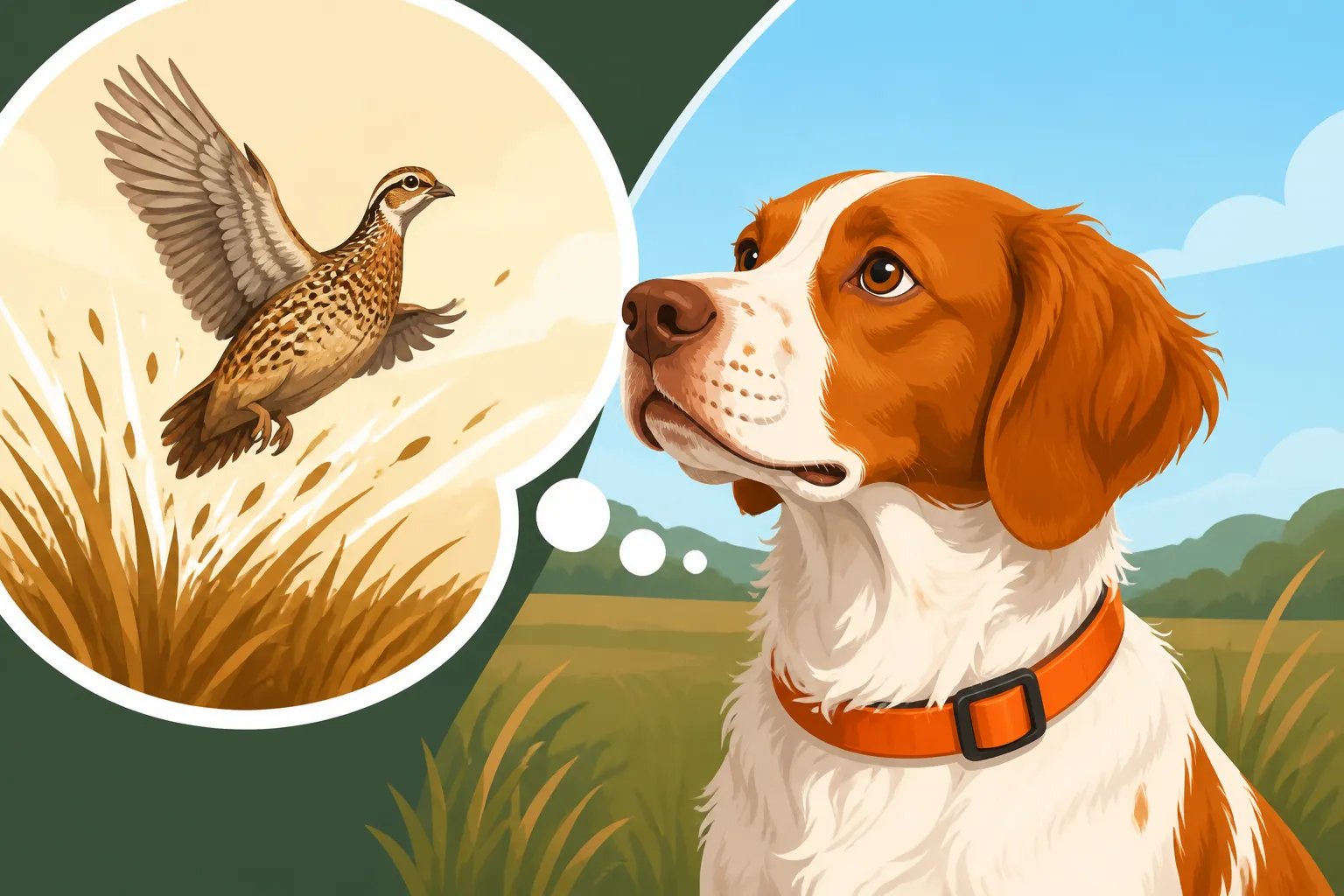
A flushing dog searches for game and pushes it into flight so the hunter can take a shot. A pointing dog searches too, but when it finds a bird, it is meant to stop and indicate where the bird is. That pause gives the hunter time to approach and get ready.
Brittanys belong to the pointing group. Their natural job is to find birds such as quail and pheasant, then point them rather than deliberately drive them into the air. The name “Brittany Spaniel” can make the distinction confusing: the American Kennel Club dropped “Spaniel” from the breed’s name, and a Brittany is classified as a pointing breed. For more on that history, see Why the AKC Dropped Spaniel From the Brittany's Name in 1982 and The Brittany Points, It Does Not Flush.
The difference is easiest to picture in the field. A steady Brittany locates a bird, comes to a stop, and holds its point while you walk in. A flushing dog would move in to make the bird fly. Both types can be useful hunting companions, but they work in different ways, and a Brittany rushing a bird is not necessarily behaving like a well-trained flushing dog.
Why people sometimes think Brittanys are supposed to flush
A Brittany can look like it is flushing when it gets close enough to make a bird take off. That can happen with a puppy still learning, a dog that has not learned to hold point, or a bird that is running through cover instead of sitting still. In the moment, what the hunter sees is simple: dog moves, bird flies. But that outcome doesn’t tell you whether the dog was trying to flush, lost the scent, or reacted to the bird moving.
The breed’s history adds to the confusion. Brittanys are versatile hunting dogs, and they can search, point, retrieve, and work in different kinds of cover. A dog may retrieve a bird after it has been shot or follow a bird that gets up before the hunter arrives. Those abilities don’t turn the Brittany into a flushing breed. They’re part of a broader hunting skill set built around finding and handling game.
It also helps to remember that “spaniel” is still commonly used in everyday conversation, even though the breed is generally described as a pointing dog in the United States. If you’re comparing a Brittany with a flushing breed such as a Springer Spaniel, focus on how the dogs are meant to work around game, not just on their names or size.
Can a Brittany ever flush a bird on purpose
A Brittany can be trained to move a bird on command in some hunting setups, but that is different from saying the breed’s usual role is to flush. Most people who want a pointing dog expect it to find birds and hold point so the hunter can approach. Training a dog to flush on cue requires a specific plan and clear communication about when it should point and when it should move.
For a typical upland hunt, the useful question is not whether a Brittany can make a bird fly. Of course it can. The question is whether the dog can locate birds, stay under control, and work in a way that fits your hunting goals. If you want a dog that routinely pushes birds out of cover, a flushing breed may be a more natural match. If you want a dog that points, a Brittany’s training should develop that behavior rather than reward rushing in.
The two styles are easy to confuse when a young dog is excited. If your Brittany is bumping birds before you get there, that may be a training issue to work through—not proof that you chose the wrong kind of dog. For an overview of how the breed searches, see How a Brittany Finds Its First Bird.
Why a Brittany might rush in and flush a bird
Age and experience can change what you see
Young dogs often have more enthusiasm than self-control. A puppy may find a bird, pause briefly, and then charge after it. Another dog may point one day and bump birds the next. That inconsistency is common while a dog is gaining experience, especially when the bird moves, the scent is weak, or the dog is still learning what to do after it finds game.
A young dog’s first bird encounters should be set up to let it succeed without too much pressure. A crowded training session, repeated corrections, or a handler rushing in can make the dog more confused. Short, positive sessions with appropriate training birds can help you observe what the dog naturally does and build on it. The goal is not to demand polished steadiness from a puppy before it understands the game.
Experience matters for adult dogs, too. A Brittany that has mostly hunted in one kind of cover may react differently when it meets birds that run, hold tight, or flush at a distance. A dog that points reliably on planted birds may need time to learn how wild birds behave. If you’re wondering about that early learning curve, When a Brittany Puppy Should Meet Its First Bird and How a Brittany Puppy Shows Its First Point offer useful related reading.
The bird’s movement and scent conditions matter
A bird that holds still can give a dog time to establish point. A bird that runs may keep moving ahead of the dog, prompting it to follow. If the bird suddenly flushes close by, the dog may jump or chase out of excitement. Wind, vegetation, and the bird’s behavior all affect what the dog can scent and how clearly it can locate the source.
This is why a dog may appear steady in one field and rush in another. Thick cover can hide both dog and bird, making it harder for the handler to see whether the dog paused. Strong wind or difficult scenting conditions can also make a dog work more cautiously—or keep searching until it gets close. What looks like a deliberate flush may actually be a dog trying to relocate a moving bird.
Watch the whole sequence rather than judging only the moment the bird flies. Did the dog slow down or stop? Did it turn toward the scent? Was the bird already running? Did the dog chase after the flush? Those details give a more useful picture of the dog’s behavior and help you decide what to practice next.
A dog can point and still chase
Pointing and chasing are not mutually exclusive. A Brittany may show a clear point, then chase when the bird rises. That response can be exciting to watch, but it may make hunting harder if you need the dog to remain steady while you approach, shoot, or handle another dog.
A young dog’s chase can also be part of its early exposure to birds. The important distinction is between allowing a puppy to gain confidence around game and expecting an adult hunting dog to stay controlled. Training goals should be age-appropriate and consistent. If you’re working toward a reliable point, avoid giving mixed signals—for example, scolding the dog for moving on one bird while encouraging it to chase another without a clear cue.
A Brittany’s sensitivity matters here. Harsh corrections can make a dog uncertain around birds or reluctant to work. If the behavior is becoming a pattern, consider getting help from a qualified pointing-dog trainer who can assess the dog in the field. Related topics include Teaching a Brittany to Hold Point Until You Arrive and Teaching a Brittany Steady to Wing.
How to encourage pointing instead of unwanted flushing
Start with a clear, realistic training goal
Before changing your dog’s training, decide what you want the dog to do. For many upland hunters, the goal is a Brittany that searches, points, and gives the handler time to approach. Some hunters also want steadiness to the flush or shot, while others prioritize finding birds and accept a less formal style. The goal affects what you teach and how you respond when the dog moves.
If your dog is still young, begin with basic field manners and safe, controlled exposure to birds. Keep sessions short enough that the dog stays engaged. A check cord may help you maintain control during early work, but it is not a substitute for teaching the dog what you want. If you need basic gear, you can compare check cords and training supplies through retailers such as Chewy; choose equipment appropriate for your dog and get guidance on safe handling if you are unsure.
Avoid rushing through every training stage just because hunting season is approaching. A dog that has not learned to stay calm around birds may become more excited with each flush. Progress is usually clearer when you work on one skill at a time and give the dog room to understand the task.
Reinforce the behavior you want to see
When a Brittany points, your timing and movement can help the dog stay settled. Approach calmly, avoid crowding the dog, and resist the urge to rush directly through the point. If the bird moves or flushes, stay composed and follow your training plan. Repeatedly shouting or grabbing at the dog in the exciting moment can create confusion rather than steadiness.
For some teams, a trainer can help establish a consistent sequence: the dog finds the bird, the handler approaches, and the dog learns what is expected as the bird gets up. That sequence should be introduced gradually and safely. Gun introduction is a separate part of training; a dog should not be exposed to gunfire at close range simply because it has seen birds. For background, see How to Introduce a Gun to a Brittany.
A long line, whistle, treats, and other supplies can be useful in the right training context, but equipment alone won’t teach a dog to hold point. Chewy may be one place to look for everyday training items, while field-specific instruction is best shaped around the dog’s age, experience, and temperament. If your Brittany is sensitive or uncertain, keep sessions calm and seek professional guidance rather than increasing pressure.
Know when to get help
Occasional bird bumping is different from a persistent pattern of rushing every bird. A trainer can help you identify whether the issue is excitement, lack of experience, poor timing, unclear cues, or a mismatch between your expectations and the dog’s current stage. A good assessment looks at the dog in context rather than labeling it after one outing.
If the dog suddenly changes behavior, seems uncomfortable, or stops working normally, consider whether health or environmental factors may be involved. A dog distracted by pain, fatigue, or an injury may behave differently in the field. After outings, check for cuts, burrs, and grass awns, particularly around the feet and ears. A basic field-care kit can help with minor needs, and Chewy is another option for comparing general pet-care supplies; suspected injuries or embedded plant material should be assessed by a veterinarian.
| What you see in the field | What it may mean | A useful next step |
|---|---|---|
| The dog stops and holds position | Pointing behavior | Approach calmly and follow your training plan |
| The dog follows a running bird | The bird may be moving ahead, or the dog may need more experience | Observe the full sequence and work on controlled bird exposure |
| The dog rushes as the bird rises | Excitement or incomplete steadiness | Practice gradually and consider help from a pointing-dog trainer |
| The dog flushes birds repeatedly | A developing habit, unclear training, or an unsuitable setup | Get an experienced trainer to assess the dog in the field |
| The dog behaves differently after an outing | Fatigue, discomfort, or injury may be involved | Check the dog carefully and contact a veterinarian if concerned |
Choosing a hunting style that suits your Brittany
Decide whether you want a formal point
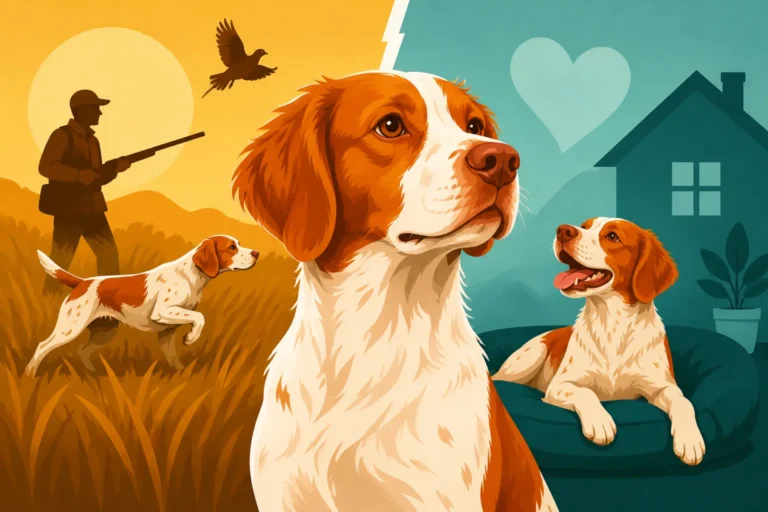
Not every hunter wants the same level of polish. Some value a dog that holds a stylish point while they walk in; others are content with a dog that finds birds and works cooperatively, even if its manners are less formal. Being clear about your preference helps prevent frustration with a dog that is doing something different from what you expected.
If a steady point is important to you, look for a trainer with experience developing pointing dogs and talk through your goals before training begins. Ask how they handle young dogs, how they introduce birds, and what they expect from the handler between sessions. Training is a partnership: the dog needs consistent expectations from everyone who works with it.
If you’re still choosing a dog, consider how you hunt and how much time you can give to training. A Brittany can be a close working companion or cover ground at a wider range, depending on the individual dog, breeding, experience, and handling. For related context, see How a Brittany Hunts Differently on Wild Birds and Whether a Brittany Points Naturally.
Separate a normal mistake from a lasting problem
A single flush does not tell you that a Brittany cannot point. A dog may bump a bird because the bird moved at the last second, because the dog got too close, or because the dog is still learning. Look for patterns across multiple outings and note what was different about each situation.
A notebook can help. Record the cover, wind, bird type, whether the bird was planted or wild, how the dog approached, and what happened after the bird flushed. You might notice, for example, that your dog points consistently in open fields but rushes birds in dense grass where scent and visibility are harder to read. That observation gives you something practical to discuss with a trainer.
If flushing is consistently what you want, and you don’t want to build a pointing style, talk with an experienced trainer or breeder about whether another kind of hunting dog would fit your needs better. But if your Brittany is simply inexperienced or still learning, patient, consistent training may help the dog develop into the pointing partner you hoped for. Chewy can help with routine supplies, but a retailer cannot assess a dog’s field behavior; hands-on advice should come from someone who can observe you and your dog working together.
Disclaimer
This article is for general informational purposes only and does not constitute professional advice. Laws, prices and regulations vary by location and change over time. Consult a qualified professional for guidance on your specific situation.