When the Brittany Standard Was First Written
It's incredibly frustrating when you're trying to understand the history and characteristics of a beloved breed like the Brittany, only to find vague timelines and conflicting information. You want to know what makes this spirited companion tick, and a big part of that starts with its official roots. This guide is going to clear up precisely when the Brittany breed standard was first formally written, and why that moment was so pivotal for the breed we know and love today.
The Dawn of the Brittany as a Recognized Breed
Before there was a meticulously written document outlining every desired trait, there were just the dogs themselves – working alongside their human companions in the fields and forests of Brittany, France. These were sturdy, intelligent, and biddable dogs, admired for their pointing abilities and tireless energy. But admiration, while lovely, doesn't build a breed, especially when you start to see variations pop up and people crossing them with other types of dogs. A standard was inevitable to preserve what made the Brittany, well, the Brittany.
Early Origins and Recognition in France
The Brittany's story truly begins in the northwest region of France, where for centuries, local peasant hunters relied on small, agile pointing dogs. These dogs were not uniform in appearance, but they all shared a remarkable aptitude for finding and pointing game birds. They were known for their versatility, able to retrieve from land and water, and possessing a keen sense of smell. These working dogs became an integral part of rural life, proving their worth day in and day out. While their exact ancestry is a bit hazy, we know they've been around for a long, long time, as evidenced by mentions in artwork and historical records. Where the Brittany Comes From tells us more about their deep roots.
As the 19th century drew to a close and the 20th century began, dog shows and formal breed clubs started gaining popularity across Europe. People began to see the value in standardizing their local working dogs, not just for aesthetics but to preserve their unique working qualities. The Brittany, or "Epagneul Breton" as it's known in its homeland, was no exception. There was a growing desire among enthusiasts and hunters to define and protect the characteristics that made this regional dog so exceptional in the field. This rising interest set the stage for a formal definition, moving the breed from simply "local working dog" to a recognized, distinct entity.
The French Foundation: When the First Standard Took Shape
This brings us to the crucial moment: the formal establishment of the breed standard. The very first written standard for the Brittany was officially adopted in 1907 in France. This was a landmark event, spearheaded by a group of dedicated hunters and breeders who formed the first Brittany club. Imagine a room full of passionate dog people, all with their own ideas, coming together to agree on the ideal height, weight, coat color, ear set, and most importantly, the temperament and working style that defined their beloved pointing dog. When the French Brittany Club Was Founded marked the beginning of this concerted effort.
The goal wasn't just to create a pretty picture; it was fundamentally about codifying the traits that made the Brittany such an effective hunting companion. They wanted to ensure that future generations of Brittanys would continue to possess that distinctive pointing instinct, biddability, and compact build, allowing them to traverse dense cover with ease. This standard served as a blueprint, guiding breeders on how to select dogs for breeding that would maintain the integrity and functionality of the breed. It was about creating a consistent type, so a hunter knew what to expect when they acquired a Brittany, both in appearance and capability.
How a Written Standard Shapes a Breed
A breed standard is much more than a checklist for judges in the show ring; it's the DNA of the breed, a living document that guides every thoughtful breeder. It defines what the breed is and should be, encompassing not just physical attributes but also the intangible qualities that make the dog unique. For the Brittany, a breed celebrated for its dual-purpose nature, this document holds immense weight.
Defining the Ideal: Conformation and Function
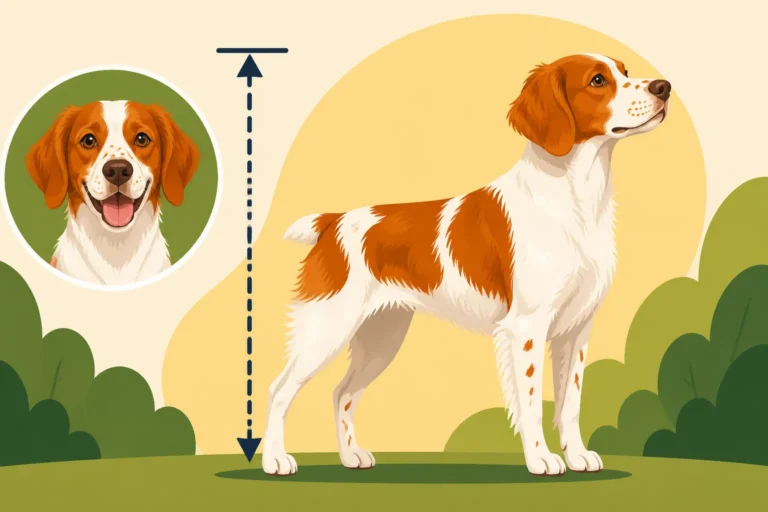
The Brittany standard, even from its earliest iteration, was always a delicate balance between form and function. It describes the physical characteristics: the size (medium-sized, neither too big nor too small for navigating varied terrain), the build (sturdy, compact, yet agile), the coat (dense, flat or wavy, providing protection without being overly heavy), the distinctive coloring (orange and white, liver and white, tri-color, and roan variations), and of course, the tail (often naturally bobbed or docked, a characteristic long associated with the breed for practical field work). But it goes deeper, describing the gait, the expression in their eyes, and even the set of their ears – all contributing to an overall picture of a keen, intelligent, and athletic bird dog.
Crucially, the standard also heavily emphasizes temperament. A Brittany isn't just a machine for finding birds; it's a partner. The standard calls for a dog that is intelligent, keen, and tractable – meaning easily trained and handled. It describes a dog that is not aggressive, shy, or overly nervous. This emphasis on a good disposition means breeders are looking for dogs that are not only excellent in the field but also wonderful companions in the home. A strong temperament is just as vital as a good nose and solid point, making the Brittany one of the most beloved versatile gun dogs. Chewy offers a wide range of training treats that can aid in reinforcing these desirable temperamental traits.
The Impact on Working and Show Dogs
For a breed like the Brittany, which excels in both the field and the show ring, the standard is particularly important. It aims to unite these two worlds, insisting that a Brittany should look like a Brittany and work like a Brittany. This is why the breed holds the distinction of having the most Dual Champions – dogs that have earned both a conformation championship and a field trial championship. The standard prevents the breed from splitting into two entirely separate types, where one is solely focused on appearance and the other purely on hunting ability, often to the detriment of both.
A breeder dedicated to the standard will carefully evaluate their breeding stock against these written guidelines. They look for dogs that embody the physical characteristics that allow them to perform tirelessly in the field – strong legs, a deep chest for endurance, and protective coat. At the same time, they assess the mental fortitude and hunting instinct. A dog that is too timid won't hold up to the rigors of hunting, and a dog that lacks natural bird sense isn't a true Brittany. This continuous evaluation ensures the breed remains true to its heritage, producing dogs that can confidently transition from the family couch to the pheasant field.
The Brittany Standard's Journey Across the Atlantic
While the breed found its official footing in France, its appeal quickly spread beyond its homeland. As with many European breeds, the Brittany eventually made its way to North America, where it captured the hearts of hunters and families alike. However, this journey brought with it new interpretations and, eventually, a slightly different standard.
American Recognition and Adaptation
The first Brittanys arrived on American shores around the early 1930s. Enthusiastic American sportsmen quickly recognized the breed's potential as a superb bird dog, ideally suited for the diverse game bird populations and hunting styles across the continent. It wasn't long before a breed club was formed, and then, in 1934, the American Kennel Club (AKC) officially recognized the Brittany. When the Brittany Reached America was a significant step, paving the way for the breed to flourish.
When the AKC recognized the breed, they adopted their own standard. While closely based on the original French standard, there were subtle differences that would, over time, lead to distinct variations between the "American Brittany" and the "Epagneul Breton" (French Brittany). One of the most notable differences, for example, lay in the allowable range of hunting. American breeders, often favoring open country hunting, allowed for a wider-ranging dog. The French standard, more aligned with closer working dogs for foot hunters, kept the emphasis on a more contained range. How a French Brittany Differs From an American One really highlights these nuances.
Evolving Over Time: Minor Tweaks and Interpretations
Breed standards are not set in stone forever; they are living documents that can be refined and updated by parent clubs. Over the decades, both the French and American Brittany standards have seen minor tweaks to clarify language, address specific breed health concerns, or simply to better reflect the desired type as the breed evolves. For instance, the discussion around coat colors and markings has seen some shifts, and the ongoing emphasis on maintaining a healthy, functional dog is paramount.
One of the most significant changes for the American Brittany came in 1982, when the AKC officially dropped "Spaniel" from the breed's name, recognizing that the Brittany’s pointing style and working characteristics were far more akin to setters and pointers than to flushing spaniels. This was a reflection of the breed's functional reality and a move to align its name with its true nature as a pointing dog. Even today, breeders and enthusiasts continuously interpret and apply the standard, ensuring that the essence of the Brittany remains intact, while allowing for some flexibility in expression.
Why Understanding the Standard Still Matters to You
Whether you're a seasoned hunter, a first-time dog owner, or simply someone who appreciates canine history, understanding the breed standard offers invaluable insight. It connects you to the past, helps you navigate the present, and ensures the future of these incredible dogs.
Choosing a Healthy and True-to-Type Brittany
If you're looking to bring a Brittany into your life, knowing the standard is your best defense against less reputable breeders. A responsible breeder will be intimately familiar with their breed's standard and will be striving to produce puppies that conform to it. They can articulate why they made specific breeding choices, how their dogs measure up, and what health clearances they've obtained to ensure the physical soundness outlined in the standard. What a Brittany Breeder Contract Requires and Which Questions to Ask a Brittany Breeder can arm you with the knowledge you need.
A breeder focused on the standard isn't just aiming for a beautiful dog; they're aiming for a healthy, functionally sound dog with the correct temperament. This means a Brittany that is physically capable of a full, active life, free from debilitating structural issues, and mentally stable enough to be a joy both in the home and in the field. They should be able to explain how their breeding practices align with the historical intent of the standard. If a breeder dismisses the standard or can't explain why their dogs fit it, that's a red flag. When you're considering a new family member, particularly one that's meant to be active, health and correct conformation are incredibly important, and understanding the standard helps you verify that. You might even want to ask if they feed high-quality dog food, as available from retailers like Chewy, to support the growth and health of their pups according to the breed's needs.
Preserving the Legacy: The Breeder's Role
Ultimately, the breed standard is a tool for preservation. It's the blueprint that ensures the Brittany of tomorrow remains as magnificent as the Brittanys of yesteryear. Dedicated breeders act as custodians of the breed, diligently working to produce dogs that embody the ideal described in that 1907 document (and its subsequent revisions). This isn't an easy task, as it requires extensive knowledge of genetics, health, conformation, and, critically, the breed's working ability.
They select breeding pairs not just for their good looks, but for their proven hunting instincts, their sound health, and their wonderful dispositions. They are committed to continuing the legacy of the Brittany as a versatile gun dog – one that points with intensity, retrieves with enthusiasm, and lives harmoniously with its human family. By adhering to the standard, they help ensure that traits like the distinctive pointing behavior, detailed in The Brittany Points, It Does Not Flush, continue to thrive. This commitment ensures that for generations to come, the spirited, intelligent, and affectionate Brittany will continue to grace our fields and our homes. It’s a labor of love, but one that has profound benefits for anyone lucky enough to share their life with one of these incredible dogs.
| Key Milestone | Year | Significance |
|---|---|---|
| First French Standard | 1907 | Formal establishment of the breed's characteristics in its homeland. |
| Brittany to America | Early 1930s | Introduction of the breed to North American hunters. |
| AKC Recognition | 1934 | Official recognition by the American Kennel Club, leading to an American standard. |
| "Spaniel" Dropped | 1982 | AKC officially changes the breed name to "Brittany," reflecting its true pointing nature. |
Disclaimer
This article is for general informational purposes only and does not constitute professional advice. Laws, prices and regulations vary by location and change over time. Consult a qualified professional for guidance on your specific situation.