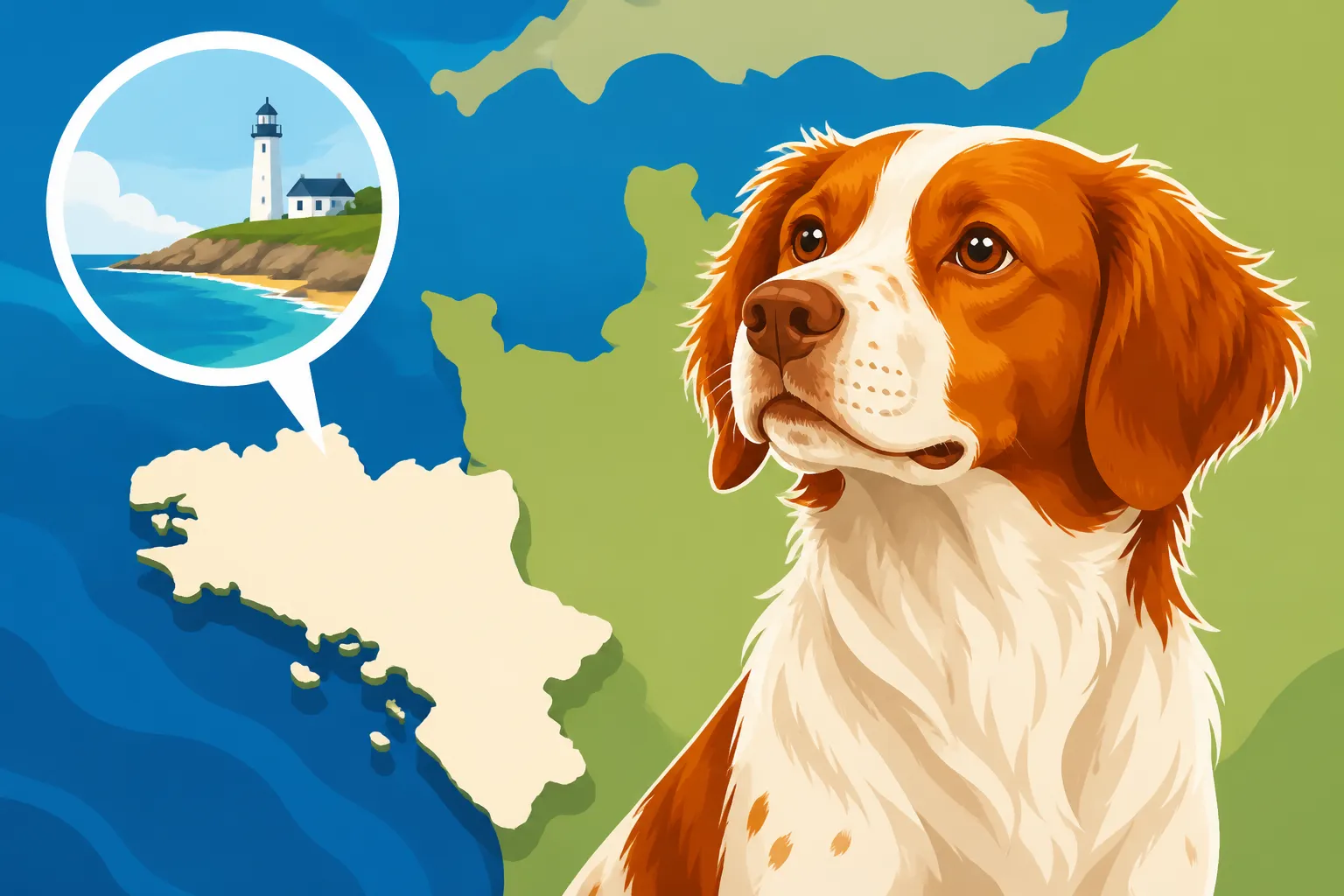
The Brittany Comes From the Northwest Corner of France
Many people adore the spirited, intelligent Brittany Spaniel but might not realize the rich history nestled deep in the northwestern corner of France from which this remarkable breed sprang. This guide will take you on a journey back in time, exploring the humble beginnings, pivotal moments, and cultural influences that shaped the Brittany into the beloved companion and exceptional hunting dog we know and cherish today. Understanding their origins helps us appreciate their inherent traits and why they are such special dogs.
Brittany's Ancient Roots in French Peasant Life
The story of the Brittany is one deeply entwined with the rustic, practical lives of the peasants and poachers in the historical region of Brittany, France. This isn't a tale of royalty or grand estates, but rather of resourceful people who needed a dog that could work tirelessly, discreetly, and effectively in challenging terrain. The landscape of Brittany, with its dense hedgerows, thick gorse, and abundant small game, demanded a particular kind of canine partner.
The Land and Its Influence on the Breed
Imagine the rolling hills, the misty coastlines, and the dense woodlands of Brittany. This was a place where wild game, from partridge and pheasant to rabbit and hare, thrived. For centuries, the local people relied on these resources for sustenance. They needed a dog that could navigate the varied terrain, from open fields to tangled undergrowth, and locate game without flushing it prematurely. The geography itself acted as a natural selection filter, favoring dogs that were agile, resilient, and possessed a keen sense of smell. These early proto-Brittanys weren't just pets; they were essential tools for survival, helping families put food on the table. Their moderate size meant they were economical to feed and easy to conceal from gamekeepers.
Early Depictions and Anecdotal Evidence
While formal breed records are a relatively modern invention, glimpses of Brittany-type dogs can be found in art and oral traditions dating back centuries. One often-cited example is a painting from the 17th century by Jean-Baptiste Oudry, which depicts a pointing dog remarkably similar to the modern Brittany. While we can't say for certain it was a Brittany, it certainly suggests a long lineage of these pointing, bird-savvy dogs in the region. There are also old tapestries and regional folklore that hint at the presence of small, active hunting dogs beloved by the local populace. These early dogs were praised for their endurance and their ability to work long hours without complaint, traits still highly valued in the breed today. They were truly dogs of the people, for the people.
The Brittany's Evolution: From Poacher's Dog to Pointing Breed
The shift from an informal, local hunting companion to a recognized pointing breed wasn't an overnight phenomenon. It was a gradual evolution driven by both necessity and a growing appreciation for the dog's unique talents. The Brittany's inherent abilities set it apart, and over time, dedicated individuals began to refine these traits.
The Role of Poachers in Early Development
It's a romantic, if somewhat illicit, part of the Brittany's history: its association with poachers. In a time when hunting rights were often reserved for the aristocracy, local villagers still needed to feed their families, and a discreet, efficient hunting dog was invaluable. The Brittany fit this role perfectly. These dogs were often silent hunters, able to locate game and hold a staunch point, allowing the poacher to approach undetected. They weren't flashy or wide-ranging like some of the larger setters and pointers; instead, they worked close to their handler, making them ideal for navigating dense cover and avoiding unwanted attention. This close-working style, even today, is a hallmark of the French Brittany.
English Sporting Dogs and the Crossbreeding Era
As communication and travel improved in the 19th century, English sportsmen began to frequent the Brittany region, often bringing their own sophisticated hunting dogs with them – breeds like English Setters and Pointers. It's widely believed that these English dogs were crossbred with the local Brittany-type canines. This wasn't necessarily a formal breeding program but likely a series of opportunistic pairings. The aim was to infuse the local stock with traits like a more refined point, a keener nose, and perhaps a bit more speed and style, without losing the hardiness and biddability of the native dogs. This period of crossbreeding, particularly around the 1850s in a place called Pontou, is considered a critical juncture in the breed's development, leading to the more distinct pointing characteristics we see in the modern Brittany.
Developing the Pointing Style
Unlike some spaniels that are primarily flushers, the Brittany was intentionally developed to point. This means that when the dog locates game, it freezes, often with one paw raised, its body rigid, and its nose intently directed at the quarry. This natural pointing instinct was refined through selective breeding. Early breeders recognized the value of a dog that could hold game in place, allowing the hunter to move into position for a shot. This specialized skill is what ultimately distinguished the Brittany from its spaniel relatives and cemented its place among the pointing breeds. To this day, a strong, natural point is one of the most cherished traits in a Brittany.
The Formal Recognition of the Breed: Shaping the Standard
From its informal origins, the Brittany eventually gained widespread recognition, leading to the establishment of a formal breed standard and the creation of dedicated breed clubs. This was a crucial step in preserving its unique characteristics and ensuring its future.
The Early 20th Century: A Move Towards Formalization
The turn of the 20th century saw a surge of interest in formalizing dog breeds across Europe. In France, enthusiasts of the Brittany began to organize, realizing the need to protect the working qualities and physical characteristics of their beloved regional dog. The first official Brittany was registered in 1907 – a dog named Boy. This marked a significant moment, transitioning the breed from local legend to recognized entity. The first breed standard was also drafted around this time, laying out the desired traits and physical appearance that breeders should strive for.
The Founding of the French Brittany Club
The push for formal recognition culminated in the founding of the Club de l'Epagneul Breton in 1907. This club, dedicated to the preservation and promotion of the Epagneul Breton (the French name for the breed), played a pivotal role in shaping its future. They established the breed standard, organized field trials, and maintained the official registry. When the French Brittany Club Was Founded marked a new era for the breed, moving it beyond regional obscurity to national, and eventually international, renown. The club's mission was clear: to maintain the Brittany as a versatile gundog, capable of both pointing and retrieving, with a temperament that made it an ideal companion.
Establishing the Breed Standard and Ideal Characteristics
The initial breed standard for the Brittany sought to define the ideal dog. It described a medium-sized, compact dog with a sturdy build, expressive eyes, and a coat that could withstand harsh weather. Critically, it emphasized the dog's natural bobtail or very short tail, a distinctive feature that set it apart from many other pointing breeds. When the Brittany Standard Was First Written focused on both form and function, ensuring that the breed would remain true to its working heritage. Temperament was also a key consideration, favoring a dog that was intelligent, biddable, and eager to please, without being overly sensitive or timid. This careful standardization helped ensure consistency in future generations.
Across the Atlantic: The Brittany's Arrival in America
The Brittany's reputation as an exceptional hunting dog eventually spread beyond the borders of France, catching the attention of sportsmen in North America. Its arrival on American shores marked the beginning of a new chapter for the breed, where it would adapt and evolve to suit different hunting styles and environments.
Introduction to North America
The first Brittanys are believed to have arrived in North America in the early 20th century. Historical records suggest that a man named Louis Thebaud imported some of the earliest specimens from France around 1928, particularly from the Pontou line. When the Brittany Reached America truly began a new lineage for the breed. These early imports quickly proved their worth in the diverse American hunting grounds, from the vast prairies of the Midwest to the dense forests of the East. Their versatility and compact size made them attractive to hunters who appreciated a dog that could do it all—point, retrieve, and work close in varying cover.
AKC Recognition and Early Popularity
The American Kennel Club (AKC) officially recognized the Brittany in 1934, initially under the name "Brittany Spaniel." This recognition provided a formal framework for the breed's development in the United States. When the AKC Recognized the Brittany was a huge step, bringing the breed into the mainstream of American purebred dog fancy. Early proponents emphasized the Brittany's superb hunting abilities and its friendly, adaptable nature, which made it equally at home in the field and in the family home. Its medium size and striking orange and white coat also contributed to its growing appeal. Owners found them to be less "kennel dog" than some other pointing breeds, often preferring to have them as house companions.
The "Spaniel" Debate and Name Change
For decades, the breed was known as the "Brittany Spaniel" in North America, a nod to its likely historical ties to spaniel-type dogs. However, as the breed's primary function as a pointing dog became more evident and its divergence from flushing spaniels clearer, a debate arose within the American Brittany Club. Many felt the "spaniel" designation was misleading and did not accurately reflect the breed's pointing heritage. The argument was that the Brittany behaved more like a setter or pointer than a spaniel. This eventually led to a significant change. In 1982, the AKC officially dropped "Spaniel" from the breed's name, henceforth recognizing it simply as the "Brittany." This name change formally acknowledged its distinct identity as a pointing breed, aligning its name with its true purpose and distinguishing it from other spaniel breeds.
The French Brittany (Epagneul Breton) vs. American Brittany: A Divergence
While both American and French Brittanys share a common ancestry, their paths diverged significantly over the decades, leading to distinct differences in appearance, working style, and even official recognition. This split highlights how cultural preferences and breeding goals can shape a breed.
Differences in Appearance and Size
One of the most noticeable differences lies in their physical appearance. The French Brittany, or Epagneul Breton, tends to be a bit smaller and more compact than its American counterpart. Its head might appear slightly more refined, and traditionally, they have darker amber eyes. While American Brittanys are almost exclusively orange and white or liver and white, the French standard permits black and white, and tricolor variations (black, white, and orange/liver). How a French Brittany Differs From an American One can be quite striking when you see them side-by-side. The American Brittany, developed with an eye towards covering vast North American landscapes, often exhibits a slightly taller, lankier build, allowing for greater speed and stride.
| Feature | French Brittany (Epagneul Breton) | American Brittany |
|---|---|---|
| Average Height | 18.5 – 20.5 inches | 17.5 – 20.5 inches |
| Average Weight | 30 – 40 lbs | 30 – 40 lbs |
| Acceptable Colors | Orange & White, Liver & White, Black & White, Tricolor | Orange & White, Liver & White, Roan |
| Eye Color | Amber (darker preferred) | Dark brown or amber |
| Body Type | More compact, square-bodied, slightly smaller | Often slightly larger, lankier build for range |
| Tail | Natural bobtail or docked (often shorter dock) | Natural bobtail or docked |
Divergent Working Styles and Hunting Preferences
The most significant divergence between the two types is arguably their working style in the field. American Brittanys, especially those bred for horseback field trials, are often selected for their wide-ranging abilities. They cover vast distances quickly, making them ideal for open prairies and large hunting grounds. An American Brittany Ranges Wide and a French One Stays Close is a common saying among hunters. The French Brittany, on the other hand, is typically a closer-working dog, often preferred by foot hunters in dense European cover. They hunt methodically, quartering more tightly and checking in with their handler frequently. This difference isn't just about training; it's often an inherent genetic predisposition developed through generations of selective breeding. For a hunter who prefers walking and working in thick brush, Whether a French Brittany Suits a Walking Hunter is a question with a clear answer.
Separate Registries and Breed Clubs
This divergence has led to separate registration bodies and breed clubs. In the United States, the AKC registers the "Brittany," which refers to the American-bred lines. For French Brittanys in America, organizations like the Club de l'Epagneul Breton of the United States (CEB-US) work to preserve the French standard and encourage breeding according to European guidelines. What CEB US Is to Brittany Owners is a critical question for those interested in the authentic French lines. While both types are undeniably Brittanys, Whether a French Brittany Is a Separate Breed sometimes arises, given their distinct standards and breeding philosophies. These organizations are vital for maintaining the integrity and unique characteristics of each type, ensuring that future generations continue to exhibit the traits their respective enthusiasts cherish.
Why the Brittany's French Heritage Still Matters Today
The deep roots of the Brittany in the French countryside aren't just a historical footnote; they continue to influence the breed's characteristics, temperament, and hunting prowess today. Understanding this heritage provides invaluable insight into what makes a Brittany truly a Brittany.
Temperament: Biddability and Sensitivity
The Brittany’s origins as a poacher’s dog and a cherished family companion in rural France fostered a temperament that is highly biddable, intelligent, and eager to please. Unlike some larger, more independent hunting breeds, Brittanys thrive on partnership and close cooperation with their human handlers. This inherent desire to work with you, rather than for themselves, is a direct legacy of their early role where discretion and responsiveness were paramount. They are known for being quite sensitive, often responding better to positive reinforcement and gentle corrections than harsh methods. This "softness" is part of their charm and effectiveness, making them highly trainable and adaptable companions. Their keen desire to please their family makes them excellent pets, even for first-time dog owners, provided their exercise needs are met. Many Brittany owners often observe their dogs following them from room to room, a clear sign of their inherent desire for companionship.
Natural Hunting Instincts and Versatility
The core hunting instincts of the Brittany—their strong pointing ability, keen nose, and natural retrieving drive—are deeply embedded in their French genetic code. Their versatility, the ability to excel on various types of game and in different terrains, is a direct result of being bred for the diverse landscapes of Brittany. Whether working dense cover for pheasant or open fields for quail, a Brittany's natural abilities are a testament to generations of selective breeding by French hunters who needed a dog that could do it all. Even Brittanys who aren't actively hunted often display these instincts in their daily lives, pointing at birds in the backyard or intently sniffing out interesting scents on a walk. This strong prey drive and natural talent for bird work are why so many hunters continue to choose the Brittany.
Health and Longevity: A Robust Heritage
Compared to some other purebreds, the Brittany is generally considered a healthy and robust breed, a trait that can be linked back to its hardy peasant origins. They were not bred for exaggerated features but for functionality and endurance, which often correlates with good health. While no breed is entirely free from genetic health concerns, the Brittany has a reputation for relative hardiness. Responsible breeders, both in France and America, continue to prioritize health testing to maintain this legacy. The average lifespan of a Brittany is a respectable The Twelve to Fourteen Years a Brittany Gets, a testament to their inherent vigor. When looking for a puppy, it's wise to consider breeders who follow rigorous health screening protocols, ensuring the continuation of this robust heritage. Finding a reputable breeder through Chewy or other avenues that emphasizes health can make a big difference.
Preserving the Legacy: Clubs and Organizations
Maintaining the integrity and future of a breed like the Brittany requires dedicated effort from passionate individuals and organized groups. Breed clubs and specialized organizations play a crucial role in safeguarding the Brittany's French heritage, both in its homeland and abroad.
The Role of National Breed Clubs
National breed clubs, such as the Club de l'Epagneul Breton in France and the American Brittany Club in the United States, are the guardians of the breed standard. They define what a Brittany should look and act like, guiding breeders and judges to ensure that future generations remain true to the breed's historical characteristics. These clubs organize events like field trials, conformation shows, and obedience competitions, which not only showcase the breed's talents but also serve as important tools for evaluating breeding stock. They also act as educational resources for new owners, providing information on training, health, and care, often collaborating with vets and canine experts to disseminate best practices. These clubs are the backbone of breed preservation, helping owners navigate the nuances of Caring for a Brittany Past Ten or understanding What a Brittany Spaniel Breeder Should Have Tested.
Health Initiatives and Genetic Preservation
A critical aspect of preserving the Brittany's legacy is maintaining its health. Breed clubs often spearhead initiatives for genetic health testing, encouraging breeders to screen for conditions that can affect the breed. For instance, the Orthopedic Foundation for Animals (OFA) works closely with breed clubs to record hip and elbow dysplasia clearances. By encouraging testing for conditions like hip dysplasia, which historically could affect working dogs, breeders help ensure the long-term vitality of the breed. Furthermore, clubs often support research into canine health, seeking to understand and mitigate inherited diseases. This proactive approach to health means that new owners can often find information about the health clearances of a puppy's parents through the breeder or the club's resources, sometimes even finding health-focused products like specialized food or supplements on platforms like Chewy.
Promoting the Working Heritage and Versatility
Beyond physical traits and health, breed clubs are deeply committed to preserving the Brittany's working heritage. Field trials, hunt tests, and versatility events are designed to test a Brittany's natural instincts and trained abilities in real-world hunting scenarios. These events ensure that the breed's core purpose—to be an exceptional gundog—remains at the forefront of breeding decisions. Clubs also promote the breed's incredible versatility, encouraging owners to participate in a wide range of activities, from agility and obedience to scent work and therapy dog programs. This focus on both field prowess and adaptable companionship ensures that the Brittany continues to be recognized as a truly versatile pointing breed, capable of excelling in many different roles while honoring its French hunting dog origins.
Disclaimer
This article is for general informational purposes only and does not constitute professional advice. Laws, prices and regulations vary by location and change over time. Consult a qualified professional for guidance on your specific situation.