How to Treat a Brittany’s Torn Pad
There's nothing quite like the heart-sinking feeling when your active, bird-crazy Brittany comes trotting back to you in the field, favoring a paw, or worse, leaving a tell-tale smear of red on the fallen leaves. Torn paw pads are an all too common, frustrating, and often painful reality for our hardworking Brittanys, especially during hunting season or after an enthusiastic romp on rough terrain. This comprehensive guide is here to walk you through exactly how to treat a Brittany's torn pad, from immediate field first aid to knowing when professional veterinary help is crucial, and most importantly, how to prevent these injuries in the first place.
Understanding Your Brittany's Paws and Why They Get Injured
Our Brittanys are built for action, for covering ground, and for tireless pursuit of game. Their paws are their primary tool in the field, but they're also incredibly vulnerable to the varied and often harsh environments they explore. Understanding this vulnerability is the first step to protecting them and responding effectively when injuries occur.
Why Brittany Pads Are Prone to Injury
Brittanys, by their very nature, are energetic and agile dogs, always eager to explore and work. This incredible drive means they often don't self-regulate on rough surfaces until an injury has already happened. Picture your Brittany quartering through a stubble field, pushing through thorny brambles, or scrambling over rocky creek beds – all standard activities that can wreak havoc on unprotected pads. Unlike some other breeds with naturally tougher, more calloused paws, a Brittany’s pads, while resilient, can be surprisingly susceptible to cuts, abrasions, and tears, especially if they haven't been properly conditioned.
The type of terrain plays a massive role. Sharp gravel, abrasive stubble from harvested crops, hidden pieces of glass or metal in urban parks, or even extreme temperatures (very hot pavement or frozen ground) can all contribute to pad damage. A quick burst of speed across a concrete path after a long period of inactivity can even cause a pad to rip. It's not just about sharp objects; constant friction and uneven surfaces can wear down the protective outer layer, leaving the more sensitive layers exposed and vulnerable. You might think only sharp objects cause issues, but even prolonged running on coarse, dry grass can abrade pads raw. This is a common issue for active dogs, and knowing the risks is half the battle.
Common Types of Pad Injuries
Paw pad injuries can range from minor scrapes to deep, debilitating lacerations. Recognizing the type of injury can help you assess its severity and determine the best course of action.
- Abrasions and Scrapes: These are superficial injuries, much like a "rug burn" on a human. They occur when the pad rubs against a rough surface, wearing away the top layer of skin. You might see reddened, raw areas, sometimes with light oozing or minor bleeding. These are usually less serious but can be quite painful and prone to infection if not cleaned properly. Imagine your Brittany sliding to a stop on gravel or repeatedly pushing off on a rough concrete training surface.
- Cuts and Lacerations: These are deeper wounds caused by sharp objects like glass, sharp rocks, thorns, or even a jagged piece of wood. They can range from small nicks to gaping wounds that expose underlying tissue, fat, or even bone. Bleeding can be significant, especially if a blood vessel is involved. This is often what people think of when they say their Brittany "cut its pads on stubble." These can be deceptively deep and require careful attention.
- Punctures: Caused by sharp, pointed objects like thorns, splinters, or nails that penetrate the pad. Puncture wounds might not bleed much externally, but they can carry bacteria deep into the tissue, leading to abscesses or serious infections. Finding the foreign object itself can be tricky.
- Tears: These are often the most painful and difficult to heal. A tear occurs when a section of the pad is ripped, either partially or completely detached. This can happen from snagging on a root, a sharp rock, or uneven ground at high speed. The flap of skin might hang loose, exposing raw, sensitive tissue beneath. These injuries often bleed profusely and can take a long time to heal due to the constant stress on the paw.
- Burns and Frostbite: While less common in day-to-day activities, extreme temperatures can severely damage paw pads. Hot pavement, asphalt, or sand can cause painful burns, leading to blisters and peeling skin. Conversely, prolonged exposure to freezing temperatures, especially on snow or ice, can cause frostbite, where tissue is damaged due to freezing. Both require immediate attention and can lead to significant pain and tissue loss if not treated promptly.
Immediate First Aid for a Torn Pad: What to Do in the Field
When you find your Brittany with a torn pad, the immediate aftermath can be a mix of worry and urgency. Knowing exactly what to do can make all the difference in managing pain, preventing infection, and ensuring a faster recovery.
Assessing the Injury
First things first, stay calm. Your Brittany will pick up on your anxiety, which can make them more stressed and less cooperative. Gently restrain your dog, talking to them in a soothing voice. If you're in the field, move to a safer, cleaner spot if possible. Before you can clean or bandage, you need to understand what you're dealing with.
Carefully lift the injured paw. Be prepared for your dog to be sensitive, so move slowly and gently. Look for:
- Bleeding: Is it light oozing or a steady stream? Is it pulsing, which could indicate an arterial bleed (rare, but serious)?
- Depth and Size: How large is the wound? Can you see underlying tissue, or is it just a surface scrape? Is there a flap of skin hanging?
- Foreign Objects: This is crucial. Look closely for thorns, splinters, glass, or gravel embedded in the pad. Sometimes, these are obvious; other times, they might be tiny but cause immense pain.
- Swelling or Discoloration: These could indicate infection or a more severe underlying issue.
If the wound is actively bleeding, your priority is to control it. Apply direct pressure with a clean cloth or gauze. If the bleeding is severe, elevate the paw slightly above the heart. Even a small amount of blood can look like a lot against a light-colored coat, so try to assess objectively. Remember, a quick assessment helps you determine if this is a minor fix or an emergency trip to the vet.
Cleaning and Initial Care
Once you've assessed the injury and controlled any significant bleeding, cleaning is paramount to prevent infection. If you have a first aid kit handy (and every Brittany owner should!), now's the time to use it.
- Flush the Wound: If you have clean water or a sterile saline solution (even bottled drinking water will do in a pinch), gently flush the wound to remove loose dirt, debris, and any visible foreign material. You might need to rinse for several minutes. This step is critical, especially if you're out in a muddy or dusty environment.
- Antiseptic Application: After flushing, apply a mild antiseptic solution. Povidone-iodine (diluted to a light tea color) or chlorhexidine solution are excellent choices. Avoid alcohol or hydrogen peroxide on open wounds, as they can damage delicate tissues and delay healing. Dab the antiseptic gently around and into the wound.
- Removing Foreign Objects (Caution!): If you see a small, superficial foreign object (like a tiny thorn) that you can easily grasp with tweezers without pushing it deeper, you can attempt to remove it. However, if the object is large, deeply embedded, difficult to see, or if your Brittany is in extreme pain, do NOT attempt to remove it yourself. You risk causing more damage or pushing the object further in. This is a job for a veterinarian. Trying to extract a deeply embedded object yourself could turn a treatable injury into a much more complicated one.
For deeper lacerations or tears, cleaning might be difficult due to pain and bleeding. Focus on stopping the bleeding and protecting the wound with a clean cover. For minor scrapes, a good flush and antiseptic might be all that's needed before covering.
Bandaging the Paw
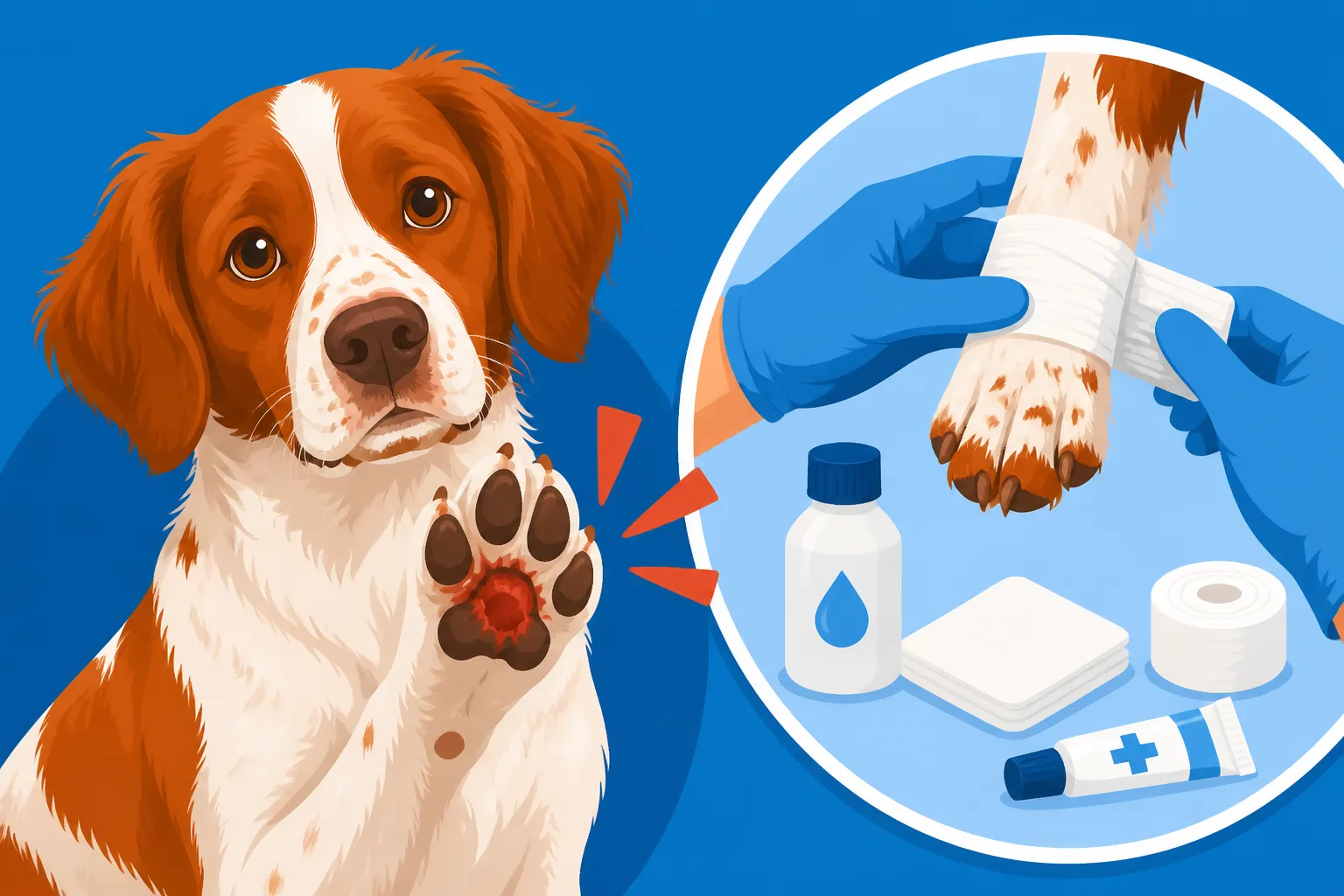
A well-applied bandage serves several purposes: it protects the wound from further contamination, helps control bleeding, and minimizes movement, which can reduce pain and promote healing. This is particularly important for active dogs like Brittanys, as they need to keep pressure off the injury.
Here’s a step-by-step guide on how to tape a Brittany's foot in the field:
- Materials: You'll need sterile gauze pads (non-stick preferred), self-adhering bandage wrap (like Vetrap or Co-Flex), and medical tape. Keep these in your dog's first aid kit!
- Apply a Non-Stick Pad: Place a sterile, non-stick gauze pad directly over the clean wound. This will absorb any drainage and prevent the bandage from sticking to the healing tissue.
- Padding Between Toes: If the wound is deep or if you're using a thick bandage, place small pieces of cotton or gauze between your Brittany’s toes. This prevents moisture buildup and chafing between the digits, which can lead to new problems like interdigital dermatitis.
- First Layer (Conforming Gauze): Wrap the paw with a layer of conforming gauze, starting at the toes and working your way up. Ensure it’s snug but not too tight. Make sure to cover the entire paw pad area and extend slightly above the wrist or hock.
- Second Layer (Self-Adhering Wrap): Now apply the self-adhering wrap. Again, start at the toes and work up, overlapping each turn by about 50%. Crucially, leave the two central toenails exposed. This is a vital indicator. If the bandage is too tight, these nails will swell and separate, signaling that you need to re-do it immediately. Wrap firmly but do not cinch it down. You should be able to slide a finger under the top edge of the bandage easily.
- Secure with Tape: Apply a layer of medical tape around the top and bottom edges of the self-adhering wrap to prevent it from unraveling or slipping off. You can also run a few strips of tape lengthwise up the leg and over the top of the bandage for extra security.
- Check for Comfort: After bandaging, observe your Brittany. Are they still limping excessively? Are they chewing at the bandage? Check the exposed toenails frequently over the next hour for swelling or separation, indicating it's too tight.
Remember, the goal is protection and stability, not tourniquet-like tightness. If you're unsure, it's always better to get professional advice.
When to Call the Vet: Recognizing Serious Pad Injuries
While some minor pad injuries can be managed at home, many require professional veterinary attention. Knowing the signs that indicate a more serious problem is crucial for your Brittany's well-being and recovery.
Recognizing Serious Injuries
It can be tough to distinguish between a simple scrape and a serious injury, especially when your dog is in pain. Here are key indicators that warrant an immediate trip to the veterinarian:
- Deep or Wide Lacerations: If the cut is deep enough that you can see fat, muscle, or bone, or if the edges of the wound gape open widely, it likely needs sutures to heal properly. These wounds are also at higher risk of infection and can take a very long time to close on their own. Similarly, a significant tear where a flap of pad is almost completely detached often requires surgical reattachment or debridement. This kind of wound is often what leads to the question of what hip surgery costs on a Brittany, though this is a pad injury, not a hip issue, the comparison is to severe, costly interventions.
- Excessive or Uncontrolled Bleeding: If you apply pressure for 5-10 minutes and the bleeding doesn't slow significantly or stop, there might be a larger blood vessel involved. Persistent, heavy bleeding is an emergency.
- Embedded Foreign Objects: As mentioned earlier, if an object is large, deeply embedded, or you can't easily remove it, attempting to do so at home can cause more harm. Veterinarians have the tools and expertise to safely remove foreign bodies, often under sedation.
- Signs of Infection: Even minor wounds can become infected. Watch for redness, swelling, heat around the paw, pus or foul-smelling discharge, or your Brittany showing increased pain or lameness days after the initial injury. Fever or lethargy can also indicate a systemic infection.
- Severe Lameness or Non-Weight Bearing: If your Brittany is completely refusing to put any weight on the injured paw, or if they are in obvious, continuous severe pain, it's a sign that the injury is more than superficial. This could indicate nerve damage, fracture, or severe soft tissue damage.
- Burns or Frostbite: These injuries are inherently serious due to the tissue damage they cause. They require immediate professional assessment and specialized treatment to prevent infection, manage pain, and promote healing.
When in doubt, always err on the side of caution and contact your vet. A quick phone call can often help you decide if an immediate visit is necessary.
Veterinary Treatment Options
When you bring your Brittany to the vet for a torn pad, they will thoroughly examine the paw, often sedating the dog for better access and to minimize pain. The treatment approach will depend entirely on the type and severity of the injury.
- Wound Cleaning and Debridement: The vet will meticulously clean the wound, often with sterile saline and antiseptic solutions. They may need to remove any dead or contaminated tissue (debridement) to promote healthy healing.
- Sutures or Staples: For deep lacerations or tears, the vet may use sutures (stitches) or surgical staples to bring the edges of the pad back together. This is crucial for proper healing and minimizing scarring. Pad tissues are tough to stitch, but when done correctly, it can drastically improve recovery.
- Pain Management: Pain relief is a key component of treatment. Your vet will likely prescribe anti-inflammatory medications (like NSAIDs) to reduce pain and swelling, making your dog much more comfortable during recovery.
- Antibiotics: If there's a risk of infection (especially with puncture wounds or contaminated injuries) or if an infection is already present, oral antibiotics will be prescribed. This prevents complications that can significantly prolong healing.
- Specialized Bandaging and Splinting: Vets often apply specialized bandages designed to protect the wound, absorb discharge, and provide support. In some severe cases, especially if a digit is compromised, a splint might be necessary to immobilize the paw. These bandages are usually changed every few days, requiring follow-up visits.
- Recheck Appointments: Multiple follow-up appointments will be necessary to monitor healing, change bandages, and remove sutures. Adhering to this schedule is vital for a successful recovery.
The recovery process for a torn pad can be lengthy. Pad tissue heals slowly due to its constant use and unique structure. Your vet will provide specific instructions on rest, activity restrictions, and wound care at home. This might mean kennel rest, leash walks only, or even a cone collar to prevent licking or chewing at the wound.
The Cost of Treating a Brittany's Torn Pad
Let's be real: veterinary care, especially for an injury requiring sutures, medication, and multiple follow-ups, isn't cheap. The cost of treating a Brittany's torn pad can vary widely depending on the severity of the injury, the need for sedation or surgery, geographic location, and whether complications arise.
For a minor cut or abrasion that just needs cleaning and a bandage, you might be looking at a standard office visit fee plus materials, perhaps $100-$300. However, for a deep laceration requiring sedation, sutures, pain medication, and antibiotics, the costs can quickly climb to $400-$800, or even more if specialists are involved or if there are complications like infection. Imagine a scenario where your Brittany tears its pad badly; you might be facing initial emergency vet costs, follow-up visits for bandage changes, and medication refills. This can add up.
This is where having pet insurance like Healthy Paws can be a huge relief. Pet insurance plans can help offset these unexpected veterinary expenses, ensuring you can make treatment decisions based on your Brittany's health needs rather than solely on your wallet. For working dogs, particularly, the risk of field injuries is higher, making insurance an even wiser investment. Healthy Paws, for example, often covers accidents and illnesses, which would include most torn pad injuries, allowing you to focus on your dog's recovery without the added financial stress. While a Brittany’s field injuries cost in a season can be high, proactive financial planning can mitigate the burden.
| Injury Type | Symptoms | First Aid Action | When to See a Vet |
|---|---|---|---|
| Abrasion/Scrape | Red, raw area, light oozing | Clean with mild antiseptic, apply protective bandage | If pain persists, signs of infection, or not healing after 2-3 days |
| Minor Cut/Puncture | Small bleeding, visible superficial wound | Clean, apply pressure to stop bleeding, bandage | If bleeding won't stop, object embedded, deep wound, or signs of infection |
| Deep Laceration/Tear | Gaping wound, heavy bleeding, flap of skin | Control bleeding with pressure, clean gently, bandage | Immediately – likely needs sutures, pain management, antibiotics |
| Embedded Object | Limping, visible object, pain | Do NOT remove if deep or large, bandage around it | Immediately – requires professional removal |
| Infection Signs | Swelling, redness, pus, foul odor, increased pain | Keep clean, light bandage | Immediately – requires vet for antibiotics and proper wound management |
| Severe Lameness | Non-weight bearing, extreme pain | Rest, gentle support | Immediately – indicates significant injury, potentially fracture or nerve damage |
| Burns/Frostbite | Blisters, peeling skin, discolored tissue | Cool with water (burns), warm gently (frostbite) | Immediately – requires specialized veterinary care |
Proactive Steps to Prevent Torn Pads
Prevention is always better than cure, especially when it comes to the painful and often disruptive experience of a torn paw pad. For a Brittany, whose life revolves around activity, taking proactive steps to protect their paws is an essential part of responsible ownership.
Pre-Hunt Conditioning and Paw Care
Just like an athlete conditions their body, a working Brittany's paws need conditioning, too. This isn't just about general fitness, but specific care for those hardworking pads.
- Toughening Pads Gradually: If your Brittany is mostly a couch potato during the off-season, jumping straight into a rigorous hunt on rough terrain is a recipe for disaster. Gradually increase their exposure to different surfaces. Start with short walks on varied ground – pavement, gravel, grass – and slowly extend the duration and intensity. This helps the pads build up natural calluses and become more resilient. You might also look into whether pad toughener works on a Brittany, though many owners find gradual conditioning more effective and natural.
- Regular Pad Inspections: Make it a habit to check your Brittany's paws regularly, especially before and after any strenuous activity. Look between the toes, at the pads themselves, and at the nails. Check for cracks, foreign objects, tenderness, or any signs of redness or irritation. This early detection can prevent minor issues from becoming major problems. You'll be surprised how often a Brittany's pads should be checked.
- Proper Nail Trimming: Overly long nails can splay the toes and put abnormal pressure on the paw pads, making them more susceptible to injury. Keep your Brittany's nails trimmed short, to the point where they don't click on hard floors. If you're wondering how short a Brittany's nails should be for running, the answer is as short as comfortably possible without cutting into the quick. This also helps with traction and overall paw health.
- Paw Waxes and Balms: Products like Musher's Secret or other paw waxes can create a protective barrier on the pads, shielding them from abrasive surfaces, extreme temperatures (hot pavement or ice), and chemicals. Apply them generously before hunts or long walks, especially in challenging conditions. Many wonder whether a Brittany needs paw wax, and for active dogs, it's certainly a beneficial preventative measure.
Protective Gear and Environmental Awareness
Sometimes, conditioning isn't enough, or the environment is simply too harsh. That's when protective gear comes into play.
- Dog Boots: While some dogs resist them, boots can be invaluable in protecting paws from extreme conditions or known hazards. Whether a Brittany needs boots in the field depends on the terrain and weather. For hunting in icy conditions, deep snow, or fields covered in sharp stubble or burrs, dog boots can prevent cuts, abrasions, and frostbite. Brands like Ruffwear, Ultra Paws, and Muttluks offer durable options. It’s important to introduce boots gradually, starting with short periods indoors, to help your Brittany get used to them.
- Avoid Extreme Surfaces and Temperatures: Be mindful of where your Brittany is running. Hot asphalt can quickly burn pads, especially in summer. If it's too hot for you to comfortably hold your hand on the pavement for five seconds, it's too hot for your dog's paws. Similarly, prolonged exposure to frozen ground or ice can lead to frostbite. If you're questioning whether a Brittany's pads burn on hot ground, the answer is a resounding yes, so always test the surface yourself.
- Scout Hunting Areas: If possible, familiarize yourself with new hunting grounds before letting your Brittany run wild. Look for potential hazards like broken glass, barbed wire, sharp rocks, or dense, thorny brush. Being aware of the environment allows you to guide your dog away from dangerous areas or take precautions.
Post-Hunt Routine
The care doesn't stop once the hunt is over. A thorough post-hunt inspection and cleaning routine can catch minor issues before they escalate.
- Immediate Inspection: As soon as you finish a hunt or a long walk, or within an hour of a hunt, give your Brittany's paws a thorough check. Look carefully at each pad and between each toe. Feel for any tenderness or lumps. This is particularly important for dogs that have been running in heavy cover.
- Clean the Paws: Even if there are no visible injuries, cleaning your Brittany's paws after an outing is a good practice. Use a damp cloth to wipe away dirt, mud, burrs, and any chemicals or irritants they might have picked up. This also helps you spot any hidden cuts or abrasions.
- Moisturize (If Needed): If your Brittany's pads are dry or cracked, a canine-specific paw balm or moisturizer can help keep them supple and prevent cracking. Dry pads are more prone to tearing, so maintaining their elasticity is important.
- Monitor for Delayed Symptoms: Sometimes, the full extent of an injury isn't immediately apparent. Over the next 24-48 hours, keep an eye on your Brittany for any limping, licking, swelling, or changes in behavior that might indicate a developing problem. Early intervention can prevent minor issues from becoming complicated infections.
By integrating these preventative measures into your routine, you significantly reduce the likelihood of your beloved Brittany suffering from painful and debilitating torn paw pads, keeping them happy, healthy, and ready for their next adventure in the field.
Disclaimer
The information provided in this article is for educational and informational purposes only, and does not constitute veterinary advice. Always consult with a qualified veterinarian for any health concerns or before making any decisions related to your pet's health and treatment.