Whether a Brittany Goes Blind From Retinal Dysplasia
It’s a heart-wrenching thought for any Brittany owner: the possibility of your vibrant, energetic companion losing their sight. The worry about conditions like retinal dysplasia and what it might truly mean for your dog's future vision is a valid and heavy concern. This guide aims to thoroughly explore retinal dysplasia in Brittanys, helping you understand if and when this condition can lead to blindness, what signs to look for, and how to navigate care if your beloved Brittany is affected.
Understanding Retinal Dysplasia in Brittanys
When you first hear "retinal dysplasia," it sounds scary, doesn't it? Like a guaranteed path to darkness for your dog. But the reality, while serious, is often more nuanced, and understanding the specifics can bring a lot of clarity and peace of mind. It’s not always an immediate death sentence for your Brittany’s vision, but it's certainly a condition that requires attention and awareness.
What Retinal Dysplasia Actually Is
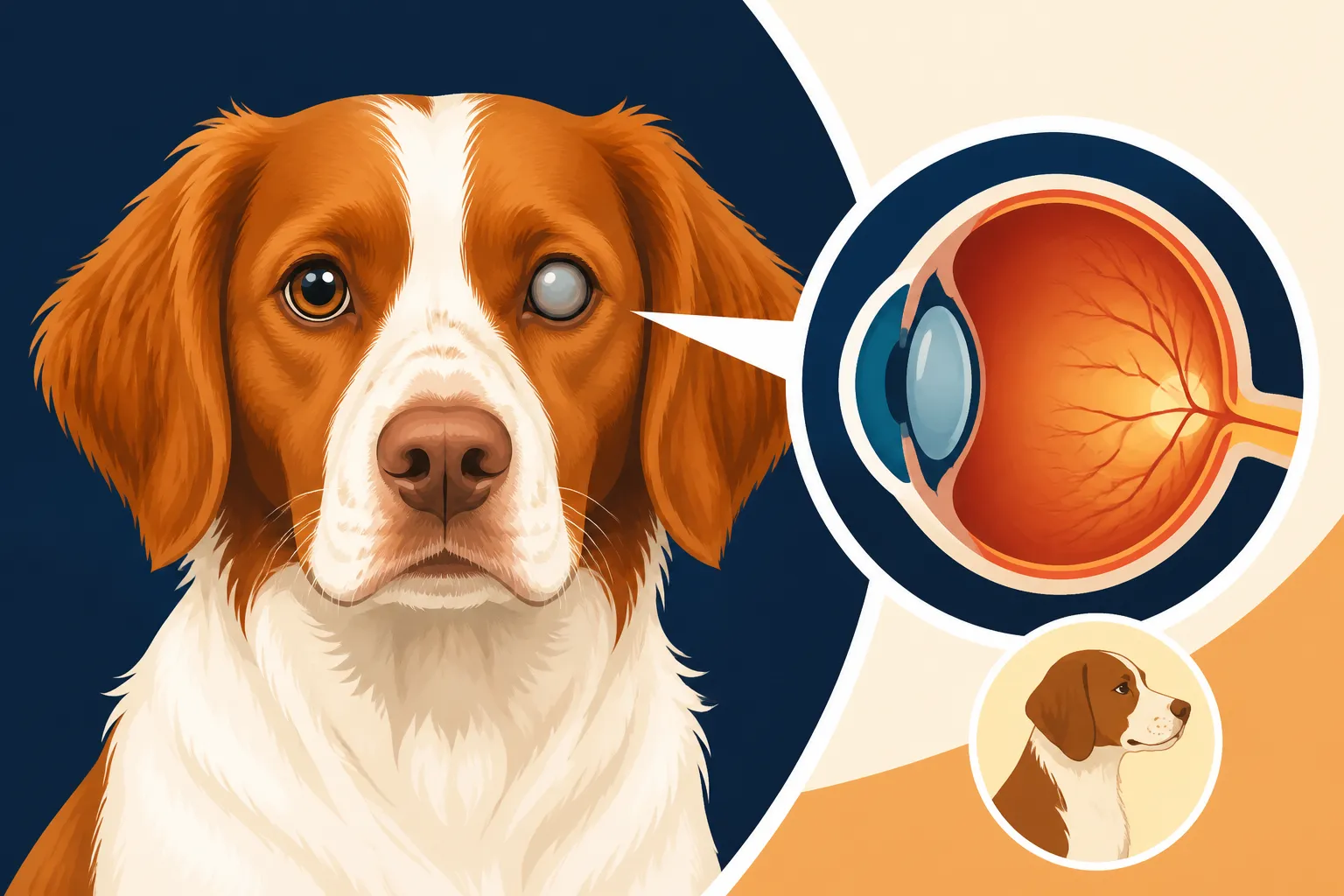
At its core, retinal dysplasia is a developmental abnormality of the retina, which is that critical light-sensitive tissue at the back of your dog's eye. Think of the retina as the film in a camera – it captures the images and sends them to the brain. When this tissue doesn't develop correctly, those images can't be formed or transmitted properly. This condition is congenital, meaning a puppy is born with it, and it usually stems from genetic factors, though sometimes trauma or infection during development can play a role.
There are primarily three types of retinal dysplasia, each affecting the eye differently. The mildest form, and arguably the most common, is retinal folds. These are essentially little wrinkles or creases in the retina. Imagine a piece of paper that's been slightly crumpled and then flattened out; you can still read it, but there are lines. For a dog, these folds often cause no noticeable vision impairment at all. Then there's geographic retinal dysplasia, which is a more severe form. Here, the retinal layers are not just folded but are disorganized and can have areas of thinning or detachment. This is where vision starts to be more significantly affected. Finally, the most severe, and thankfully rarest, form is total retinal detachment. In this scenario, the retina completely separates from the back of the eye, which is a devastating blow to vision.
How Retinal Dysplasia Affects a Brittany's Vision
The impact of retinal dysplasia on a Brittany's vision directly correlates with the severity and type of the dysplasia. For most Brittanys diagnosed with the mildest form, retinal folds, their vision remains perfectly normal. They might have a few small blind spots or areas of slightly blurred vision that are completely imperceptible to them in their day-to-day lives. Many dogs with retinal folds live full, active lives, hunting, playing, and navigating their world without a single hiccup related to their eyes. It's often only discovered during a routine eye exam by a veterinary ophthalmologist.
However, when we move into geographic retinal dysplasia, the effects become more pronounced. Depending on the size and location of the affected areas, a Brittany might experience significant vision impairment. This could manifest as difficulty seeing in dim light, bumping into objects, or struggling with depth perception. They might be slower to react to moving objects or hesitant in unfamiliar environments. It’s important to note that even with geographic dysplasia, many dogs still retain some functional vision and can adapt remarkably well, especially if their environment is kept consistent.
In the unfortunate event of a total retinal detachment, the prognosis is quite different. When the retina completely detaches, that part of the eye loses its ability to function, leading to complete blindness in that eye. If detachment occurs in both eyes, the dog will be entirely blind. This is, understandably, the most feared outcome and highlights the critical need for regular eye health checks, particularly for puppies. You can read more about what specifically happens in the eye in our detailed article, "What Retinal Dysplasia Does to a Brittany's Sight."
The Genetic Component and Inheritance
For Brittanys, retinal dysplasia, particularly the inherited forms, is a serious concern, and it's largely considered to be hereditary. This means it's passed down from parents to their offspring. The exact mode of inheritance can be complex, sometimes involving a single recessive gene or multiple genes working together. What this boils down to is that a dog can carry the gene for retinal dysplasia without showing any symptoms themselves, and then pass it on to their puppies. If two carriers breed, or if a carrier breeds with an affected dog, the chances of producing affected puppies increase significantly.
This genetic link underscores why it is absolutely paramount for responsible Brittany breeders to conduct thorough eye screenings on their breeding stock. Organizations like the Orthopedic Foundation for Animals (OFA) and the American College of Veterinary Ophthalmologists (ACVO) offer certifications (often referred to as CERF exams) that screen for hereditary eye diseases, including retinal dysplasia. A reputable breeder will have these certifications for both the dam and sire, providing verifiable proof that their dogs have been checked by a board-certified veterinary ophthalmologist and found to be free of observable hereditary eye conditions. This significantly reduces the risk of puppies inheriting the severe forms of retinal dysplasia. Without such screening, you're essentially gambling with a puppy's vision and perpetuating a genetic problem within the breed.
The Severity Spectrum: Can a Brittany Truly Go Blind?
The burning question for many is, "Will my Brittany go blind?" The answer, as frustrating as it might be, depends heavily on the specific presentation of retinal dysplasia. It's not a one-size-fits-all condition, and the journey from diagnosis to potential vision loss has many different paths.
Mild Cases and Minimal Impact
In the vast majority of cases, Brittanys diagnosed with retinal folds experience what we consider a "mild" form of retinal dysplasia. These folds are typically small, localized, and do not significantly interfere with the dog's field of vision. Think of it like a minor imperfection on a camera lens – it might technically be there, but it doesn't stop the camera from taking clear pictures. Many dogs with these folds will never show any outward signs of vision trouble. They'll continue to track birds in the field, navigate your home, and play fetch with the same enthusiasm they always have.
These mild cases are often discovered incidentally during a comprehensive eye examination, perhaps as part of a routine check-up or a pre-breeding screening. The ophthalmologist will observe these folds through specialized equipment, but for the dog, life goes on as normal. It’s a good example of how sometimes, a medical diagnosis doesn't always equate to a disability or a significant change in quality of life. Owners are often relieved to learn that while the condition is present, it's not immediately threatening their dog's ability to see or enjoy life.
Moderate to Severe Cases
This is where the concern about blindness becomes very real. Geographic retinal dysplasia involves more widespread and severe malformations of the retinal tissue. Instead of simple folds, you have areas where the retina is thinner, thicker, or even completely disorganized. These larger, more significant lesions directly impact the retina’s ability to process light and send visual signals to the brain. A Brittany with geographic retinal dysplasia might have significant blind spots, tunnel vision, or generally blurry sight, making it challenging to navigate their environment, especially in low light or unfamiliar surroundings.
The most severe scenario, total retinal detachment, is unfortunately a direct path to blindness in the affected eye. This happens when the layers of the retina separate, cutting off the blood supply and nerve connections essential for vision. If this occurs in both eyes, the dog becomes completely blind. While relatively rare, it is a devastating outcome. These severe forms can sometimes be associated with other ocular abnormalities, such as cataracts or vitreous degeneration, further complicating vision. While there are often no effective treatments to reattach a genetically detached retina, prompt veterinary attention is crucial for accurate diagnosis and to rule out other treatable causes of detachment.
The Importance of Early Diagnosis
Early diagnosis of retinal dysplasia, especially in Brittany puppies, is incredibly important for several reasons. Firstly, it provides owners with a clear understanding of their dog's eye health status, allowing them to make informed decisions about their care, training, and breeding plans. Pediatric eye exams, ideally conducted by a board-certified veterinary ophthalmologist around 6-8 weeks of age, can identify retinal dysplasia when the puppy is still young. You can learn more about this in our article, "When a Brittany Puppy's Eyes Should Be Checked."
Secondly, early diagnosis allows for monitoring of the condition. While mild retinal folds typically don't progress, some forms of geographic dysplasia might warrant periodic re-evaluations to track any changes. Knowing the diagnosis early also helps owners adapt their home environment if necessary, preventing accidents and ensuring the puppy's safety as they grow. This proactive approach can make a significant difference in the quality of life for an affected Brittany. Regular check-ups, even if your dog seems perfectly fine, are part of responsible pet ownership, and you can explore "How Often a Brittany's Eyes Should Be Certified" for more information.
Living with a Brittany Affected by Retinal Dysplasia
Discovering your Brittany has retinal dysplasia, even if it’s a mild case, can be a moment of anxiety. But it doesn't mean the end of a happy, full life for your dog. With understanding, adaptation, and proactive care, Brittanys with vision impairment can thrive.
Managing Vision Impairment
If your Brittany does experience significant vision impairment due to retinal dysplasia, adapting your home environment and daily routines becomes key. The goal is to create a safe, predictable, and enriching world for them. This means trying to keep furniture and water bowls in consistent locations. Avoid rearranging things frequently, as this can disorient a dog with poor vision and lead to bumps and falls. Use tactile cues, like different textured rugs or runners, to help them navigate specific areas. For instance, a mat by the door could signal "exit."
Safety is paramount. Block off stairs with gates, especially if your dog's vision is severely compromised. Use soft padding on sharp furniture corners. Outside, keep your yard securely fenced and clear of obstacles. When out on walks, always use a leash, and consider a harness rather than a collar for better control and to prevent neck strain if they suddenly pull. It’s also incredibly helpful to use verbal cues consistently – always say your dog’s name before approaching them so you don’t startle them. Words like "step up," "step down," "wait," and "obstacle" can become invaluable commands. A dog with limited vision relies heavily on their other senses, so familiar smells and sounds can provide comfort and orientation.
Treatment Options and Prognosis
It’s tough to hear, but for most genetic forms of retinal dysplasia, there isn't a medical treatment that can reverse the retinal malformation or reattach a genetically detached retina. The damage, unfortunately, is typically done during development. This is why prevention through responsible breeding and genetic screening is so critical. However, this doesn't mean there's no care to be given. Management often focuses on addressing any secondary issues that might arise, or simply on adapting to the vision impairment.
For instance, if a retinal detachment causes inflammation or discomfort, medication might be prescribed to manage those symptoms. Regular veterinary check-ups are still essential to monitor overall eye health and catch any other conditions that might develop, such as cataracts or glaucoma, which can sometimes occur alongside other eye issues. While a definitive "cure" for the dysplasia itself might not exist, a proactive approach to managing your dog's overall health and supporting their other senses can ensure they maintain a high quality of life for "The Twelve to Fourteen Years a Brittany Gets."
Financial Considerations and Insurance
The costs associated with diagnosing and managing eye conditions in dogs can vary widely. Initial diagnostic exams by a veterinary ophthalmologist, including a CERF exam, might range from $150 to $300, sometimes more depending on additional tests like electroretinography (ERG) to assess retinal function. If specialized treatments or surgeries for secondary conditions are needed, those costs can escalate significantly. For example, treatments for something like "Glaucoma in a Brittany Spaniel" can be an emergency and quite expensive.
Many owners find themselves caught off guard by these expenses, which is why considering pet insurance can be a real lifeline. Companies like Healthy Paws offer various plans that can help cover a significant portion of veterinary bills for unexpected illnesses and accidents, though congenital or hereditary conditions often have specific waiting periods or may not be covered if diagnosed prior to policy enrollment. It's always best to research policies thoroughly and understand what they do and don't cover, especially regarding genetic conditions. Having a good insurance plan from Healthy Paws can provide immense relief if you face unexpected veterinary costs, helping you focus on your Brittany's well-being rather than the financial strain. Pet insurance, including options from Healthy Paws, is an investment in your dog’s health and your peace of mind over their lifetime.
Here’s a quick overview of the different types of retinal dysplasia and their potential impact:
| Type of Retinal Dysplasia | Description | Potential Impact on Vision | Prognosis for Vision Loss |
|---|---|---|---|
| Retinal Folds | Small, localized creases or wrinkles in the retina. | Usually none; may cause minor, unnoticeable blind spots. | Very low. |
| Geographic Retinal Dysplasia | Larger, disorganized areas of retina with thinning/detachment. | Can range from mild impairment to significant blind spots or generalized poor vision. | Moderate to high, depending on severity and location. |
| Total Retinal Detachment | Complete separation of the retina from the back of the eye. | Complete blindness in the affected eye. If bilateral, total blindness. | Very high (immediate blindness in affected eye). |
Disclaimer
This article is intended for informational purposes only and is not a substitute for professional veterinary advice. Always consult with a qualified veterinarian or veterinary ophthalmologist for any health concerns or before making any decisions about your Brittany's medical care.