What Retinal Dysplasia Does to a Brittany’s Sight
It's incredibly distressing to think about your beloved Brittany struggling with their vision, especially a breed known for its keen eyes and field prowess. When a condition like retinal dysplasia enters the picture, it can bring a wave of worry about their quality of life, their ability to navigate their world, and even their hunting future. This guide aims to thoroughly explain what retinal dysplasia means for your Brittany's sight, how it's diagnosed, and how to best support your companion.
Understanding Retinal Dysplasia in Brittanys
When we talk about retinal dysplasia, it sounds like a very technical, intimidating term, but at its heart, it refers to an abnormal development of the retina. The retina is the light-sensitive tissue at the back of your dog's eye, essentially their "camera film." It's crucial for sight, converting light into signals that the brain interprets as images. For a Brittany, a breed renowned for its sharp vision in the field, any retinal issue is a significant concern.
What is Retinal Dysplasia?
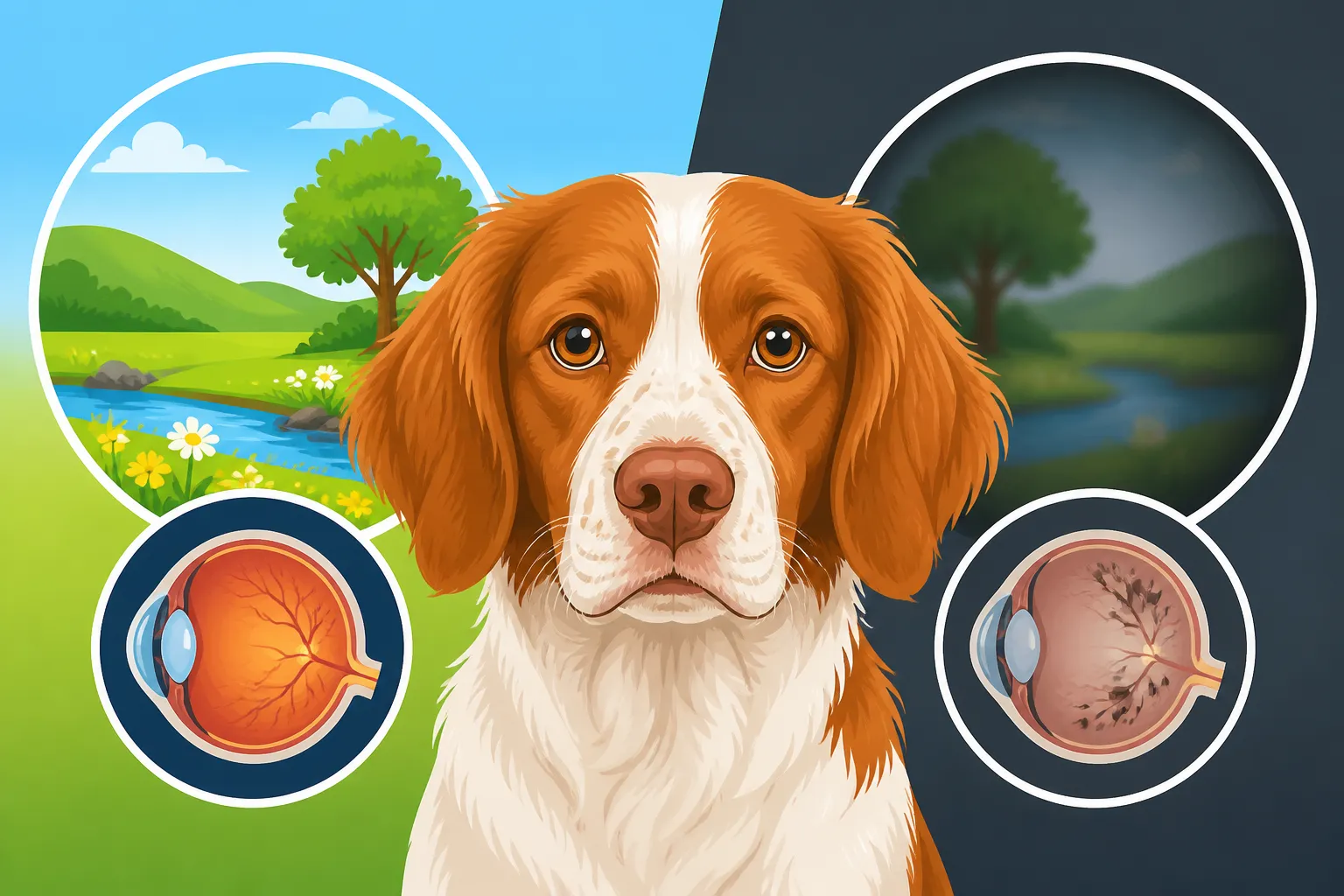
Retinal dysplasia occurs when the layers of the retina don't form correctly during development, usually before birth. Instead of smooth, well-organized tissue, you end up with folds, rosettes (small areas of abnormal growth), or even larger areas where the retina hasn't properly attached to the back of the eye. Think of it like a piece of photographic film that's crinkled or torn in places; it simply can't capture a clear, complete image.
The condition isn't a single entity but manifests in different forms, each with varying degrees of impact:
- Retinal Folds: This is often the mildest form, where small, benign folds or creases appear in the retina. Many dogs with only retinal folds might have no noticeable vision impairment at all. It's like having a slight crease on your camera film – you might not even notice it in most photos. These are frequently found during routine eye exams and don't typically worsen.
- Geographic Retinal Dysplasia: This form is more severe. Here, larger, irregular areas of retinal malformation occur, often appearing as patches of thinning or detachment. These "geographic" lesions can certainly affect vision, especially if they are located in critical areas of the retina responsible for sharp central vision. A dog might have blind spots or a generalized reduction in visual acuity.
- Retinal Detachment: This is the most serious manifestation, where a significant portion of the retina separates from the underlying supportive tissue. When the retina detaches, it loses its blood supply and connection to the optic nerve, leading to significant, often complete, vision loss in the affected eye. It’s akin to the film completely coming loose from the camera back; no image can be captured. While full detachments can occur with severe dysplasia, sometimes retinal detachments can happen for other reasons too, so it's important to differentiate.
In Brittanys, the most commonly reported forms are retinal folds and geographic dysplasia. Thankfully, complete retinal detachment as a primary result of dysplasia is less common than the milder forms, but it's still a possibility. The key takeaway here is that "retinal dysplasia" isn't a one-size-fits-all diagnosis; the specific type and severity greatly influence its effect on your dog.
How Brittanys Inherit Retinal Dysplasia
Understanding the genetic component of retinal dysplasia is crucial, especially for a breed like the Brittany where lineage and health screenings are so important. In many breeds, including the Brittany, retinal dysplasia is considered a heritable condition. This means it's passed down from parents to offspring. The exact mode of inheritance can vary depending on the breed and specific form of dysplasia, but it often follows an autosomal recessive pattern or a complex polygenic inheritance.
In simpler terms, if it's autosomal recessive, a puppy needs to inherit a copy of the faulty gene from both its mother and its father to develop the condition. Dogs that inherit only one copy are considered carriers; they won't show symptoms themselves but can pass the gene on to their puppies. This is why responsible breeding practices are so incredibly important. A breeder might have two outwardly healthy dogs who are both carriers, and if they breed them, a percentage of the litter could inherit the condition.
Breeders committed to improving the health of the Brittany Spaniel population strive to identify and avoid breeding affected dogs or known carriers. This involves thorough health testing and careful pedigree research. While not all forms of retinal dysplasia in all breeds have a definitive DNA test, regular eye certifications by a board-certified veterinary ophthalmologist play a critical role in identifying affected individuals. By understanding these genetic risks, we can help ensure that future generations of Brittanys are born with the best possible chance for clear, healthy vision throughout their energetic lives.
The Impact on a Brittany's Sight
When you first hear the words "retinal dysplasia," it's natural to immediately jump to the worst-case scenario: your active, bird-hunting Brittany going completely blind. Thankfully, that's often not the case, but the actual impact on their vision can vary dramatically, from virtually unnoticeable to profoundly debilitating.
Range of Visual Impairment
The extent of vision loss a Brittany experiences due to retinal dysplasia is directly tied to the severity and location of the retinal abnormalities.
- Mild Retinal Folds: Often No Noticeable Impact: Many Brittanys diagnosed with only mild retinal folds will live their entire lives with perfectly functional vision. These small creases in the retina might only be visible to a veterinary ophthalmologist with specialized equipment. For these dogs, their ability to track birds, navigate dense cover, or even just play fetch in the backyard remains unimpaired. They might not even register that anything is amiss, and you certainly wouldn't be able to tell by observing their behavior. It's truly a testament to how adaptable and resilient dogs are, and how much "extra" capacity their visual system has. However, even mild folds should be noted, especially if the dog is part of a breeding program, as they indicate the presence of the genetic predisposition.
- Geographic Retinal Dysplasia: Varied Impairment: This is where things get a bit more complex. With geographic retinal dysplasia, larger, more significant areas of abnormal retinal development are present. Depending on their size and position, these lesions can cause anything from minor blind spots to a more generalized reduction in overall visual acuity. Imagine looking through a window with a permanent smudge or distortion in certain areas. A Brittany with this form might still be able to hunt, but perhaps with reduced efficiency, struggling slightly with depth perception or quickly locating a fallen bird in challenging light. They might bump into objects more frequently in unfamiliar environments or be a little more hesitant in low-light conditions. Their peripheral vision might be affected, making them jumpy if something suddenly appears from the side. For dogs whose lives revolve around visual cues and tracking, even subtle impairments can have an effect, though many will still manage remarkably well, relying on their other senses.
- Retinal Detachment: Severe to Complete Vision Loss: This is the most severe outcome. When a significant portion of the retina detaches, the dog's vision in that eye can be severely compromised, often leading to complete blindness. A Brittany experiencing a retinal detachment due to severe dysplasia might suddenly become disoriented, anxious, or begin bumping into furniture. They would certainly struggle immensely in the field, likely unable to follow game birds or navigate obstacles. While fortunately less common as a direct consequence of typical retinal dysplasia in Brittanys, it's the scenario that causes the most immediate and profound impact on their sight and quality of life. For a dog that goes completely blind in both eyes, their world changes dramatically, but they can still lead fulfilling lives with a dedicated owner, though their hunting career would certainly be over. If you suspect your Brittany's vision has suddenly deteriorated, seeking immediate veterinary attention is crucial, as some forms of retinal detachment might be treatable if caught early enough.
Progressive vs. Non-Progressive Forms
One of the most common questions owners have when facing a diagnosis of retinal dysplasia is whether their dog's vision will continue to worsen over time. This is a critical distinction and often a source of relief for Brittany owners.
For most forms of retinal dysplasia, particularly the folds and geographic types seen in Brittanys, the condition is generally considered non-progressive. This means that the abnormal development occurred during the prenatal or early postnatal period, and once the retina has developed to its final state, the dysplasia itself does not typically worsen or progress to more severe forms or detachment later in life. What you see is essentially what you get, in terms of the specific retinal lesions.
This is a huge relief for many owners. If your Brittany is diagnosed with mild retinal folds as a puppy and shows no significant visual impairment, it's highly likely they will continue to maintain that level of vision throughout their life. The immediate impact on their hunting ability or daily life would be established early on, and you wouldn't be constantly worrying about a decline. This allows owners to plan and adapt to their dog's specific visual capabilities without the fear of progressive deterioration.
However, it's important to distinguish between the non-progressive nature of the dysplasia itself and other age-related or unrelated eye conditions that can develop later. For example, a Brittany with retinal dysplasia could still develop cataracts or glaucoma, just like any other dog. These separate conditions would then cause their own set of vision problems, but they wouldn't be a direct progression of the retinal dysplasia. It's vital to continue with regular veterinary check-ups to monitor overall eye health. Furthermore, sometimes a detached retina can lead to secondary issues like glaucoma if not addressed, so ongoing care is always important.
Knowing that the condition is often non-progressive allows owners to focus on supporting their Brittany's current abilities and making any necessary environmental adjustments, rather than bracing for an inevitable decline. This understanding can significantly reduce anxiety and help you appreciate the life you have with your dog, regardless of their visual challenges.
Diagnosing and Managing Retinal Dysplasia
Catching any health issue early is always the best approach, and retinal dysplasia is no exception. While it's largely a congenital condition, timely diagnosis is key to understanding its impact and planning for your Brittany's future.
Early Detection and Veterinary Exams
The best way to detect retinal dysplasia is through a comprehensive eye examination performed by a board-certified veterinary ophthalmologist. These specialized vets have the expertise and equipment to thoroughly inspect the delicate structures of the eye, including the retina.
The most common method for early detection in puppies is an ophthalmoscopic examination. This involves dilating the puppy's pupils with drops, which allows the ophthalmologist to get a clear view of the retina at the back of the eye. They'll be looking for those characteristic folds, geographic lesions, or any signs of detachment. It's often recommended that puppies from breeds prone to eye conditions undergo their first eye exam between 6 to 12 weeks of age. For Brittanys, especially those from breeding lines with a history of eye issues, an early screening is a proactive step. This is also why many reputable breeders will have their entire litter checked before sending puppies to new homes. You can learn more about When a Brittany Puppy's Eyes Should Be Checked to prepare for your new companion.
During this exam, the ophthalmologist will issue a Canine Eye Registration Foundation (CERF) or Orthopedic Foundation for Animals (OFA) Eye Certification Registry (ECR) certificate. This document details any observed eye conditions. Even if mild folds are found, this information is invaluable for both the owner and for future breeding decisions, should that be the path. Understanding these early findings can help set expectations and ensure appropriate care from day one. Insurance providers like Healthy Paws often recommend regular veterinary check-ups, including eye exams, as part of preventative care to maintain eligibility and catch issues early.
Living with a Brittany with Retinal Dysplasia
If your Brittany receives a diagnosis of retinal dysplasia, it's natural to feel overwhelmed. However, many dogs, particularly those with mild to moderate forms, adapt incredibly well and lead full, active lives. The key is understanding their specific visual limitations and making practical adjustments.
- Assess Their Vision: First, work with your vet to clearly understand the severity of the dysplasia and how much vision your Brittany truly has. Can they see shadows? Distinguish shapes? Navigate familiar environments? This understanding will guide your approach.
- Maintain a Consistent Environment: Dogs with vision impairment thrive on consistency. Try to keep furniture and their feeding/sleeping areas in the same place. If you must rearrange, guide them around the new layout several times. This reduces anxiety and helps them build a mental map.
- Safety First, Always: For dogs with significant vision loss, safety becomes paramount.
- Outdoor Supervision: Never let a vision-impaired Brittany off-leash in an unfenced area. A long line in a secure field can allow them some freedom, but always with close supervision. They can easily become disoriented or wander into danger.
- Hazard Proofing: Identify potential hazards in your home or yard: sharp corners, stairs (use gates if needed), swimming pools (secure fencing is a must), or steep drops.
- Auditory Cues: Rely more on verbal commands and auditory signals. Clapping, whistling, or using a distinct verbal cue can guide them. Some owners even attach small bells to other pets or children so the Brittany can track their movements.
- Engage Other Senses: Brittanys have an incredible sense of smell and hearing. Leverage these strengths! Scent games, puzzle toys with treats, and sound-based toys can keep them mentally stimulated and happy. Many even continue to enjoy retrieving by scent, if the object has a distinct smell.
- Don't Pity, Empower: It's easy to feel sorry for a dog with vision issues, but too much pity can actually limit their potential. Encourage them to explore, learn, and be active within their capabilities. They pick up on your emotions, so project confidence and positivity.
- Regular Veterinary Check-ups: Even though retinal dysplasia itself is usually non-progressive, regular eye exams are crucial to monitor for any secondary issues or other age-related conditions. Your vet can check for signs of glaucoma or cataracts, which could further impact their vision. These yearly visits are important for overall health, and you might find it helpful to review Whether a Brittany Needs a Yearly Eye Exam. Insurance plans like Healthy Paws are beneficial for covering unforeseen veterinary costs, which can include managing additional eye conditions that might arise.
Living with a Brittany with retinal dysplasia is a journey of adaptation and learning, but it doesn't mean a diminished life. With patience, understanding, and proactive care, these remarkable dogs continue to bring immense joy and companionship.
Breeding Considerations and Prevention
For a breed as cherished for its health and working ability as the Brittany, addressing inherited conditions like retinal dysplasia through responsible breeding is paramount. This isn't just about individual dogs; it's about safeguarding the entire breed's future.
Screening and Genetic Testing
The cornerstone of preventing inherited eye diseases in any breed, including the Brittany, is thorough and consistent eye screening of all breeding stock. This primarily involves comprehensive eye examinations performed by a board-certified veterinary ophthalmologist. These exams, often part of the OFA Eye Certification Registry (ECR) program (formerly CERF), are performed annually on breeding dogs.
During these examinations, the ophthalmologist will look for any signs of retinal dysplasia, as well as other potential eye conditions like cataracts or glaucoma. If retinal folds or geographic dysplasia are identified, the dog should ideally be removed from a breeding program. Even if the folds are minor and don't affect the dog's vision, their presence indicates that the dog carries the genetic predisposition for the condition and could pass it on to offspring. It's an important aspect of a breeder's due diligence, alongside other health checks like hip screening. You can dive deeper into How Often a Brittany's Eyes Should Be Certified to understand the full commitment.
While specific DNA tests exist for certain forms of retinal dysplasia in some breeds, a universal DNA test that covers all forms of RD across all breeds, including the Brittany, is not currently widely available. This makes the skilled examination by an ophthalmologist even more critical. Research into canine genetics is constantly evolving, so it's always worth checking with breed clubs or veterinary geneticists for the most up-to-date information on available tests. For now, the visual examination remains the gold standard for screening.
Making Informed Breeding Decisions
For prospective Brittany owners, choosing a puppy from a breeder who prioritizes health screening is essential. A responsible breeder will be transparent about the health history of their breeding pair, including eye certifications. They should be able to provide you with OFA ECR certificates for both the dam and sire, showing that their eyes are clear of inherited conditions. They will also understand the genetic implications of any mild findings. If a breeder can't provide these certifications or dismisses their importance, it should raise a significant red flag.
Here's what to look for:
- OFA Eye Certification Registry (ECR) Clearances: Ensure both parents have current eye clearances from a board-certified veterinary ophthalmologist. These should be renewed yearly for active breeding dogs.
- Transparency and Discussion: A good breeder will openly discuss any eye conditions found in their lines, even mild ones, and explain their breeding philosophy regarding such conditions. They understand that not every dog can be perfect, but informed decisions are key.
- Focus on Overall Health: Eye health is just one piece of the puzzle. Responsible breeders also screen for other common Brittany health issues, such as hip and elbow dysplasia, and C3 deficiency. Understanding What a Brittany Spaniel Breeder Should Have Tested will give you a comprehensive picture of responsible breeding practices.
- Education for Puppy Buyers: Breeders should educate new owners about retinal dysplasia and other health concerns, advising them on what to look for as their puppy grows and the importance of regular veterinary care, including eye check-ups. This includes discussions around potential costs, with some owners considering pet insurance plans like Healthy Paws to help manage unexpected health expenses.
By insisting on these standards, we as owners can support ethical breeding practices that reduce the incidence of inherited conditions like retinal dysplasia, helping to ensure that Brittanys continue to be the healthy, keen-sighted companions and hunters we love for many The Twelve to Fourteen Years a Brittany Gets.
| Type of Retinal Dysplasia | Description | Potential Impact on Vision | Progression |
|---|---|---|---|
| Retinal Folds | Small, benign creases or folds in the retina. | Usually none; dog's vision typically remains normal. | Non-progressive |
| Geographic Dysplasia | Larger, irregular areas of retinal malformation. | Mild to moderate impairment, including blind spots or reduced visual acuity. Adaptable. | Non-progressive |
| Retinal Detachment | Retina completely separates from underlying tissue. | Severe to complete vision loss in the affected eye. Significant impact on quality of life. | Non-progressive (but secondary issues can arise) |
Disclaimer
This article is intended for informational purposes only and is not a substitute for professional veterinary advice. Always consult with a qualified veterinarian or veterinary ophthalmologist for any health concerns or before making any decisions about your Brittany's care.