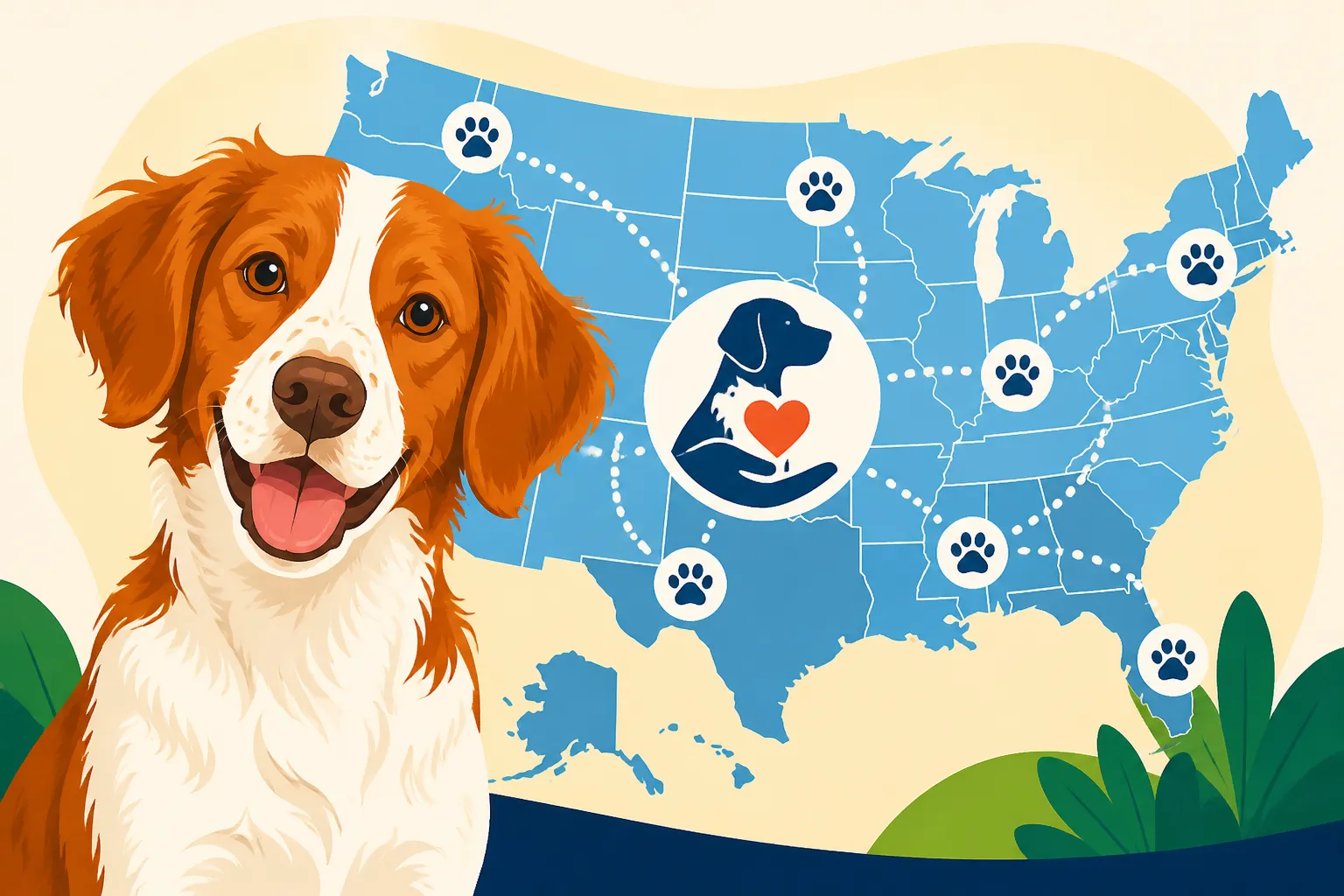
Whether the Brittany Rescue Network Covers the Country
A Brittany Rescue Network can reach far beyond one town, but “countrywide” does not mean there is a staffed shelter or foster home in every state. If you are trying to surrender or adopt a Brittany, the practical question is whether a volunteer can help in your area and what transport, foster care, and timing may involve. This guide explains what nationwide coverage usually looks like.
Does the Brittany Rescue Network cover the whole country
National reach is not the same as a shelter in every state
A rescue network may serve a broad geographic area by connecting dogs, foster homes, volunteers, and potential adopters across regions. That is different from operating a chain of public shelters with a building in every state. A group can have national reach while relying on a smaller number of volunteers who coordinate locally or regionally.
For Brittany owners, this distinction matters. Someone in a major population center may have more nearby foster or volunteer contacts than someone in a rural part of Montana, Wyoming, or the Dakotas. A rescue may still be able to discuss options, but the distance between the dog and a suitable foster home can affect how quickly a placement is possible.
So the practical answer is: the network may have broad national reach, but the level of hands-on help is not necessarily equal everywhere. Ask whether the organization currently has a volunteer or partner who can assist in your state, rather than assuming that “national” means immediate local service.
Coverage depends on people, foster homes, and transport
Volunteer availability changes. A rescue may be able to respond to an inquiry from a state where it has no regular foster home, but that does not guarantee it can take a dog immediately. Foster homes need to be available, suitable for that particular dog, and able to manage its needs while an adopter is found.
Transport can also shape what “coverage” looks like. A dog may be moved between regions when a safe, appropriate arrangement can be made, but a rescue should explain who is responsible for planning and carrying out that transport. It is worth asking whether the dog would travel with a volunteer, meet a foster nearby, or need another arrangement.
These practical limits are common to volunteer-based rescue work. A nationwide network can make connections across state lines, but each placement still depends on the dog’s behavior, health, foster capacity, and the people available to help. If you are trying to place a dog, start early and share honest information about its needs. If you hope to adopt, be flexible about timing and location.
What nationwide coverage means for adopters and owners
If you want to adopt a Brittany
Begin by asking whether the rescue serves your location and whether it has a Brittany available that could fit your home. An application may ask about your experience, household, activity level, other pets, and plans for exercise. Those questions are not just paperwork: Brittanys are energetic sporting dogs, and a good placement depends on matching the individual dog with a realistic home.
A rescue may not have a dog immediately available near you. You might be asked to wait, consider a dog in another region, or discuss whether travel is practical. Before committing to a long-distance adoption, ask how you will meet the dog, what information is known about its history, and how the handoff would work. Read Adopting a Brittany From Rescue for more on the process, and What Adopting a Brittany Costs for the kinds of expenses to plan for.
If you are preparing for a newly adopted dog, set up a quiet settling-in area before the dog arrives. Ask the rescue what food the dog currently eats and whether a gradual food transition is recommended. Chewy can be one place to source routine supplies such as food storage, bowls, or a comfortable bed, but confirm the dog’s specific needs with the rescue or veterinarian rather than buying a large supply of unfamiliar food in advance.
If you need help placing a Brittany
Contact the rescue with clear details: your location, the dog’s age, medical history, behavior around people and other animals, and any known training or hunting experience. If the dog has a bite history, separation distress, or a medical condition, say so plainly. Accurate information helps a rescue judge whether it has a suitable foster home and avoids a stressful or unsafe placement.
It can also help to send recent photographs, veterinary records, and a description of the dog’s normal routine. A Brittany that has lived as a family companion may need a different foster setting from one that has spent most of its life in a kennel or hunting environment. A rescue may not be able to take every dog at once, so ask whether it can offer advice, a referral, or a waitlist while you keep the dog safely housed.
Some dogs enter rescue because their needs and their household no longer fit. For example, a young Brittany without enough daily activity may become difficult to manage indoors; that does not automatically mean the dog is “bad,” but it does affect what kind of foster home could succeed. Why an Under Exercised Brittany Ends Up in Rescue explores that mismatch, while What People Get Wrong About the Brittany helps set realistic expectations about the breed.
| What you need to know | What to ask the rescue |
|---|---|
| Whether your area is served | Do you have a volunteer, foster home, or partner who can help in my state? |
| Adoption availability | Are any dogs currently being considered for homes near me? |
| Out-of-area placements | How would a meeting and handoff be arranged? |
| Surrender support | Can you take the dog, advise me, or refer me to another group? |
| The dog’s background | What is known about health, behavior, training, and previous homes? |
| Timing | Is there a wait, and what should I do safely while waiting? |
How to check whether help is available near you
Contact the organization directly with your location
The most reliable way to understand current coverage is to contact the rescue and give your city, state, and the kind of help you need. “Do you cover the country?” is a useful starting question, but it may not reveal whether anyone can help in your county or whether the rescue is currently accepting dogs.
Explain whether you are hoping to adopt, need to rehome a Brittany, or are looking for advice about a dog already in rescue. Those are different requests and may go to different volunteers. If you do not hear back promptly, a polite follow-up with your original details can make it easier for a volunteer to understand the situation without starting from scratch.
Ask what happens if the organization cannot help directly. It may be able to suggest another breed-specific rescue, a regional animal-welfare group, or a local shelter with relevant experience. A referral is not the same as a guaranteed placement, but it can give you a sensible next step instead of leaving you to search broadly on your own.
Ask about the individual dog, not just the map
Geographic reach is only one part of a good adoption match. Ask what is known about the dog’s comfort around children, cats, other dogs, visitors, and time alone. If the Brittany was used for hunting, ask how it behaves outside, whether it is accustomed to household life, and what training it has received. Those details can matter more than whether the dog is currently two states away or twenty minutes down the road.
Rescue histories can be incomplete. A dog may arrive without full veterinary records or with limited information about its past. Ask what has been observed directly by the foster caregiver and what is based on previous reports. Whether a Rescue Brittany Has Been Screened gives a closer look at health questions, and Whether a Rescue Brittany Has Been Hunted covers the difference between a dog’s known experience and assumptions based on breed.
If you are considering a dog from outside your region, ask for a realistic conversation about its daily needs before arranging travel. A Brittany that is a good fit for an active home with time for training may struggle in a household expecting a quiet, low-exercise companion. Review Whether a Rescue Brittany Comes Gun Shy if the dog’s response to gunfire is relevant to your plans, and Whether a Brittany Suits a First Time Owner if you are new to the breed.
Preparing for a rescue Brittany in any region
Plan for the first days, not just the adoption trip
A long drive, a new home, unfamiliar people, and a sudden change in routine can be a lot for a dog. Keep the first few days calm. Give the Brittany a secure place to rest, use a leash when going outside until you understand its recall, and avoid expecting immediate affection or polished manners. Even a friendly dog may need time to decompress.
Ask the foster or rescue what commands, feeding schedule, and household rules the dog already knows. Keeping some familiar routines can make the transition easier. If the dog is eating a particular food, discuss whether to continue it at first and how to change it gradually if needed. Chewy may be convenient for replenishing familiar food or basic supplies, but the important part is following the transition advice provided for that individual dog.
Before the dog arrives, check that collars, identification, gates, and doors are secure. Brittanys can be quick and curious, and a newly adopted dog may not yet understand the boundaries of its new home. Make sure everyone in the household knows the plan for walks, meals, visitors, and quiet time so the dog is not overwhelmed by inconsistent expectations.
Build a local support plan after adoption
A national rescue connection can help with placement, but ongoing care will usually happen close to home. Identify a veterinarian, ask the rescue whether it has local recommendations, and plan for routine wellness care. If the dog has a known condition or incomplete medical history, arrange a veterinary visit and bring any records the rescue provides.
You may also want practical support from a trainer or behavior professional, particularly if the dog is anxious, has lived outdoors, or is adjusting to other pets. Use methods suited to the dog’s temperament. A sudden, forceful approach can make a worried dog less comfortable, while patient routines and clear rewards can help build trust. For ordinary grooming and cleanup supplies, Chewy is one possible retailer, but your veterinarian or groomer can advise you on any products needed for a specific health or coat concern.
If you are still comparing adoption with other routes to finding a dog, consider the fit rather than relying on a general assumption that every Brittany will behave the same way. The breed’s activity level, history, and individual personality all matter. For a broader look at the breed’s background, How a French Brittany Differs From an American One can help explain why the name “Brittany” may describe dogs with differing lines and characteristics.
Disclaimer
This article is for general informational purposes only and does not constitute professional advice. Laws, prices and regulations vary by location and change over time. Consult a qualified professional for guidance on your specific situation.