What Hypothyroidism Does to a Brittany
It’s truly disheartening when your normally vibrant, energetic Brittany, the dog who lives for adventure and a good run in the field, starts slowing down, looking a bit lackluster, or gaining weight unexpectedly. You know your dog better than anyone, and when something feels "off," it's easy to jump to conclusions or feel frustrated by the mystery. This guide dives deep into hypothyroidism, explaining what this common endocrine disorder is, how it specifically affects your beloved Brittany, and what steps you can take to diagnose, treat, and manage it so your companion can get back to their happy, healthy self.
Understanding Hypothyroidism in Brittanys
When we talk about hypothyroidism, we're discussing an often-misunderstood condition that can really throw a wrench into your dog's overall well-being. It's not just about weight gain; it impacts nearly every system in their body, subtly at first, then more overtly as it progresses. For Brittany owners, understanding this condition is key, as our active dogs rely so heavily on a balanced metabolism to do what they love.
What Exactly Is Hypothyroidism?
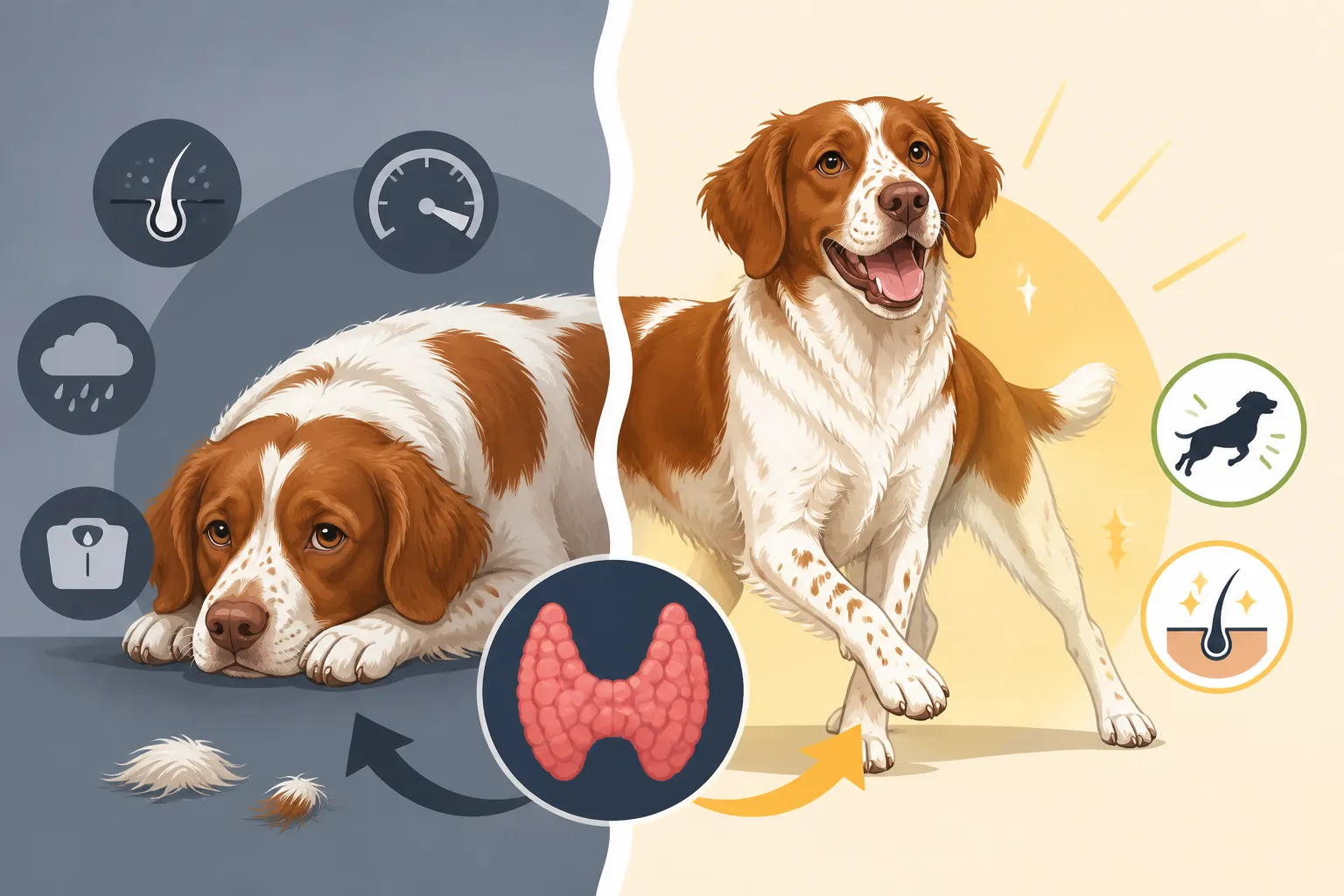
At its core, hypothyroidism is a condition where the thyroid gland, a small, butterfly-shaped gland located in your Brittany's neck, doesn't produce enough thyroid hormones. Think of these hormones – primarily thyroxine (T4) and triiodothyronine (T3) – as the master regulators of your dog’s metabolism. They control how quickly and efficiently cells throughout the body convert food into energy, impacting everything from heart rate and body temperature to skin health and brain function. When the thyroid gland is underactive, this metabolic process slows down across the board.
Most commonly, in dogs, hypothyroidism is caused by an autoimmune condition called lymphocytic thyroiditis. In this scenario, your Brittany's own immune system mistakenly attacks and destroys the thyroid gland over time. It’s a slow burn, often developing over months or even years before obvious symptoms appear. Less frequently, it can be idiopathic thyroid atrophy, where the gland simply shrinks and stops functioning for no apparent reason, or it can be a congenital defect, though this is rare in adult Brittanys. Regardless of the underlying cause, the result is the same: a deficiency in those crucial metabolic hormones.
Why Brittanys Are Prone to Hypothyroidism
It’s a common frustration among Brittany owners that our breed seems to be susceptible to certain health issues, and hypothyroidism is definitely on that list. While it can affect any dog, breeds like Brittanys, Golden Retrievers, Doberman Pinschers, and Irish Setters show a higher genetic predisposition. This suggests there's a hereditary component, making it even more important for responsible breeders to screen their breeding stock. You might ask, "Why my dog?" The truth is, for many breeds, there are genetic quirks that make them more vulnerable. For Brittanys, that lively, robust metabolism that powers their field work also means they can feel the effects profoundly when their thyroid isn't pulling its weight.
The genetic link is why you'll often hear discussions about proper health testing before breeding. While there isn't a single definitive gene test for hypothyroidism like there is for, say, C3 Deficiency Is the Brittany's Own Genetic Disease, a good breeder will still have their dogs' thyroid levels checked regularly. Understanding the breed's proclivity helps us, as owners, be more vigilant. If you've ever wondered What a Brittany Breeder Should Have Tested, thyroid panels are certainly among the recommended health screenings.
How the Thyroid Controls Your Brittany's Body
Imagine your Brittany as a finely tuned engine. Thyroid hormones are like the fuel regulators that ensure everything runs smoothly and at the right speed. When these hormones are abundant and balanced, your Brittany has boundless energy, a lustrous coat, a healthy weight, and a sharp mind.
However, when thyroid hormones are insufficient, almost every system is impacted. Your dog's metabolism slows down, leading to weight gain even if their diet hasn't changed. Their skin can become dry, flaky, or greasy, and their coat might thin, become brittle, or even start falling out, especially on the flanks, tail, and neck. They might feel the cold more acutely because their internal thermostat isn't working efficiently. Their heart rate can slow, and they might become lethargic, losing that characteristic Brittany zest. They may even experience changes in their mental state, becoming duller or less responsive. It's truly a widespread impact, which is why the symptoms can be so varied and sometimes confusing for owners.
Recognizing the Subtle (and Not So Subtle) Signs
One of the trickiest things about hypothyroidism is that the symptoms often creep up gradually. It's rarely an overnight change. As a dedicated Brittany owner, you're constantly observing your dog, so you might notice subtle shifts long before anyone else. But knowing what to look for can make all the difference. Many of these signs can mimic other conditions, which is why a thorough veterinary investigation is so crucial.
Behavioral Changes to Watch For
Your Brittany is typically a bundle of energy, a dog always ready for the next adventure, whether it's a brisk walk, a training session, or a romp in the park. This characteristic zest is part of What a Brittany's Temperament Is Really Like. So, when you notice them slowing down, it's a huge red flag. One of the most common early signs of hypothyroidism is a noticeable decrease in energy levels. Your once-eager hunter might start lagging behind on walks, show less interest in playtime, or seem reluctant to get up and go. They might sleep more than usual, even after a full night's rest, or seem generally listless.
Beyond just physical lethargy, some Brittanys become less mentally sharp or more withdrawn. They might seem a bit dull, less responsive to commands, or simply not as engaged with the family. They might seek out warm spots in the house more often, lying in sunbeams or by heaters, as their internal temperature regulation falters. Sometimes, owners report a subtle shift in personality, where a normally happy-go-lucky Brittany seems a bit sad or even slightly depressed. If you notice your Brittany's drive diminishing in the field, or they seem less enthusiastic about retrieving, it’s worth considering thyroid issues.
Physical Symptoms That Signal Trouble
While behavioral changes can be telling, many owners first notice physical symptoms. Weight gain, despite no change in diet or even a slight reduction in food intake, is a classic sign. It's not just a little extra padding; it often feels like a generalized puffiness. If you’re wondering Whether a Brittany Gets Hypothyroid Weight Gain, the answer is a resounding yes, and it’s a very common presentation. This weight gain often comes with a decrease in muscle tone, making them feel softer to the touch.
Another very common and often frustrating symptom involves the skin and coat. You might notice their beautiful, rich coat becoming dry, brittle, and dull. Hair loss, particularly in symmetrical patterns on the flanks, chest, and tail (often referred to as a "rat tail" if the tail hair thins significantly), is highly indicative. The skin itself can become dry, flaky, or develop a greasy, seborrheic feel. Some Brittanys will develop recurrent skin infections, hot spots, or even ear infections, as their immune system is also compromised. Their skin might thicken, and you might notice hyperpigmentation (darkening) in areas like the armpits or groin. And remember that seeking warmth? Their fur might also feel coarse to the touch, and they might shiver even in mild temperatures.
When to Suspect Something Is Wrong
Knowing your Brittany's baseline is crucial. If your usually high-energy dog suddenly starts acting like a couch potato, or if their gorgeous coat looks scruffy no matter how much you groom them, it’s time to pay attention. For example, if your Brittany, who used to clear brush effortlessly, now hesitates or seems to tire quickly after just a short time in the field, or if they're gaining weight despite consistent exercise and diet, these are clear indicators.
Imagine your two-year-old Brittany, "Copper," who used to jump for joy at the sight of his leash. Lately, he just gives a half-hearted tail wag and seems to prefer snoozing on the couch. Or "Daisy," whose perfectly feathered tail has suddenly become sparse and thin. These are the kinds of specific, real-world changes that should prompt a conversation with your veterinarian. Don't dismiss these changes as just "getting older" or "being lazy," especially if your Brittany is still relatively young. Timely intervention can significantly improve their quality of life. If you're seeing these signs, it's worth checking out "Signs a Brittany's Thyroid Is Low" for more detailed information.
| Common Hypothyroidism Symptoms in Brittanys | Description | Impact on Brittany Life |
|---|---|---|
| Lethargy / Decreased Energy | Increased sleeping, reduced enthusiasm for activity. | Less desire to hunt, play, or train. |
| Weight Gain | Obesity despite normal eating habits. | Strain on joints, reduced stamina. |
| Hair Loss / Dull Coat | Thinning hair (especially flanks/tail), dry, brittle coat. | Increased skin infections, poor appearance. |
| Skin Issues | Dryness, flakiness, greasiness, recurrent infections. | Itching, discomfort, odor, vet visits. |
| Cold Intolerance | Seeking warm spots, shivering easily. | Less comfortable outdoors, especially in cold weather. |
| Mental Dullness | Decreased alertness, slower responses. | Less engaged, reduced training performance. |
| Ear Infections | Recurrent or chronic ear problems. | Discomfort, need for frequent veterinary care. |
The Diagnostic Journey: Getting a Clear Picture
So, you've noticed some changes in your Brittany and you suspect something might be amiss with their thyroid. The next step is a trip to the vet, and this is where the detective work begins. Diagnosing hypothyroidism isn't always as straightforward as you might think, as many symptoms can overlap with other health issues. It requires a comprehensive approach to get an accurate diagnosis.
Initial Vet Visit and Physical Exam
When you bring your Brittany in, your veterinarian will start by gathering a thorough history. They'll ask about all the changes you've observed – when they started, how they've progressed, and any other relevant details. It's helpful to come prepared with a list of symptoms, photos of any skin or coat changes, and even a log of their activity and eating habits. Don't be shy about detailing everything; those seemingly small observations are often critical clues.
Following the history, your vet will perform a comprehensive physical examination. They'll pay close attention to your Brittany's weight and body condition, feeling for any puffiness or muscle loss. They'll meticulously examine their skin and coat for dryness, oiliness, hair loss patterns, or secondary infections. They'll also check your Brittany's heart rate, listen to their chest, and palpate their neck area, though the thyroid gland itself is rarely palpable unless greatly enlarged. Sometimes, the vet might also notice a slower heart rate or a lower body temperature than normal, which can be subtle hints pointing toward a sluggish metabolism.
Blood Tests for Thyroid Function
The cornerstone of diagnosing hypothyroidism is a blood test. However, not just any blood test will do. A basic T4 (total thyroxine) level is a good starting point, but it's often not enough on its own because T4 levels can be influenced by many non-thyroidal illnesses, medications (like steroids or NSAIDs), or even stress. This is often referred to as "euthyroid sick syndrome," where the body temporarily lowers T4 in response to other diseases, without the dog actually having a thyroid problem.
For a definitive diagnosis, your vet will typically recommend a more comprehensive thyroid panel. This often includes:
- Total T4 (TT4): Measures both bound and unbound thyroxine in the blood. A low TT4 can indicate hypothyroidism but needs to be interpreted carefully.
- Free T4 (fT4): Measures only the unbound, active form of thyroxine. This is generally less affected by non-thyroidal illnesses and medications, making it a more reliable indicator.
- TSH (Thyroid Stimulating Hormone): This hormone is produced by the pituitary gland to stimulate the thyroid. In primary hypothyroidism, where the thyroid gland itself is failing, the pituitary will produce more TSH in an attempt to kick the sluggish thyroid into gear, so TSH levels are often high.
- Thyroglobulin Autoantibodies (TgAA): These antibodies are present when the body's immune system is attacking its own thyroid gland, which is the most common cause of hypothyroidism (lymphocytic thyroiditis). A positive TgAA test strongly supports an autoimmune cause.
A full thyroid panel, often performed by a specialized veterinary diagnostic lab, provides the most complete picture. Your vet will interpret these results together, looking for the classic pattern of low fT4 and high TSH, often accompanied by positive TgAA. This comprehensive approach is crucial for an accurate diagnosis, especially since it's common for a Brittany's Thyroid to be Tested in conjunction with other routine bloodwork, or specifically if symptoms arise.
Ruling Out Other Conditions
Because the symptoms of hypothyroidism are so broad, your veterinarian will also consider and rule out other conditions that might present similarly. For instance, weight gain and lethargy could point to Cushing's disease, diabetes, or even heart disease. Skin and coat issues might be due to allergies (a common Brittany frustration), parasites, or other hormonal imbalances. That's why your vet might suggest other diagnostic tests, such as a complete blood count (CBC) to check for anemia (sometimes seen with hypothyroidism), a biochemistry panel to assess organ function, or skin scrapings to rule out mites.
This process of elimination, while sometimes frustrating for owners eager for a quick answer, is essential to ensure your Brittany receives the correct diagnosis and, therefore, the most effective treatment. It ensures you're not just treating symptoms but addressing the root cause of your dog's discomfort. Healthy Paws, or similar pet insurance providers, are a great help during this diagnostic phase, as comprehensive testing can involve several different tests and follow-ups.
Managing Hypothyroidism and Restoring Vitality
Receiving a diagnosis of hypothyroidism for your Brittany can feel daunting, but it’s actually a huge relief because it means you finally have answers and a clear path forward. The good news is that hypothyroidism is highly treatable, and with consistent management, most Brittanys go on to live full, happy, and active lives.
Lifelong Medication and Dosage
The primary treatment for hypothyroidism is daily oral medication: a synthetic thyroid hormone called levothyroxine (often prescribed as Soloxine, Thyro-Tabs, or a generic equivalent). This medication simply replaces the hormones your Brittany's body isn't producing naturally. It's a lifelong commitment, much like a human taking thyroid medication.
The key to successful treatment lies in consistency. Your Brittany will need to take this pill once or twice a day, typically at the same time each day, and ideally on an empty stomach (or consistently with a meal, but separating it from food and other medications can improve absorption). Don’t skip doses, even if your dog seems to be feeling better. Most owners start to see improvements in their Brittany's energy levels within a few weeks, and significant changes in their coat and skin can take a few months as the body slowly heals and new hair grows in. It's truly remarkable to watch them transform back into their vibrant selves!
Monitoring and Adjusting Treatment
Finding the right dosage of levothyroxine is a bit of an art and a science. Your vet will start with a standard dose based on your Brittany's weight, but every dog is an individual. After about 4-8 weeks on the medication, your vet will recommend follow-up blood tests to check your Brittany's thyroid levels again. This usually involves measuring TT4 and fT4 levels to ensure they are within the optimal therapeutic range. These blood samples are typically taken 4-6 hours after the morning pill, which is when the medication's effect is at its peak.
Based on these results and your observations of your Brittany's symptoms, your vet will adjust the dosage as needed. It might take a few adjustments to get it just right. Once stable, your Brittany will likely need yearly or bi-yearly blood tests to ensure their levels remain in range, especially as they age or if their weight changes. Signs of over-dosing can include excessive panting, nervousness, increased thirst, and weight loss, while under-dosing means the original symptoms will persist. Regular communication with your vet about any changes, positive or negative, is vital for fine-tuning the treatment. This proactive monitoring is also a part of what a Brittany's Yearly Bloodwork Should Cover in general, helping to catch issues early.
Supporting Your Brittany's Overall Health
While medication is the cornerstone, supporting your Brittany's overall health plays a huge role in their recovery and long-term well-being. A balanced, high-quality diet appropriate for their activity level is important, especially as their metabolism normalizes. Regular, appropriate exercise will help them shed any excess weight they gained and rebuild muscle tone. You'll likely see their energy bounce back, making exercise more enjoyable for both of you.
Pay close attention to their skin and coat during recovery. Regular brushing with a soft brush can help stimulate blood flow and remove dead hair. If they had secondary skin infections, these will need to be treated, and your vet might recommend special shampoos or supplements to aid skin healing. And let's not forget the importance of pet insurance like Healthy Paws. While pre-existing conditions typically aren't covered, having pet insurance in place before a diagnosis like hypothyroidism can help with the costs of diagnostic tests, medication, and ongoing monitoring, providing peace of mind as you care for your dog. For other considerations on their long-term health, explore resources like "Caring for a Brittany Past Ten."
Living with a Hypothyroid Brittany
Once your Brittany is properly diagnosed and on medication, it's amazing how quickly they can return to their old selves. It's a journey, but one that leads to a much better quality of life for your beloved companion. Understanding the long-term outlook and how to best partner with your vet are key to success.
Long-Term Outlook and Quality of Life
The really good news about hypothyroidism is that, with proper treatment, your Brittany's prognosis is excellent. Most dogs respond incredibly well to levothyroxine and can live a normal lifespan, often enjoying all the activities they did before the onset of symptoms. The Twelve to Fourteen Years a Brittany Gets are precious, and managing their thyroid ensures they can enjoy those years to the fullest.
You'll see their energy return, their weight stabilize, their coat become shiny and full again, and their personality bounce back. It's a true transformation. However, it's important to remember that this is a management condition, not a cure. Your Brittany will need to take thyroid medication for the rest of their life. Think of it as a small daily routine that brings immense benefits, allowing your dog to continue being the active, affectionate Brittany you know and love. Don't be surprised if your vet encourages you to explore preventative health measures more broadly, as The Brittany Is One of the Healthiest Sporting Breeds when given the right care.
Preventative Measures and Breeder Responsibility
Given the genetic predisposition in Brittanys, prevention starts with responsible breeding practices. Reputable breeders should be transparent about the health history of their lines and ideally screen their breeding dogs for thyroid function. While there's no way to guarantee a puppy won't develop hypothyroidism, choosing a puppy from parents with healthy thyroid histories can reduce the risk. This ties into the broader discussion of "Whether a Brittany Breeder Screens Thyroid" as part of their comprehensive health testing protocols.
As an owner, there aren't specific "preventative" medications, but maintaining your Brittany's overall health with a balanced diet, regular exercise, and routine veterinary check-ups (including annual bloodwork) can help catch any issues early. Discuss with your vet the best schedule for checking thyroid levels, especially if your Brittany is entering middle age or if you notice any subtle changes in their behavior or physical condition. Being proactive is always better than reactive when it comes to long-term health.
The Importance of a Strong Vet-Owner Partnership
Successfully managing hypothyroidism is a team effort. You, as the owner, are the frontline observer. Your daily interactions with your Brittany give you invaluable insights into their mood, energy levels, and physical changes. Your veterinarian is the expert providing diagnosis, prescribing medication, and interpreting bloodwork.
Open and honest communication is paramount. Don't hesitate to call your vet if you notice new symptoms, side effects, or concerns about the medication. Keep a record of your Brittany's weight, activity levels, and any visible changes, as this information is incredibly useful during follow-up appointments. This partnership ensures that your Brittany receives the individualized care and dosage adjustments needed to thrive. And again, having a good pet insurance plan from a provider like Healthy Paws can truly alleviate the financial stress associated with chronic conditions, allowing you to focus on what matters most: your Brittany's health and happiness.
Disclaimer
The information provided in this article is for general informational purposes only and is not a substitute for professional veterinary advice. Always consult with a qualified veterinarian for any health concerns or before making any decisions related to your Brittany's care, diagnosis, or treatment.