How Spinal Muscular Atrophy Weakens a Brittany
It's heartbreaking to watch your active, spirited Brittany start to lose their strength, stumble, and struggle with movements that once came so naturally. Many owners feel a gut-wrenching worry when these subtle signs appear, wondering if it's just old age, an injury, or something far more serious. This comprehensive guide is here to shed light on Spinal Muscular Atrophy (SMA) in Brittanys, detailing exactly how this devastating genetic condition weakens our beloved companions.
Understanding Spinal Muscular Atrophy in Brittanys
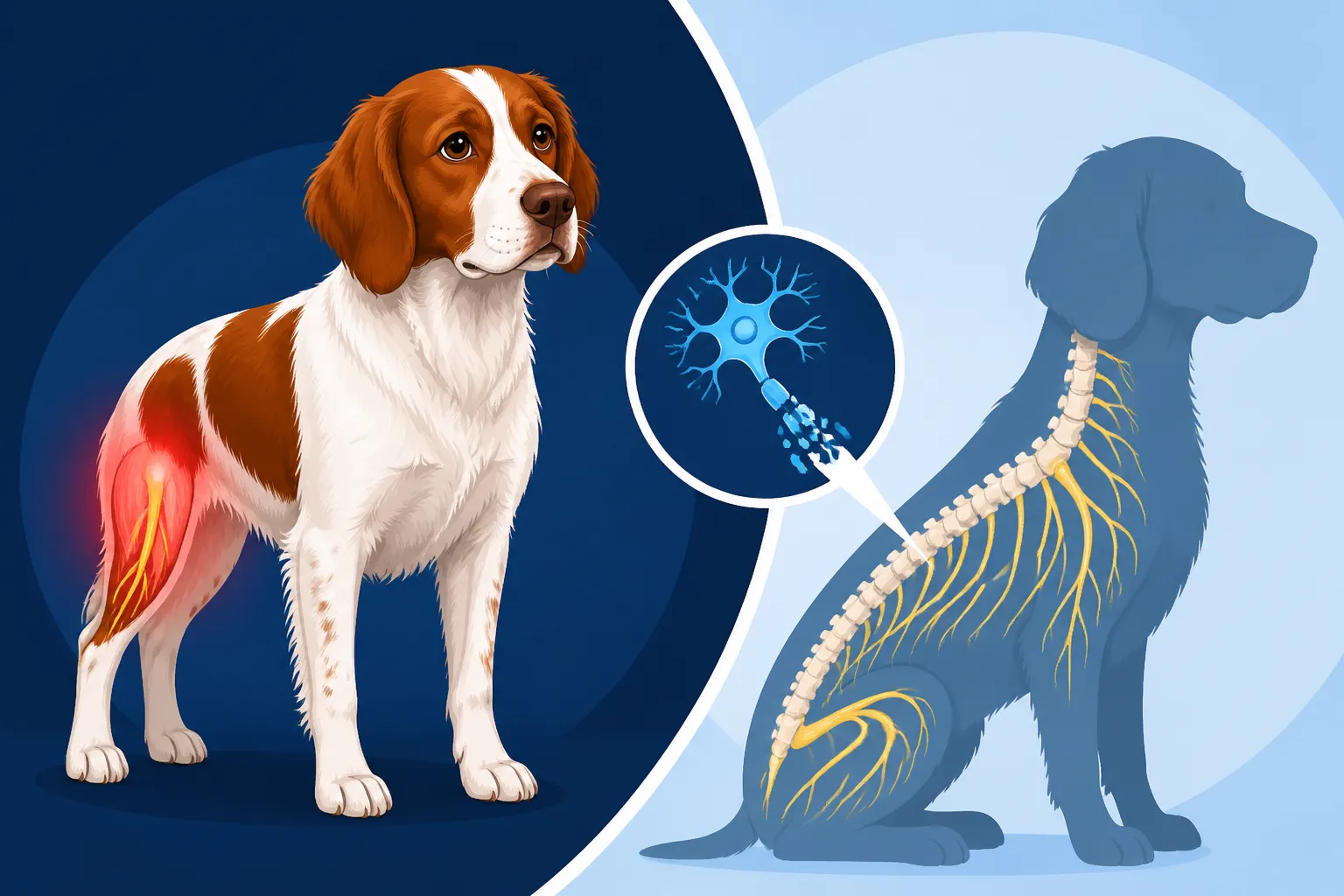
Spinal Muscular Atrophy (SMA) is one of those terms that can immediately send a shiver down any dog owner's spine. It's a progressive, inherited neuromuscular disease that specifically impacts the nerve cells in the spinal cord and brainstem. These nerve cells, called motor neurons, are responsible for sending signals from the brain to the muscles, telling them when and how to move. When these motor neurons degenerate and die, the muscles they innervate simply don't receive the commands they need, leading to weakness and eventual atrophy.
For Brittany owners, hearing about SMA can be particularly concerning because our breed, like a few others, has a documented form of the disease. It's a reminder that even the most energetic and seemingly healthy dogs can carry hidden genetic vulnerabilities. The disease doesn't discriminate based on a dog's lineage or how well you care for them; it's simply a matter of genetics. Knowing this helps us understand the challenge, but it doesn't make it any easier to cope with.
What Exactly is SMA and How Does it Affect Muscles?
At its core, Spinal Muscular Atrophy means a gradual loss of muscle function due to nerve damage. Imagine a complex electrical system where the wires connecting the power source (the brain and spinal cord) to the appliances (the muscles) start to fray and eventually break down. When those signals can't get through effectively, the muscles stop working as they should.
In a Brittany affected by SMA, this breakdown prevents the muscles from receiving the necessary stimulation to contract and maintain their strength and bulk. Over time, these muscles begin to waste away, a process known as atrophy. It's not that the muscles themselves are inherently faulty; it's the communication system that's failing. This leads to a profound and progressive weakness, particularly in the limbs, making simple movements incredibly difficult. What might start as a slight tremor or an occasional misstep can escalate into significant mobility challenges. The dog's body simply can't execute the commands its brain is trying to send, leading to a frustrating and debilitating decline. This progressive weakening is a hallmark of the condition and is what makes it so heartbreaking for owners to witness.
The Genetic Link Behind Brittany SMA
The specific form of Spinal Muscular Atrophy that affects Brittanys is inherited in an autosomal recessive pattern. Now, if you're not a geneticist, those words can sound like a mouthful, but it's important for understanding how the disease passes down through families. Basically, it means that a puppy must inherit two copies of the faulty gene – one from its mother and one from its father – to actually develop the disease.
If a Brittany inherits only one copy of the faulty gene, it's considered a "carrier." Carriers typically don't show any symptoms of SMA themselves. They live perfectly normal, healthy lives, often running and hunting with as much vigor as any other Brittany. However, they carry the potential to pass that faulty gene on to their offspring. This is why responsible breeding practices are so crucial. Breeders who screen their dogs for genetic conditions like SMA can make informed decisions about pairings, ideally avoiding breeding two carriers together, which would result in affected puppies. You can often find breeders who are transparent about their health testing results, which is a fantastic sign of their commitment to the breed's future health. Understanding this inheritance pattern is key to preventing the spread of the disease and is why asking What a Brittany Spaniel Breeder Should Have Tested is so important when looking for a puppy.
The Progressive Weakness: Signs and Symptoms
Watching a Brittany, a breed renowned for its boundless energy and athleticism, slowly lose its physical capabilities due to SMA is an incredibly tough experience. The onset of symptoms can be subtle, making it easy to initially dismiss them as clumsy puppy antics or minor aches. However, as the disease progresses, the signs become undeniably more severe, impacting every aspect of a dog's life. It's not a sudden paralysis but a creeping weakness that gradually takes hold, affecting their ability to run, jump, and even stand.
The key to understanding SMA's impact is recognizing that it's progressive. This means the symptoms will worsen over time. What might start as a slight tremor or a hesitant gait can eventually lead to severe muscle wasting and profound disability. For owners who cherish their Brittany's active nature, this decline can be particularly distressing.
Early Indicators of Muscle Wasting
The very first signs of SMA in a Brittany typically begin to emerge when they are still quite young, often between 3 to 5 months of age. This early onset is part of what makes it so devastating, as these puppies are just starting to explore the world with their natural zest. You might notice what seems like an awkward gait, perhaps a little more wobbly than expected for a puppy. They might stumble more frequently, especially when trying to navigate uneven terrain or when playing vigorously.
A common early indicator is a subtle tremor in their limbs, particularly when they are standing still or trying to maintain a posture. This isn't just a puppy shivering from cold or excitement; it's an involuntary muscle contraction as their nervous system struggles to maintain control. You might also observe a reduced ability to jump, climb stairs, or even get up from a lying position. The muscles, especially those in the hindquarters, will start to show a loss of bulk, becoming noticeably thinner. This muscle atrophy, initially mild, will become more pronounced as the disease advances. If you're concerned about a puppy showing these signs, it's crucial to consult a vet specializing in neurology. The question of The Age Spinal Muscular Atrophy Shows in a Brittany is critical here, as early detection can help manage expectations and provide supportive care.
How Mobility and Coordination Deteriorate
As Spinal Muscular Atrophy progresses, the initial subtle signs give way to more pronounced and debilitating symptoms. The muscle weakness becomes severe, significantly impairing the Brittany's mobility and coordination. You'll likely see a more pronounced, "bunny hopping" gait, where they move both hind legs simultaneously, almost as if trying to compensate for weakness in each limb individually. This can be particularly evident when they try to run or climb.
Standing becomes an effort, and maintaining balance can be a significant challenge. Affected dogs might sway, tremble visibly, or have difficulty holding a steady stance. Eventually, the hind limbs become so weak that the dog may struggle to stand on its own, needing assistance to get up or even to relieve itself. Walking long distances, which is usually second nature to a Brittany, becomes impossible. They might collapse frequently, and the once eager desire to chase birds or play fetch diminishes as their body simply can't keep up. The muscle atrophy continues, making the dog appear noticeably thinner, especially in the hindquarters and along the spine. While the muscles around the head and face are typically spared, the overall progressive deterioration of the limb and trunk muscles is devastating. Understanding Whether a Brittany With Muscular Atrophy Can Walk becomes a critical concern for owners.
Here's a quick overview of the progressive signs:
| Stage of SMA | Common Observations | Impact on Brittany |
|---|---|---|
| Early Onset | Subtle tremors, awkward gait, occasional stumbling, difficulty with stairs/jumps. | Reduced agility, hesitant movement, mild muscle loss. |
| Mid-Stage | More frequent falls, pronounced hindquarter weakness, "bunny hop" gait, noticeable muscle atrophy. | Difficulty standing, reluctance to play, decreased endurance. |
| Advanced | Severe weakness, inability to stand/walk without support, significant muscle wasting, tremors. | Profound mobility impairment, diminished quality of life. |
Living with a Brittany Affected by SMA
Receiving a diagnosis of Spinal Muscular Atrophy for your Brittany is devastating. There's currently no cure for SMA, which means the focus shifts entirely to supportive care, maximizing comfort, and maintaining the best possible quality of life for your beloved dog. It's a challenging journey, both emotionally and practically, but with dedication and love, you can ensure your Brittany lives its life with dignity. This is where your role as a devoted owner truly shines, finding ways to adapt and support them through their declining mobility. It's a testament to the bond you share.
The financial implications of long-term care for a dog with a chronic condition like SMA can also be significant. This is where pet insurance, like plans from Healthy Paws, can be an invaluable resource, helping to cover the costs of veterinary visits, physical therapy, and any specialized equipment or medications your Brittany might need. Having that safety net allows you to focus on your dog's well-being without constant financial stress.
Managing Daily Life and Providing Support
When you have a Brittany with SMA, every aspect of their daily routine needs to be re-evaluated and adjusted to accommodate their progressive weakness. This isn't about giving up, but about adapting and providing thoughtful support. Regular, gentle exercise is still important to maintain muscle tone for as long as possible and prevent secondary issues like joint stiffness. However, this will be very different from the vigorous runs a healthy Brittany thrives on. Think short, controlled walks on soft surfaces, or even hydrotherapy in a pool, which can allow for movement without the full impact of gravity.
Physical therapy becomes incredibly important. A certified canine rehabilitation therapist can teach you exercises, stretches, and massage techniques to help maintain flexibility and muscle condition. They might recommend assistive devices such as slings, harnesses, or even a dog wheelchair for longer distances, to keep your Brittany mobile and engaged with the world around them. Traction socks or non-slip mats can also be lifesavers inside the home, preventing slips and falls on smooth floors. Ensuring easy access to food and water, perhaps with elevated bowls, and providing a comfortable, orthopedic bed to prevent pressure sores are also crucial. You might also consider consulting with your vet about nutritional supplements, like omega-3 fatty acids, though always with professional guidance. It's all about making their environment as safe and accessible as possible. If you are worried about the cost of these interventions, it's a good time to review What a Brittany Costs Over Its Lifetime and what pet insurance can cover.
Prognosis and Quality of Life Considerations
The prognosis for a Brittany diagnosed with Spinal Muscular Atrophy is unfortunately guarded, as it is a progressive and ultimately fatal condition. The severity and rate of progression can vary somewhat between individual dogs, but the underlying neurological degeneration continues. Most Brittanys affected by SMA will experience a significant decline in mobility and quality of life as the disease advances, often necessitating difficult decisions regarding their comfort and well-being.
However, a diagnosis doesn't mean immediate despair. With dedicated supportive care, many Brittanys with SMA can still enjoy a period of good quality life. The goal is always to manage symptoms, prevent secondary complications, and keep them as comfortable and happy as possible for as long as possible. This includes regular veterinary check-ups to monitor their condition, manage pain if it arises, and address any other health issues that might emerge. Quality of life assessments are ongoing and deeply personal. It involves honestly evaluating their ability to eat, drink, eliminate, interact with the family, and experience joy. There will come a point where the challenges outweigh the joys, and at that time, making the compassionate choice to prevent further suffering is the ultimate act of love. Understanding The Twelve to Fourteen Years a Brittany Gets can help contextualize this difficult journey, reminding us that every day with our beloved companions is a gift, regardless of their health challenges.
Disclaimer
Please remember that this article is intended for informational purposes only and should not be considered a substitute for professional veterinary advice. If you suspect your Brittany may have Spinal Muscular Atrophy or any other health concern, please consult with a qualified veterinarian immediately. Only a veterinary professional can accurately diagnose and recommend the appropriate course of treatment for your pet.