Discoid Lupus and a Brittany Spaniel’s Nose
That moment when you’re lovingly stroking your Brittany’s soft head, maybe after a long walk or a successful hunt, and you notice something just isn't right with their nose. It's not just a little dry; it looks… different. Maybe it’s losing its deep black color, or perhaps it feels rough, even cracked. As a dedicated Brittany owner, your heart sinks, immediately wondering if it's something serious. This guide will walk you through understanding Discoid Lupus Erythematosus (DLE), a common autoimmune skin condition that often affects our beloved Brittanys right on their sensitive snouts, helping you recognize the signs, navigate diagnosis, and manage it effectively.
Understanding Discoid Lupus Erythematosus (DLE) in Brittanys
DLE is one of those veterinary terms that can sound incredibly intimidating, but for us pet parents, it really boils down to an immune system hiccup. Instead of just focusing on external threats like bacteria or viruses, the immune system mistakenly targets the dog's own skin cells, particularly on the nose.
What is DLE and Why Does It Affect Dogs?
At its core, Discoid Lupus Erythematosus is a non-systemic autoimmune skin disease. "Non-systemic" is the key part here; it generally means it's limited to the skin and doesn't usually spread to internal organs, unlike the more severe systemic lupus erythematosus (SLE). For dogs, DLE most frequently manifests on the face, with the bridge of the nose and the top of the muzzle being prime targets.
Why the nose, specifically? Well, a dog's nose, especially one as exposed and active as a Brittany's, is constantly interacting with the environment. It's often subjected to sunlight, which is a known trigger for DLE flare-ups, much like it can be for people with lupus. The skin on the nose is also unique, with its specific texture and pigmentation. When the immune system decides to attack these cells, it leads to inflammation, cell damage, and the characteristic changes we observe. It's not contagious, so you don't need to worry about it spreading to other pets or to humans. While it rarely poses a direct threat to life, DLE can be incredibly uncomfortable and, if left untreated, can significantly impact your dog's quality of life.
The Brittany's Predisposition to Autoimmune Conditions
It might feel unfair, but some breeds, including our spirited Brittanys, do seem to have a genetic predisposition to certain autoimmune conditions. It’s almost as if their immune systems are a bit too enthusiastic and sometimes get confused about what's friend and what's foe. While the exact genetic markers for DLE in Brittanys aren't fully understood, we do know that breeds like German Shorthaired Pointers, Collies, Shetland Sheepdogs, and Siberian Huskies, in addition to Brittanys, show a higher incidence. This doesn't mean every Brittany will get DLE, but it does mean they're perhaps a little more susceptible than some other breeds.
It's important not to blame yourself if your Brittany develops DLE. This isn't a condition caused by anything you did or didn't do. It’s part of that complex genetic lottery, and it simply means your dog's immune system has a particular quirk. Just like with other immune-related issues that can affect Brittanys, such as C3 Deficiency Is the Brittany's Own Genetic Disease, understanding this predisposition helps us be more vigilant and proactive in their care. The good news is that with early detection and consistent management, most Brittanys with DLE can lead full, happy lives.
Recognizing the Early Signs of DLE on Your Brittany's Nose
One of the trickiest parts of DLE is that its early signs can sometimes mimic other, less serious issues. But for an observant Brittany owner, knowing what to look for can make all the difference. Remember, our dogs often try to hide discomfort, especially our stoic Brittanys, so a subtle change can be a big indicator.
Changes in Pigmentation and Texture
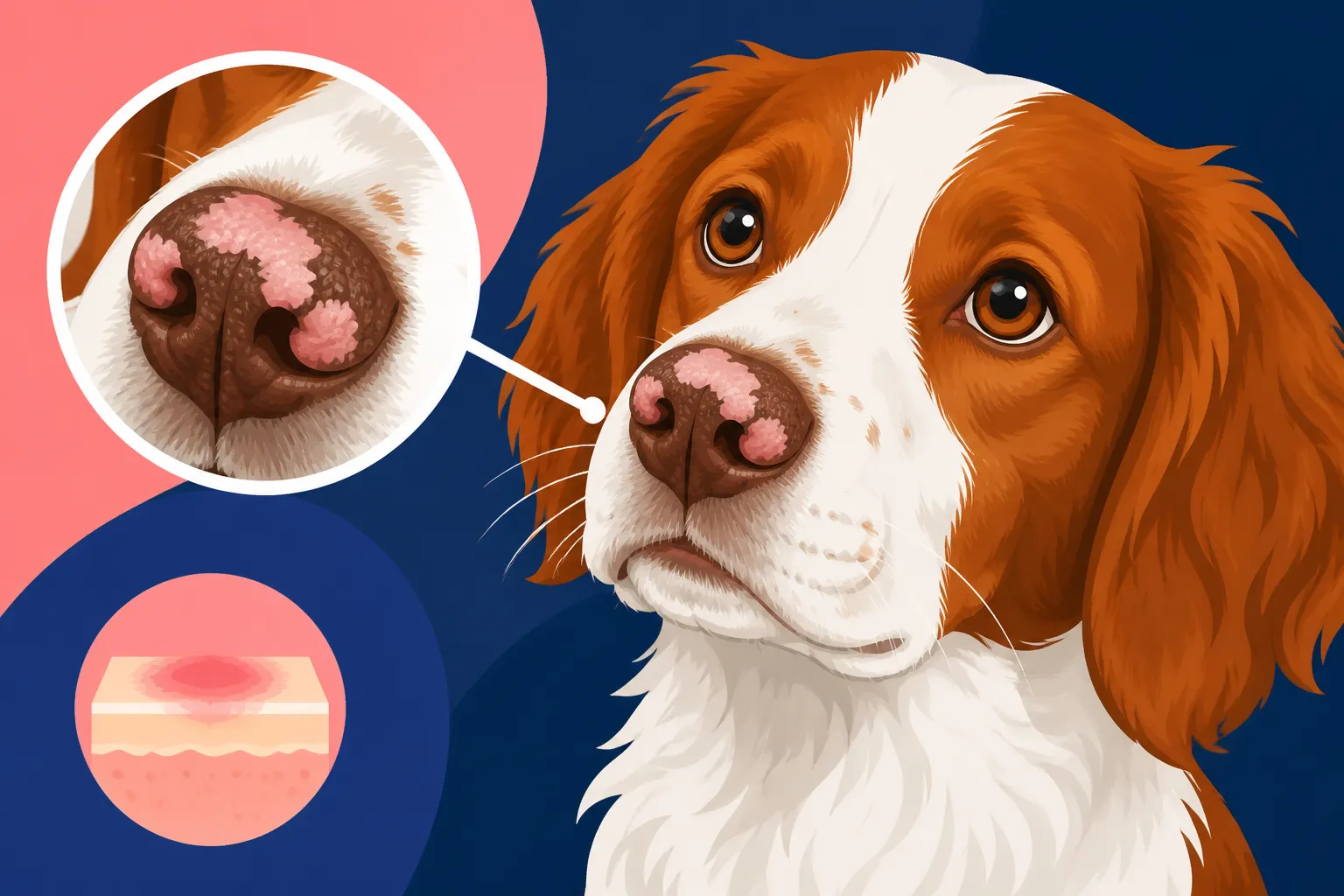
The most common and often earliest sign of DLE on a Brittany's nose is a change in its normal appearance, particularly the loss of the characteristic deep black pigmentation. You might start noticing that your dog’s nose, which was once a solid ebony, is beginning to lighten. This depigmentation often starts on the bridge of the nose and around the nostrils, making it look a bit mottled or patchy, sometimes turning a lighter pinkish-grey. This change from black to a paler color is often referred to as a "pink nose" or "snow nose" when it's seasonal, but with DLE, it’s typically progressive and non-seasonal.
Beyond color, pay close attention to the texture. A healthy Brittany nose is typically moist, slightly pebbled, and firm. With DLE, you might feel that the normally rugged surface, the 'cobblestone' texture, starts to become smooth and shiny, almost like polished skin. This loss of normal architecture is a significant red flag. As the condition progresses, this smooth skin can then become rough, dry, and develop small fissures or cracks, especially along the edges of the nostrils or across the top of the muzzle. It might even resemble a severely chapped lip, but on their nose. These subtle initial changes can be easy to dismiss as just dryness, but if they persist or worsen, it’s definitely time to take a closer look.
Crusting, Sores, and Bleeding
If left unchecked, or if your Brittany experiences significant sun exposure, the condition can escalate from simple depigmentation and textural changes to something much more uncomfortable. The cracks and fissures can deepen, leading to the formation of crusts. These crusts can vary in thickness and might be yellow, brown, or black, often tightly adhered to the skin. It’s a bit like a severe scab that won't heal properly.
Beneath these crusts, the skin is inflamed and fragile. This means that even minor trauma – a playful nudge against furniture, digging in the yard, or rubbing their nose on the carpet – can cause erosions (shallow sores) and ulcers (deeper sores). And, as any open wound can, these areas can bleed. You might notice small spots of blood on their bedding, toys, or even on your clothes after they've given you a loving nudge. This bleeding can be particularly distressing to witness and indicates significant inflammation and damage. It’s a sign that the condition is causing considerable discomfort and needs immediate veterinary attention. These are clear Signs a Brittany Has Discoid Lupus that shouldn't be ignored. The sight of your dog's nose cracking and bleeding can be alarming, and this is truly one of the more painful aspects of DLE, as outlined in "Why a Brittany's Nose Cracks and Bleeds."
Other Affected Areas and Associated Symptoms
While the nose is overwhelmingly the primary site for DLE, it's not exclusively limited to it. In some rarer cases, DLE can affect other mucocutaneous junctions – areas where skin meets mucous membrane. This includes the lips, especially the commissures (corners of the mouth), the skin around the eyelids, and sometimes the inner surface of the ear flaps (pinnae). You might see similar depigmentation, redness, or crusting in these areas. Less commonly, the footpads can also be affected, though this is quite rare for DLE and would warrant ruling out other conditions.
It's crucial to distinguish DLE from its more severe counterpart, Systemic Lupus Erythematosus (SLE). DLE is generally confined to the skin, and dogs with DLE usually do not exhibit systemic signs of illness. This means they typically don't have fever, lethargy, joint pain, or other symptoms that would suggest their internal organs are involved. If your Brittany is showing these types of broader symptoms in addition to skin changes, your vet will want to investigate further to ensure it's not a more generalized autoimmune disease. However, for the vast majority of DLE cases, your Brittany will otherwise appear healthy and energetic, aside from the discomfort on their nose.
The Diagnostic Journey for DLE in Brittanys
When you notice those worrisome changes on your Brittany’s nose, the first step is always a visit to your veterinarian. Self-diagnosis, especially with skin conditions that can mimic so many other issues, is nearly impossible and often leads to unnecessary worry or, worse, delayed treatment.
Why a Vet Visit is Crucial
Your veterinarian is your best resource for navigating any health concerns, especially something as specialized as an autoimmune condition. An early and accurate diagnosis of DLE is incredibly important for several reasons. First, it prevents the condition from worsening, which can lead to more discomfort and potential secondary infections for your dog. Imagine trying to point a bird with a painfully cracked, bleeding nose – it’s just not fair to them. Second, an experienced vet can rule out other conditions that might look similar but require entirely different treatments.
During your visit, your vet will perform a thorough physical examination, paying close attention to your Brittany's nose and any other affected skin areas. They’ll also take a detailed history from you. Be prepared to answer questions about when you first noticed the changes, how they’ve progressed, any correlation with sun exposure, your dog's diet, activity level, and any other symptoms you’ve observed. This comprehensive approach helps your vet form a strong initial hypothesis and decide on the best diagnostic steps. It’s a collaborative effort, and your observations are invaluable.
The Role of a Biopsy
While your vet might have a strong suspicion of DLE based on the visual signs and your Brittany’s history, the definitive diagnosis almost always requires a skin biopsy. This sounds a bit daunting, but it’s a very common and safe procedure. Essentially, it involves taking a small tissue sample from the affected area of your dog’s nose.
The process typically involves light sedation or general anesthesia to ensure your Brittany is completely comfortable and still during the procedure. The vet will numb the area, take a few small punch biopsies (tiny circular pieces of skin), and then close the sites with a few stitches. These samples are then sent to a veterinary pathologist, a specialist who examines the tissue under a microscope. What the pathologist looks for is a specific pattern of inflammation and cellular changes called "interface dermatitis," along with other characteristic features that confirm DLE. It’s the gold standard for diagnosis and provides certainty, allowing for the most appropriate and effective treatment plan. Knowing "How Discoid Lupus Is Diagnosed in a Brittany" can help alleviate some of the anxiety around this necessary step.
Ruling Out Other Conditions with Similar Symptoms
One of the primary reasons a biopsy is so crucial is to differentiate DLE from other conditions that can present with similar nasal lesions. There's a whole list of "differential diagnoses" your vet will consider, and many of them have overlapping symptoms but vastly different treatments.
For example, conditions like nasal solar dermatitis, sometimes called "collie nose," can look very similar, especially in breeds prone to sun sensitivity, but it's primarily a photosensitivity reaction rather than an autoimmune attack. Pemphigus foliaceus is another autoimmune skin disease that can affect the nose, but it tends to be more widespread and involves different immune processes. Bacterial or fungal infections can also cause crusting, sores, and inflammation on the nose, and these require antimicrobial treatments. Even contact dermatitis, from an allergy to a plastic food bowl or a plant in the yard, could cause irritation.
By performing a biopsy and sometimes additional tests like bacterial cultures or fungal screenings, your vet can systematically rule out these other possibilities. This thorough approach ensures that your Brittany isn't undergoing treatment for the wrong condition, which would not only be ineffective but could also potentially worsen the true underlying issue. It’s about getting to the root cause, not just treating the symptoms.
Managing and Treating Discoid Lupus in Brittany Spaniels
Once DLE is confirmed, the good news is that it’s often very manageable with the right treatment plan. The goal is to reduce inflammation, promote healing, and prevent future flare-ups, allowing your Brittany to get back to their adventurous self without discomfort.
Topical Treatments for Mild Cases
For Brittanys with mild DLE, especially if it’s caught early and primarily affects the pigmentation or has minimal crusting, topical treatments are often the first line of defense. These medications are applied directly to the affected area, minimizing systemic side effects.
Corticosteroid creams, such as those containing betamethasone or triamcinolone, are powerful anti-inflammatories. They work by calming the immune response in the skin, reducing redness, swelling, and itchiness. Your vet will likely prescribe a specific concentration and advise you on how often to apply it. It’s important to apply these thinly and evenly, and try to prevent your dog from licking it off immediately after application, as some can be harmful if ingested in large quantities.
Another excellent topical option is tacrolimus ointment. This is an immune modulator that works differently than steroids, directly inhibiting certain immune cells responsible for the DLE attack. It can be very effective, especially for long-term management, and generally has fewer side effects than prolonged steroid use. Sometimes, vets will use it in conjunction with a short course of topical steroids to get the initial inflammation under control.
And let’s not forget dog-safe sunscreen! Just like us, prolonged sun exposure can trigger or worsen DLE. Brands like Epi-Pet or Snout Soother offer sunscreens specifically formulated for pets that are safe if licked. Applying these before outdoor activities, especially during peak sun hours, can be a game-changer. Finally, if secondary bacterial infections have developed due to the compromised skin barrier, a short course of topical antibiotics may be prescribed to clear those up before focusing solely on the DLE.
Systemic Medications for More Severe DLE
When topical treatments aren't enough, or if the DLE is more widespread or severe, your vet may recommend systemic medications. These are administered orally and work throughout the body to suppress the overactive immune response.
Oral corticosteroids, such as prednisone, are very effective at rapidly reducing inflammation. They can bring relief relatively quickly, but they do come with potential side effects like increased thirst, urination, appetite, and long-term concerns like weight gain and weakened immune function. Your vet will typically start with a higher dose to get the condition under control and then gradually taper it to the lowest effective dose to minimize side effects. This tapering process is critical; never stop oral steroids abruptly.
A combination therapy of tetracycline (an antibiotic with anti-inflammatory properties) and niacinamide (a form of Vitamin B3) is another popular systemic treatment. This combination works by modulating the immune system and has fewer side effects than oral steroids. However, it takes much longer to see results, often several weeks to months. It's frequently used for maintenance once the initial flare is controlled, or for cases where steroids are not tolerated.
For truly refractory cases – those Brittanys whose DLE doesn't respond well to the standard treatments – your vet might consider other immune suppressants like azathioprine or cyclosporine. These are stronger medications with more potential side effects and typically require closer monitoring, often with a veterinary dermatologist. The good news is that most Brittanys respond well to either topical treatments, the tetracycline/niacinamide combo, or low-dose oral steroids, often in combination. Knowing "Which Medication a Brittany With Lupus Takes" is vital for understanding your treatment options.
The Lifelong Commitment to Management
One of the most important things to understand about DLE is that it is often a chronic condition. While treatment can bring about remission, it's not usually a "one-and-done" fix. For many Brittanys, DLE will require lifelong management and monitoring. This means consistent application of topical medications, adherence to oral medication schedules, and regular check-ups with your veterinarian.
The journey might involve some trial and error to find the perfect balance of medications and lifestyle adjustments that work for your individual Brittany. You’ll need to be observant, noting any signs of a flare-up and communicating them promptly to your vet. Don’t get discouraged if a relapse occurs, especially during periods of high sun exposure or stress. This is common, and it just means you and your vet need to reassess the treatment plan. It’s a marathon, not a sprint, and your consistent commitment is key to your Brittany’s comfort and well-being. This ongoing commitment is a big part of "Whether a Brittany's Lupus Is Lifelong."
Living with a Brittany with Discoid Lupus: Practical Tips
Living with a Brittany that has DLE means integrating special care into your daily routine, especially considering their active, outdoor nature. It’s about being proactive and making smart adjustments to protect their sensitive nose.
Sun Protection is Paramount
We’ve touched on it already, but it bears repeating: sun protection is absolutely critical for Brittanys with DLE. Ultraviolet (UV) light is a major trigger for flare-ups, causing inflammation and worsening symptoms.
The simplest step is to avoid direct sun exposure during peak hours, typically between 10 AM and 4 PM. This might mean adjusting your walk schedule to early mornings or late evenings, or ensuring your Brittany has ample shade when they’re outdoors. For our hunting companions, this can be tricky. If you're out in the field, look for natural shade during breaks, or consider resting your dog in a shaded part of the truck.
Protective gear can also make a huge difference. Dog hats or visors, while they might look a bit silly, can effectively shade the nose and face. There are also dog-specific sunscreens available, which are formulated to be safe if ingested. Applying a thin layer of sunscreen to your Brittany's nose 15-20 minutes before going outside, especially if they’ll be in the sun, can provide a vital layer of protection. This directly addresses "Whether a Brittany Needs Sunscreen on Its Nose" – the answer is a resounding yes for those with DLE! Remember that even on cloudy days, UV rays can still penetrate, so consistent protection is key.
Routine Care and Monitoring
Beyond sun protection, daily routine care is essential for managing DLE and ensuring your Brittany’s comfort. Gently cleaning their nose with a soft, damp cloth can help remove crusts and debris without causing further irritation. Avoid harsh scrubbing or abrasive materials. If the nose is dry or cracked, your vet might recommend a pet-safe balm or moisturizer, in addition to medicated treatments, to keep the skin supple and prevent new fissures.
Regularly inspecting your Brittany's nose and any other affected areas is also vital. Look for any changes in color, texture, or the presence of new crusts, sores, or bleeding. Keeping a small journal or a note on your phone to track symptoms, medication applications, and any observed improvements or worsening can be incredibly helpful for your vet visits. This detailed record allows your veterinarian to adjust the treatment plan more effectively.
And don’t forget routine vet check-ups. Even if your Brittany seems to be doing well, periodic re-evaluations ensure that the DLE remains under control and that you’re not missing any subtle signs of progression. Dealing with a chronic condition can be expensive, and this is where pet insurance providers like Healthy Paws can be a real lifeline. They can help cover the ongoing costs of medications, vet visits, and any necessary re-evaluations, making lifelong management more financially feasible.
Adjusting Activities for a Hunting Dog
This is often the hardest part for Brittany owners: how do you balance the needs of an active hunting dog with a sensitive nose? It's not about stopping their passion, but about adapting.
First, consider the timing of your hunts. As with general sun exposure, early morning or late afternoon/evening hunts are ideal, especially during the warmer months, to minimize UV exposure. If your Brittany is prone to cracking and bleeding, consider applying protective nose balms or even a thin layer of medical-grade wax (like Musher's Secret for paws, but safe for nose application) before heading into dense cover or rough terrain. This can provide a physical barrier against scrapes and minor trauma.
During field work, be extra vigilant. After each run, take a moment to gently check their nose for new abrasions or worsening symptoms. If you see any cuts, your field first aid kit should be ready. What a Brittany's First Aid Kit Should Hold would certainly include antiseptic wipes and a protective ointment. Don’t push them too hard if their nose is particularly sensitive that day. Sometimes, a day of rest or a shorter hunt is the best medicine. Remember, their comfort in the field is paramount. A happy, healthy Brittany will perform better than one in discomfort. It's about smart adjustments, not giving up on the life they love.
Prognosis and Long-Term Outlook for Brittanys with DLE
Understanding the long-term outlook for your Brittany with DLE can bring a lot of peace of mind. While it's a chronic condition, the prognosis is generally very positive with consistent care.
Generally Good with Consistent Management
One of the most reassuring aspects of Discoid Lupus Erythematosus is that, in the vast majority of cases, it's considered a cosmetic condition or one that primarily causes discomfort, rather than being life-threatening. This is a significant distinction from systemic lupus. With a proper diagnosis and a consistent, tailored management plan, most Brittanys with DLE respond very well to treatment. You can expect to see significant improvement in their nasal pigmentation, a reduction in crusting and sores, and a return to a more comfortable, healthy-looking nose.
The key really is "consistent management." If you diligently follow your vet's instructions for medication, apply sun protection, and monitor for flare-ups, your Brittany can maintain an excellent quality of life. They can continue to be the energetic, bird-loving companions they’re meant to be, without the constant irritation or pain associated with an untreated DLE. It’s a condition that demands your attention, but it doesn't have to define your dog’s life. Knowing "Whether a Brittany Is a Healthy Breed" overall can help contextualize specific conditions like DLE.
Potential for Recurrence and Monitoring for Progression
While the outlook is generally good, it's important to have realistic expectations. Because DLE is an autoimmune condition triggered by environmental factors like sun exposure, flare-ups are quite common. You might find that during the summer months, or after a particularly intense hunting season with lots of sun, your Brittany's nose might show signs of depigmentation or mild crusting again. This isn't a failure of treatment; it's just the nature of the condition.
The most important thing is vigilance. Continue to monitor your Brittany's nose regularly, even during periods of remission. If you notice any changes, don't hesitate to consult your vet. Early intervention during a flare-up can often bring it back under control quickly, preventing it from escalating to severe discomfort.
It’s also crucial to distinguish DLE from the more serious systemic lupus erythematosus (SLE). While rare for DLE to progress to SLE, it’s always something to be aware of, especially if your Brittany starts to show any generalized symptoms of illness like lethargy, joint pain, or fever. Your vet will monitor for these signs during routine check-ups. For Brittanys, DLE usually remains localized to the skin, but an informed owner is always the best advocate for their dog’s health, especially as they enter their senior years, as covered in "Caring for a Brittany Past Ten."
Here's a quick comparison of treatment approaches:
| Feature | Topical Treatments (e.g., Corticosteroid Creams, Tacrolimus) | Systemic Treatments (e.g., Prednisone, Tetracycline/Niacinamide) |
|---|---|---|
| Best For | Mild, localized DLE, early stages, maintenance | Moderate to severe DLE, widespread lesions, refractory cases |
| Onset of Action | Can be relatively quick (days to weeks) | Prednisone: Rapid (days); Tetracycline/Niacinamide: Slow (weeks to months) |
| Side Effects | Generally minimal (local irritation); low systemic absorption | Prednisone: Increased thirst/urination/appetite, weight gain; long-term risks |
| Tetracycline/Niacinamide: GI upset (less common) | ||
| Application | Direct application to affected skin | Oral medication |
| Cost | Generally lower for medication | Often higher, especially for long-term or advanced therapies |
| Sun Protection | Still essential to prevent flare-ups | Still essential to prevent flare-ups |
| Monitoring | Visual inspection, routine vet checks | Regular vet checks, bloodwork for systemic meds |
Disclaimer
The information provided in this guide is intended for educational purposes only and should not be considered a substitute for professional veterinary advice. Always consult with a qualified veterinarian for any health concerns or before making any decisions about your Brittany Spaniel's care and treatment.