Whether Two Brittany C3 Carriers Should Be Bred
Brittany Spaniel C3 deficiency inheritance patterns and carrier genetics explain whether two carrier dogs should be bred.
Know what to watch for.
Breed-specific conditions, screening and DNA tests, what surgery actually costs, and the daily habits that stretch a healthy lifespan.

Brittany Spaniel C3 deficiency inheritance patterns and carrier genetics explain whether two carrier dogs should be bred.

C3 deficiency in Brittanys links to kidney disease risk through chronic immune dysregulation and impaired immune complex clearance.

C3 deficiency in Brittanys is a severe genetic immune disorder causing life-threatening bacterial infections and survival challenges.

C3 deficiency in Brittanys typically shows clinical signs between two and seven months old during the puppy and juvenile stages.
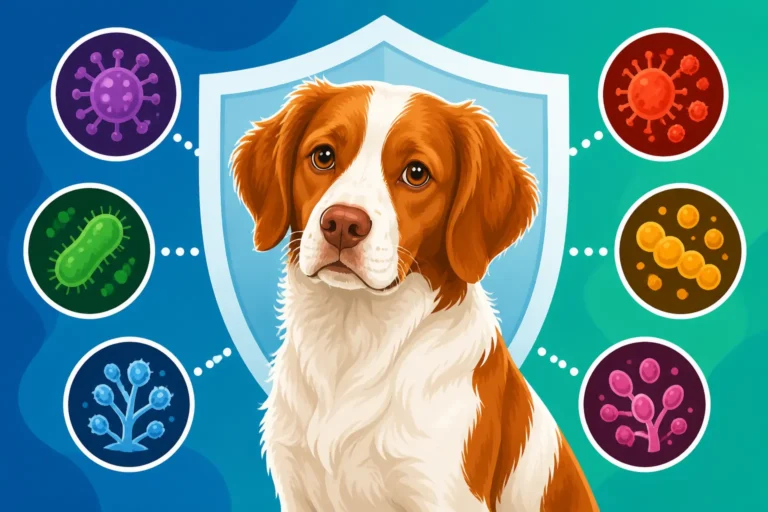
C3 deficiency in Brittany spaniel puppies impairs the complement system, causing severe infections because dogs lack this vital protein.
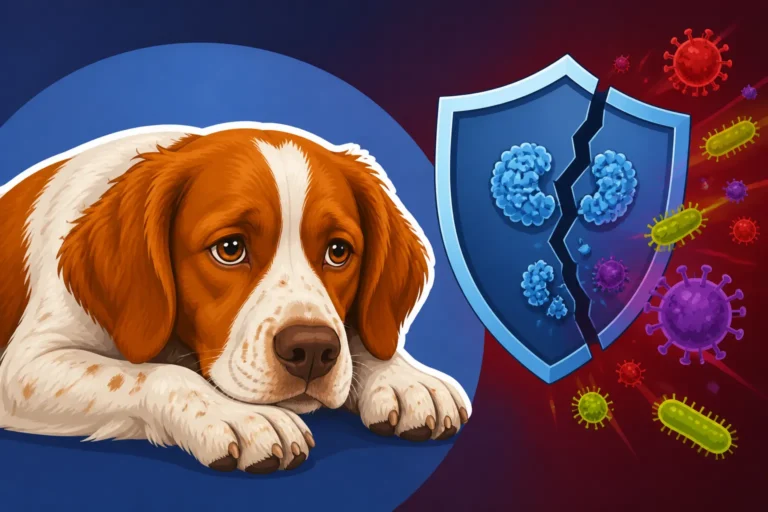
A C3 deficient Brittany cannot fight infection because missing the central C3 protein halts the immune complement cascade entirely.
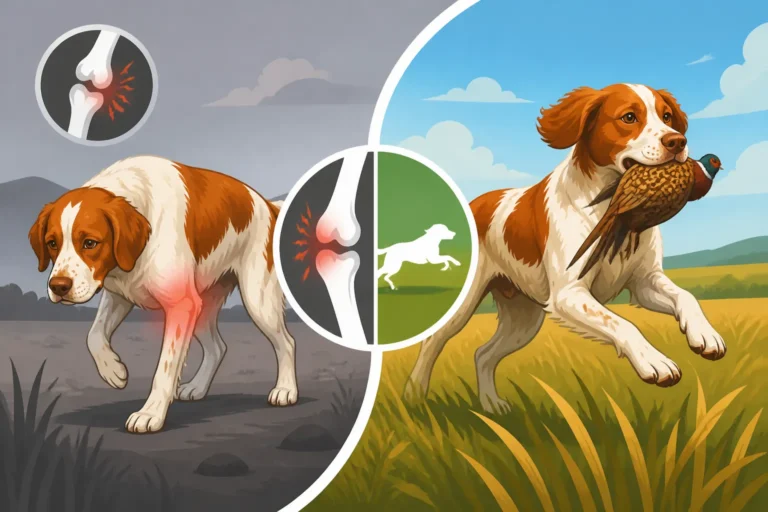
Arthritic Brittanys and joint pain in hips, elbows, or spines, explaining how reduced mobility affects their ability to hunt.
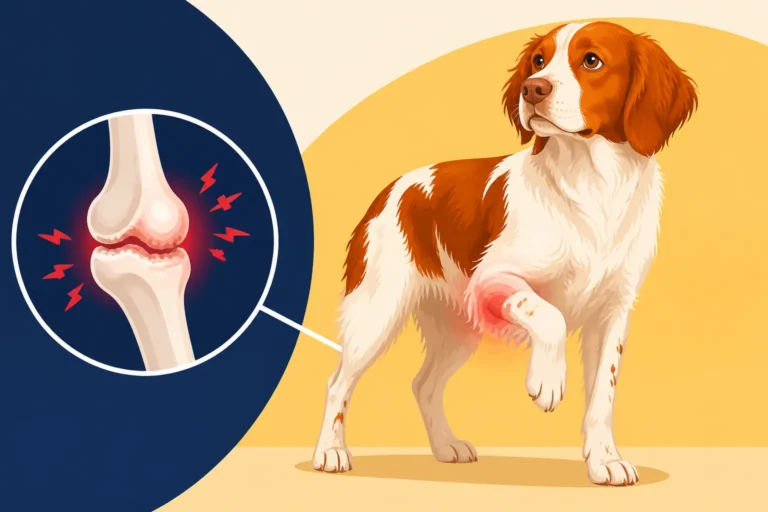
Brittany Spaniels typically show early arthritis signs between eight and ten years of age, or earlier from dysplasia and high-impact activities.

Patellar luxation in Brittanys causes the kneecap to slip from the femur groove, leading to pain, cartilage wear, and degenerative joint disease.

Cruciate tears in Brittanys cause hind leg lameness, creating knee joint instability and pain during athletic movements.