How to Get Burrs Out of a Brittany’s Coat
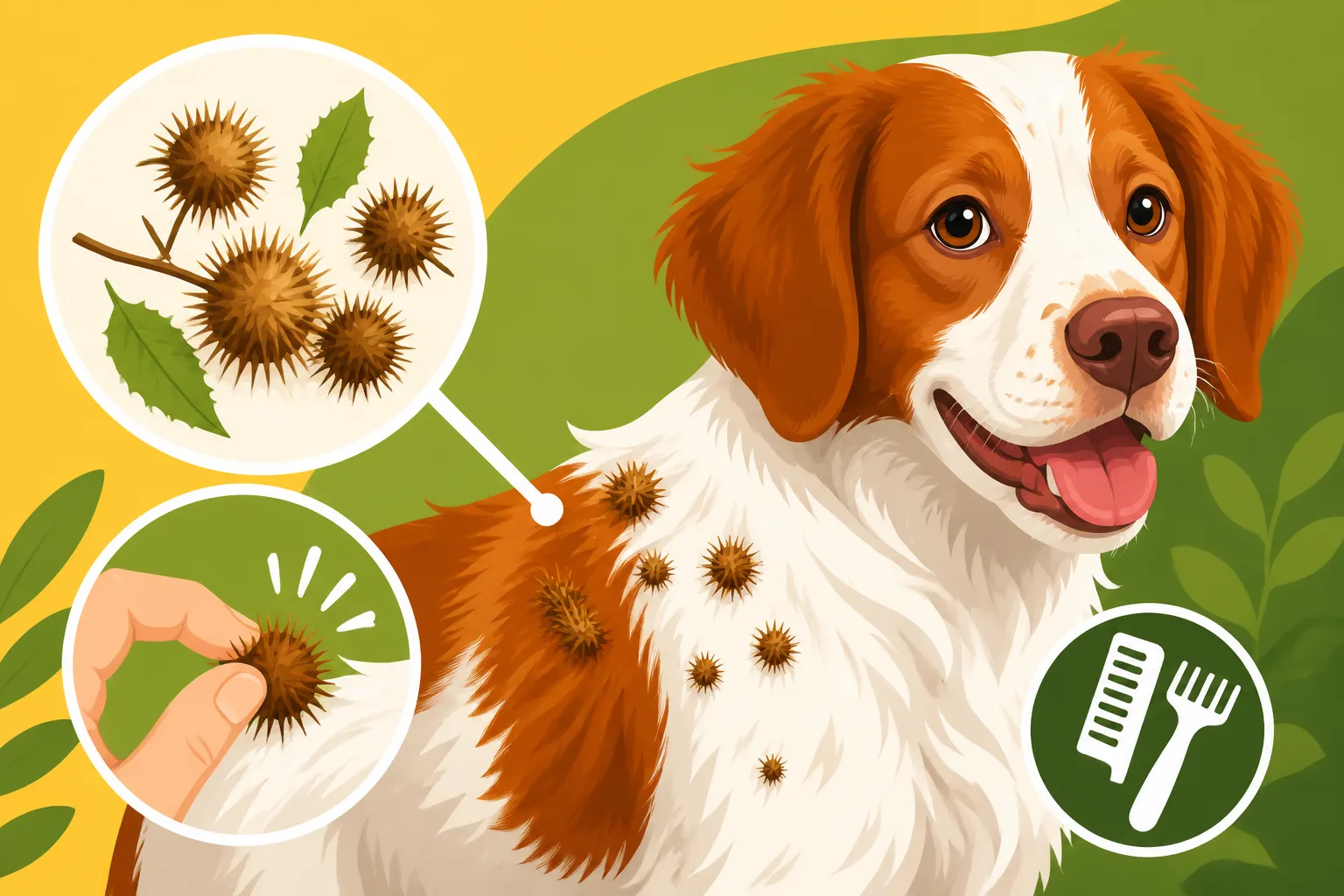
Ah, the joys of having a Brittany! There's nothing quite like watching their boundless energy as they quarter a field, nose to the ground, living out their heritage. But let's be honest, that beautiful, silky coat, so perfect for shedding water and protecting them from the elements, can also become a veritable magnet for every burr, stick-tight, and hitchhiker plant seed out there. Coming home from a successful hunt or even just a vigorous walk in tall grass often means facing the dreaded "burr safari," a tedious and sometimes painful process for both you and your loyal companion. This guide is here to help you navigate that sticky situation with practical, empathetic advice, making burr removal as smooth as possible and offering tips to prevent them in the first place.
The Burr Battle: Why Brittanys Are Such Burr Magnets
If you own a Brittany, you've probably wondered if they secretly enjoy collecting plant debris. It seems like they can sniff out the one patch of burdock in an otherwise pristine field and come out looking like a walking botanical garden. This isn't just bad luck; it's a direct result of their magnificent, yet challenging, coat.
Understanding the Brittany's Coat Structure
Brittanys possess a double coat, a marvelous design for a bird dog that needs protection in various environments. They have a fine, dense undercoat that provides insulation, keeping them warm in cold weather and cool in the heat. Overlaid on this is a medium-length, slightly wavy or flat outer coat, often described as silky. Now, here's where the burr problem comes in: this outer coat, especially the longer feathering, has just enough texture and length to perfectly entangle the hooks and barbs of burrs. Unlike dogs with very short, coarse coats or very long, heavy coats that might shed burrs more easily, the Brittany's coat acts like a finely woven net, catching and holding onto those pesky plant invaders with tenacious grip.
Imagine a fine mesh sieve. Anything small enough to get caught will stick, and the more intricate the mesh, the more it traps. That's essentially what happens with a Brittany's coat. When they dash through tall weeds, the burrs literally comb through their fur, snagging onto the individual hairs. The natural movement of the dog, combined with the often-matted nature of the burrs themselves, quickly cements them into place, creating dense, painful tangles if left unattended. It's a testament to their working breed heritage that their coat provides excellent protection, but it also demands diligent after-hunt care.
Common Trouble Spots for Burrs on a Brittany
While burrs can realistically get caught anywhere on a Brittany, there are definitely "hot zones" that require extra vigilance. These areas are usually where the feathering is longest, or where the dog's body makes repeated contact with dense vegetation.
The most notorious areas are, without a doubt, the long feathering on their legs and belly. As your Brittany pushes through thick cover, their legs and underside are constantly brushing against plants, making them prime targets. A dense patch of burrs around their "armpits" or flanks can quickly turn into a matted mess that restricts movement and causes discomfort. Don't forget the beautiful, expressive ears! The Feathering on a Brittany's Legs and Ears is particularly fine and soft, making it incredibly attractive to burrs. A dog shaking its head can drive burrs deeper into the ear feathering, sometimes even working their way closer to the ear canal if not removed promptly.
Their tail, especially if it has longer feathering (some Brittanys have natural bobtails or docked tails, but others have full or partially feathered tails), can also become a burr magnet as it wags and sweeps through grass and brush. Even the chest and neck areas, particularly where the collar sits or if they have a fuller ruff, can collect a surprising number of hitchhikers. It's a common frustration to think you've cleared them all, only to find a hidden cluster tucked away in a sensitive spot hours later. Knowing Where a Brittany's Feathering Grows can help you focus your efforts during your post-adventure checks. The key is to be methodical and thorough, knowing where these little nuisances love to hide.
Essential Tools for Burr Removal: Your Brittany's Rescue Kit
Facing a Brittany covered in burrs can feel like a daunting task, but with the right tools, you can transform it from a frustrating ordeal into a manageable grooming session. Having your "burr rescue kit" ready before you even head out to the field can save you a lot of headache.
Brushes and Combs for Every Burr Type
The cornerstone of any good burr removal strategy is a selection of appropriate brushes and combs. You'll need more than just a quick slicker brush for this job.
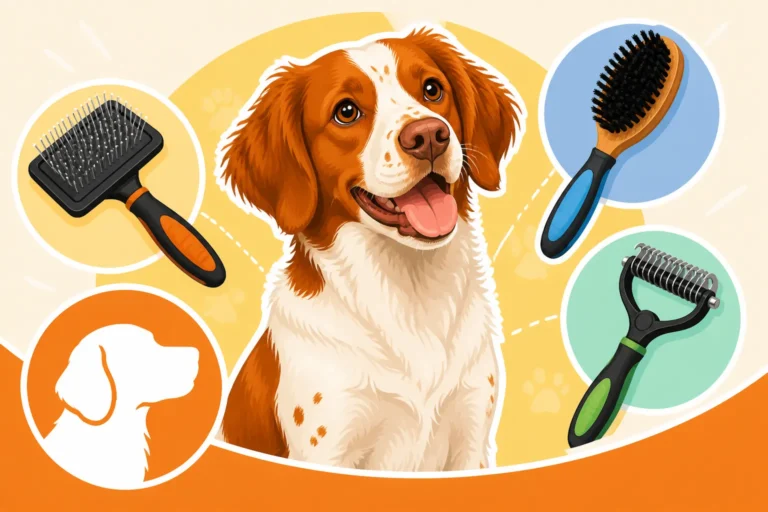
A slicker brush is excellent for initial loosening of superficial burrs and for general grooming, especially after you've removed the worst of the mats. Its fine, wire bristles can help pull out smaller, less embedded burrs and separate the hair strands. However, it's not ideal for deeply matted burrs as it can pull too much hair and cause discomfort. Think of it as your first pass, or your finishing tool, rather than your heavy-duty weapon.
For the really entrenched burrs and mats, a wide-toothed metal comb is your best friend. Look for one with sturdy, rotating teeth if possible, as these are less likely to snag and pull. This comb is crucial for working through the mat, separating the hair strand by strand. You want to use the comb to isolate individual burrs or small clusters, allowing you to gently tease them out. Work slowly, starting from the outermost edge of the mat and gradually moving inward towards the skin. It’s all about leverage and isolating the problem. When you're dealing with a Brittany's fine hair, a good quality comb like those found on Chewy or Amazon can make a world of difference. To understand what kind of tools are generally best for their coat, check out Which Brush Suits a Brittany.
In extreme cases, a dematting comb or rake might be considered, but use these with extreme caution on a Brittany's delicate feathering. These tools have sharp blades or teeth designed to cut through dense mats. While effective, improper use can easily cut skin or strip out too much healthy hair, damaging the coat. If you find yourself reaching for a dematting rake, it might be a sign that the mat is severe enough to warrant a professional groomer's touch, or that you need to be exceptionally careful and work in very small sections.
Conditioners, Oils, and Sprays for Lubrication
Sometimes, dry hair and sticky burrs create a bond that feels unbreakable. This is where lubrication comes to the rescue. Dog-safe detangling sprays, conditioners, or even natural oils can significantly reduce friction, allowing burrs to slide out with much less effort and discomfort for your dog.
A good quality dog-specific detangling spray can be misted over the burr-laden areas. Many of these sprays contain silicones or other conditioning agents that smooth the hair cuticle, making it slippery and harder for burrs to hold on. Let it sit for a minute or two to penetrate the fur before you start combing.
If you don't have a detangling spray on hand, a small amount of dog-safe conditioner (the kind you'd use after a bath) mixed with water can also work wonders. Apply it directly to the burr, let it soak in, and then try to work the burr out. For truly stubborn, matted burrs, a tiny drop of mineral oil or even coconut oil can be applied directly to the burr and the surrounding hair. Just a little bit goes a long way, as too much can make the coat greasy and harder to clean later. The oil helps to break the burr's grip and lubricate the hair strands, allowing you to gently pull the burr free without excessive tugging. I've found that Whether Coconut Oil Helps Burrs Slide Off a Brittany is a question many owners have, and yes, it can be a great natural option. Always ensure whatever you use is safe for dogs, as they will inevitably try to lick it off.
Scissors and Clippers: When to Cut Your Losses (Carefully!)
This is the last resort, and it must be approached with the utmost caution. Brittanys have thin, delicate skin, and it's alarmingly easy to accidentally nick them when using sharp objects near matted fur. Never use pointed scissors directly into a mat without extreme care, and ideally, not at all if you can avoid it.
If a burr or a cluster of burrs is so severely matted that no amount of combing or conditioning will loosen it, and it's causing your dog significant pain or discomfort, cutting might be necessary. Here's how to do it as safely as possible:
- Lift the Hair: Use a comb or your fingers to lift the mat away from the skin. You want to create a barrier between the scissors and your dog's skin.
- Use Blunt-Nose Scissors: If possible, use blunt-nosed grooming scissors. These are designed to minimize accidental pokes.
- Cut Perpendicularly: Don't try to cut along the dog's body, which increases the risk of cutting skin. Instead, make small, perpendicular snips into the mat, from the outside edge towards the skin, but always stopping before reaching the skin. This will break the mat into smaller, more manageable sections that you can then try to comb out.
- Consider Clippers: For very large, flat mats close to the skin, small electric grooming clippers (with a guard) might be safer than scissors, as they are less likely to cut skin. However, using clippers on matted fur can be tricky and pull, so proceed slowly and watch your dog for signs of pain.
Remember, the goal is to remove the burr, not to give your Brittany an impromptu haircut. If you're at all unsure, or if the mat is in a particularly sensitive area (like behind the ears or in the armpits), it's always best to seek help from a professional groomer or veterinarian.
Step-by-Step Burr Removal: A Gentle Approach
Okay, you're back from the field, your Brittany is happy but suddenly doing the "itchy dance," and you've spotted the enemy. It's time to tackle those burrs. Patience and a gentle touch are your greatest allies here.
Pre-Treatment and Initial Assessment
Before you dive in, prepare your workspace and your pup. Find a quiet, well-lit area where your Brittany can be comfortable, perhaps on a grooming table if you have one, or a non-slip mat on the floor. Have all your tools—combs, brushes, detangling spray/oil, and potentially scissors—within easy reach. A few treats are also a good idea to reward cooperation and create a positive association.
Start by gently running your hands over your dog's entire body. This isn't just to find the obvious burrs; it's to locate all the hidden ones, especially in those common trouble spots like the feathering, behind the ears, armpits, and groin. Burrs can be surprisingly small and numerous, and missing one can lead to a bigger problem later. As you feel for lumps and bumps, you'll also get a sense of how deeply embedded they are and whether they've started to form larger mats. This initial assessment is crucial, similar to the thorough check you should perform during What to Check on a Brittany After Every Outing.
If the burrs are widespread or particularly stubborn, a light misting with a detangling spray over the affected areas can be a great first step. Allow it to sit for a minute or two. This pre-treatment helps to loosen the burrs' grip and lubricate the hair, making the subsequent combing process much smoother. Don't saturate the coat, just enough to dampen the area around the burrs.
Tackling Individual Burrs and Small Clusters
Once you've assessed the situation and perhaps pre-treated the coat, it's time to get down to business. Remember the mantra: small sections, gentle strokes, and always protect the skin.
- Isolate and Secure: Choose a small section of burr-laden hair to work on. With one hand, gently hold the hair at the base, close to the skin. This is vital. It minimizes the pulling sensation on your dog's skin and directs the force to the hair strands rather than their body.
- Break Apart Large Burrs: If you're dealing with a large, prickly burr, try to break it up gently with your fingers first. Many burrs are actually clusters of smaller ones, and separating them can make them easier to remove.
- Comb from the Edge: Using your wide-toothed metal comb, start at the very outer edge of the burr or mat. Don't try to pull the comb straight through the middle. Instead, use short, gentle strokes, working the teeth of the comb into the hair just above the burr, and then pull outward to tease the burr away from the surrounding hair. Think of it like carefully untangling a knot in a string, rather than yanking it.
- Work Inwards: Gradually work your way closer to the skin, always using that short, gentle stroke from the edge of the mat. If you encounter resistance, stop, add a little more detangling spray or oil, and try to pick at the burr with your fingers to loosen its grip further.
- Patience is Key: This isn't a race. Rushing will only lead to pain for your Brittany and potentially broken hair or skin irritation. Take breaks if your dog gets antsy or you feel yourself getting frustrated. Offer a small treat for calm behavior. A typical session can easily take twenty minutes or more, depending on the severity.
Dealing with Difficult Mats and Tight Burrs
Sometimes, you'll encounter a burr that seems to have fused itself to your Brittany's coat, creating a dense, impenetrable mat. These are the truly frustrating ones, but not impossible.
For these stubborn areas, don't hesitate to reapply your detangling agent. Really work that conditioner or oil into the mat, letting it penetrate the burr and the hair strands. Sometimes, just letting it sit for an extra five minutes can make a significant difference.
Once lubricated, try again with your fingers to gently pry apart the burr. See if you can break it into smaller pieces or loosen any individual prongs that are deeply embedded. Then, with your comb, adopt a "picking" motion rather than a "combing" motion. Use the tip of the comb to carefully pick at the very edge of the mat, teasing out a few strands of hair at a time, slowly working the burr free. It's painstaking, but it saves the coat.
If, after all your efforts, a mat remains utterly unyielding and your dog is clearly uncomfortable, then—and only then—consider the careful use of scissors or clippers. As mentioned earlier, safety is paramount. Always, always try to insert a comb or your fingers between the mat and the skin before making any snips. Make tiny snips, just enough to break the mat into smaller sections that can then be combed out. This method is often preferred over a full cut, as it preserves as much length as possible. Remember, cutting a large section of hair can leave an unsightly patch and takes a long time to grow back.
Post-Removal Care and Inspection
You've done it! The major burrs are out, and your Brittany is starting to look like their usual handsome self again. But the job isn't quite finished.
First, give your dog a thorough, head-to-tail combing with a regular brush and then a fine-toothed comb. This ensures that you haven't missed any small, sneaky burrs and helps to smooth out any kinks or small mats that might have formed during the removal process. You'll be amazed at how many tiny burr fragments or overlooked seeds can still be hiding in the coat.
Next, it's vital to inspect your Brittany's skin. Burrs can cause irritation, redness, and even small cuts, especially if they've been pulling on the skin for a while. Pay close attention to the areas where the burrs were most concentrated. Look for any signs of skin irritation, swelling, or open sores. These can become hot spots or lead to infections if not addressed. Gently part the hair and visually check the skin. If you find any minor redness, a soothing, dog-safe balm or witch hazel can sometimes help.
Finally, offer your cooperative Brittany a well-deserved treat and lots of praise. This reinforces that while burr removal might be a bit uncomfortable, it's a positive experience that ends with rewards and relief. A happy dog makes future grooming sessions much easier.
Preventing Future Burr Encounters: Proactive Measures
An ounce of prevention is worth a pound of cure, especially when it comes to burrs and your Brittany's coat. While it's nearly impossible to avoid burrs entirely if your dog spends time in the field, there are many steps you can take to minimize their impact.
Pre-Hunt Preparation: Trimming and Sprays
Before heading out for a hunt or a romp in the woods, a little preparation can go a long way in reducing the post-adventure cleanup.
Consider a pre-season trim for the longer feathering on your Brittany's legs, belly, and ears. While their feathering is beautiful, practical hunters often opt to keep these areas shorter during hunting season. This isn't about style; it's about functionality. Shorter feathering offers fewer surfaces for burrs to latch onto and makes any burrs that do get caught much easier to remove. You don't need to shave them, just a careful trim with grooming shears to shorten the length in high-contact areas. Many owners question Whether a Hunting Brittany Should Be Trimmed Shorter, and for practical purposes, it often makes sense. This can drastically cut down on How Long Burr Removal Takes on a Brittany.
Another proactive measure is to use burr-repelling sprays. There are commercial sprays available that create a slick barrier on the coat, making it harder for burrs to stick and easier for them to slide off. Look for dog-safe, non-toxic options at your local pet store or on sites like Amazon. Apply generously to the feathering and other high-exposure areas before your dog goes into cover. While no spray is 100% effective, they can certainly reduce the number of burrs your dog collects.
Protective Gear for the Field
Just like you wear protective clothing in the field, there's gear available for your Brittany that can help fend off burrs and other hazards.
A protective vest or chest protector can shield your dog's chest and belly from thorny bushes and burrs. These vests, often made from durable, tear-resistant fabrics, fit snugly and prevent much of the feathering in these vulnerable areas from making direct contact with vegetation. They also offer protection against cuts and scrapes from sharp sticks. While What a Brittany's Orange Vest Costs is usually minimal, the benefit can be huge.
For extreme conditions or dogs that are highly prone to leg burrs, leg gaiters or dog boots might be an option. These can protect the delicate feathering on the legs and the sensitive paw pads. However, not all Brittanys tolerate boots well, and they can sometimes affect gait or cause chafing if not fitted correctly. It's best to introduce these items gradually and ensure your dog is comfortable wearing them before a long day in the field. You might wonder Whether a Brittany Needs a Neoprene Vest for Water; while a neoprene vest is mainly for warmth, the material itself can also offer some protection against burrs.
Regular Grooming and After-Hunt Routine
Consistency is key. Even with preventive measures, some burrs are bound to make their way into your Brittany's coat. Establishing a diligent after-outing routine is crucial.
Make it a habit to perform a thorough brush-down and inspection immediately after every outing, even if it's just a short walk through a grassy park. The sooner you find the burrs, the easier they are to remove before they become deeply matted.
Here's a systematic post-hunt check:
- Ears: Always check the insides and outsides of the ears, and especially the long feathering. Burrs here can be particularly uncomfortable.
- Armpits and Groin: These areas are warm, moist, and tend to mat quickly. They're prime hiding spots for burrs.
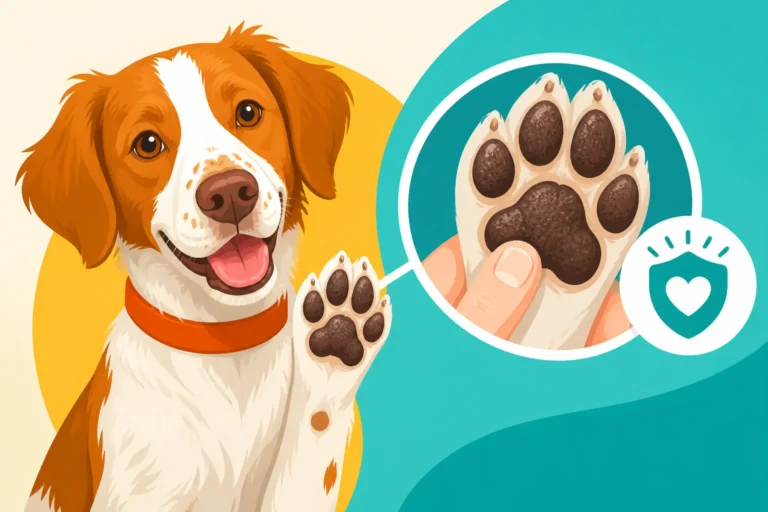
- Between the Toes: Small burrs and seeds love to lodge themselves here, causing irritation and potential limping.
- Belly and Legs: Systematically comb through all the feathering on the legs and underbelly.
- Tail: Don't forget the tail feathering!
A good routine will not only keep your Brittany comfortable but also help you catch any other issues, like ticks or small cuts. Many owners ask What to Do With a Brittany After Every Hunt, and burr removal should absolutely be at the top of the list. While you don't necessarily need to bathe your Brittany after every hunt (and Whether a Brittany Should Be Bathed After Every Hunt is a common debate), a thorough brush-down is non-negotiable.
Here's a helpful comparison of tools and techniques:
| Tool/Technique | Best Use | Pros | Cons |
|---|---|---|---|
| Slicker Brush | Initial loosening, smaller burrs, finishing pass | Gentle, good for general grooming | Not effective for dense mats, can pull hair if used incorrectly |
| Wide-Toothed Metal Comb | Deeply embedded burrs, separating mats, precise removal | Highly effective, minimizes hair pulling if used carefully | Can be time-consuming, requires patience |
| Dematting Rake/Comb | Extremely dense, flat mats (last resort) | Quickly breaks up severe mats | Can cut skin or damage coat if not used with extreme caution |
| Detangling Spray | Pre-treatment, lubricating hair for easier removal | Reduces friction, helps burrs slide out | Can make coat temporarily greasy, may need reapplication |
| Coconut Oil/Mineral Oil | Stubborn, tightly bound burrs, natural alternative | Very effective lubricant, natural option | Can make coat very greasy, requires thorough washing afterwards |
| Blunt-Nose Scissors | Breaking up severe, unmanageable mats (absolute last resort) | Allows for strategic cutting of only the matted section | Risk of cutting skin, leaves cut hair sections |
| Clippers (with guard) | Large, flat mats close to the skin (alternative to scissors) | Can be safer than scissors for large, flat mats | Can pull hair if mat is too dense, leaves a shaven patch |
| Holding Hair at Base | Fundamental technique for all removal, prevents skin pulling | Minimizes discomfort, protects dog's skin | Requires two hands, can be awkward for some areas |
| Working from Edge In | Essential technique for mats, systematic removal | Prevents further matting, less painful | Requires discipline and patience |
When to Call the Pros: Groomers and Vets
While many burr situations can be handled at home with patience and the right tools, there are times when it's genuinely best to seek professional help. Knowing when to call in the experts can save your Brittany pain and prevent further complications.
Recognizing When DIY Isn't Enough
Sometimes, you hit a wall. You've tried every comb, every spray, every technique, and the burrs are simply not budging. This often happens when:
- Mats are too large or too tight: A huge, dense mat, especially one that has been allowed to sit for a day or two, can become incredibly solid. Trying to comb this out yourself might take hours, cause immense pain for your dog, and still lead to an incomplete job.
- Burrs are too close to the skin: If the burrs are deeply embedded and matted right against your Brittany's thin skin, the risk of accidental cuts or severe skin irritation from pulling is too high to justify home removal.
- Your dog is overly stressed or reactive: Some dogs have a very low tolerance for grooming or are in pain from the burrs. If your Brittany is showing signs of extreme stress, growling, snapping, or becoming anxious during your attempts, forcing the issue will only make future grooming impossible. It's kinder to let a professional handle it.
- Burrs are in sensitive areas you can't reach: Sometimes burrs get lodged deep in an armpit, the groin, or very close to an eye or ear opening. These areas are tough to access safely, and a professional has the experience and specialized equipment to handle them.
In these situations, attempting to continue yourself often results in frustration for you and trauma for your dog. It's important to recognize your limits and prioritize your dog's comfort and safety.
The Groomer's Role in Extreme Cases
Professional groomers are absolute wizards when it comes to dematting. They have:
- Specialized Tools: Beyond what you might have at home, groomers often have high-velocity dryers to help separate hair, a wider array of dematting tools, and professional grooming tables with restraints that ensure safety.
- Expertise and Technique: They are trained in various dematting techniques that minimize pain and preserve as much coat as possible. They know how to work efficiently and effectively, often getting a job done in a fraction of the time it would take an owner.
- Patience and Experience: Groomers deal with matted dogs all the time. They understand dog behavior and can often work with stressed animals more calmly and effectively. They'll also know if the matting is so severe that it necessitates a full shave, which is sometimes the only humane option. Many groomers use high-quality detangling products, some of which you might even find available on Ollie or Chewy.
While there's a cost involved, a visit to a professional groomer for severe burr matting is often an investment in your dog's well-being and a preservation of your own sanity.
Veterinary Intervention for Skin Issues
A groomer is great for removing the burrs, but if those burrs have caused actual damage to the skin, then it's time to call the veterinarian. A vet visit is crucial if you notice any of the following:
- Deep Cuts or Lacerations: Burrs, especially those with sharp points, can cause significant cuts as they pull on the skin or when your dog tries to scratch them out.
- Persistent Redness, Swelling, or Inflammation: If the skin underneath or around where the burrs were remains red, swollen, or inflamed after removal, it could indicate severe irritation or an allergic reaction.
- Signs of Infection: Look for pus, foul odor, excessive licking or chewing at the site, or hot spots (areas of acute moist dermatitis). Infections can quickly spread and become serious if left untreated.
- Embedded Burrs: Occasionally, a small burr fragment can break off and become embedded under the skin. This usually requires veterinary removal to prevent abscess formation.
- Limping or Favoring a Paw: If burrs were concentrated on a paw and your dog is still limping after removal, there might be deep irritation, a cut, or even a burr splinter that needs professional attention.
Your vet can assess the severity of the skin injury, clean the wound thoroughly, prescribe antibiotics for infection, or anti-inflammatory medication for severe irritation. Prompt veterinary care for skin issues caused by burrs can prevent minor problems from escalating into chronic conditions.
Remember, your Brittany relies on you to keep them comfortable and healthy. Don't hesitate to lean on professionals when the situation demands it.
Disclaimer
This article is for general informational purposes only and does not constitute professional advice. Laws, prices and regulations vary by location and change over time. Consult a qualified professional for guidance on your specific situation.