Whether a Brittany Gets Mast Cell Tumors
Finding a lump on your beloved Brittany can send a wave of panic through any dog owner. It’s a moment that makes your heart sink, bringing up all sorts of terrifying "what if" scenarios. You feel it with your fingertips, and suddenly, the casual belly rub or ear scratch turns into an anxious examination. This guide is here to help you understand one of the more common and often concerning lumps our Brittanys can develop: mast cell tumors. We'll delve into what they are, how to spot them, and what your options are should your furry companion face this diagnosis.
What Exactly Are Mast Cell Tumors in Brittanys?
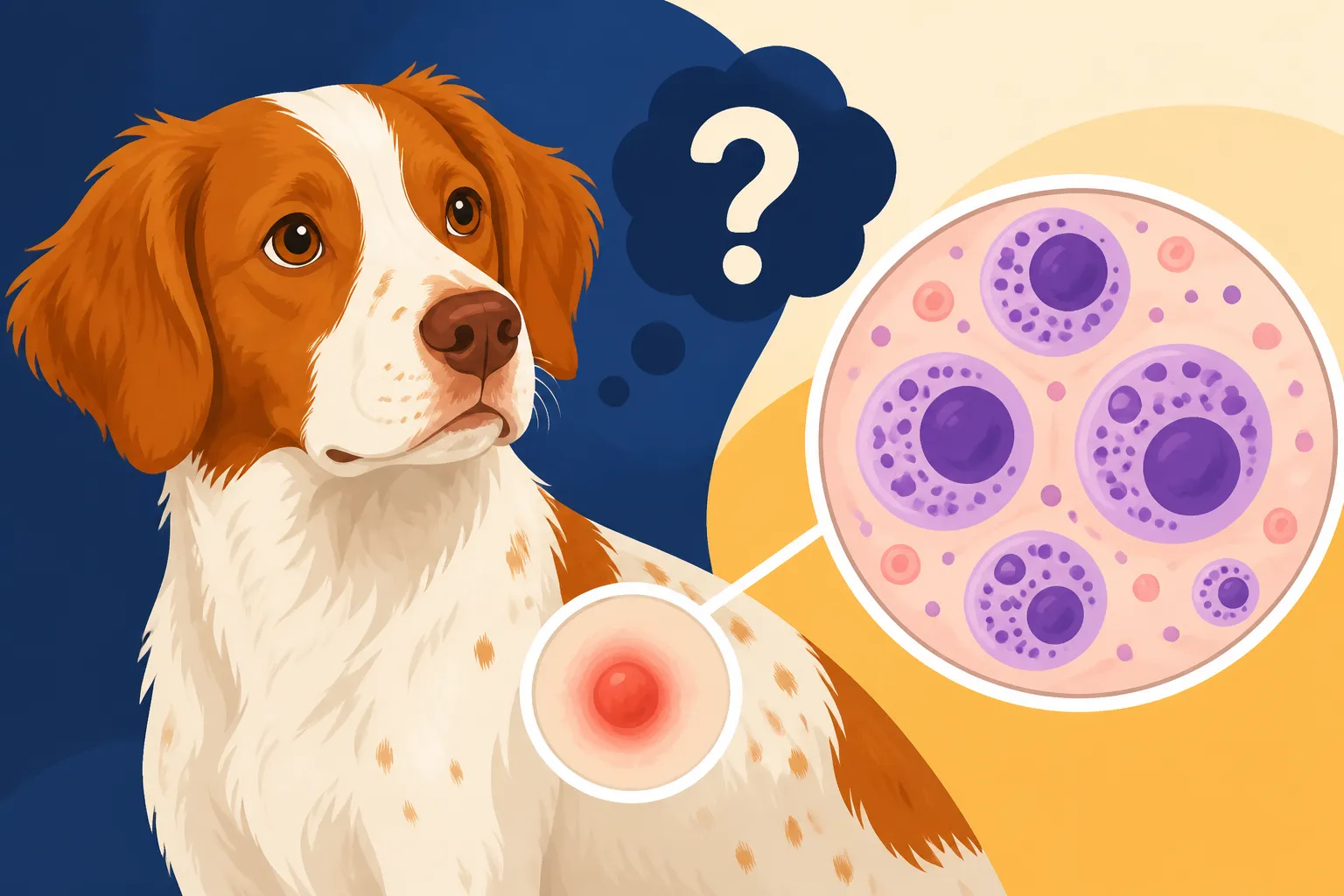
Let's start by demystifying what a mast cell tumor actually is. These aren't just any old lumps; they're a type of cancer that originates from mast cells, which are part of your Brittany's immune system. Think of mast cells as tiny little alarm bells in the body, loaded with chemicals like histamine. Normally, they're on guard, ready to spring into action against parasites or allergens, causing inflammation as part of the body's defense mechanism. But with a mast cell tumor, these cells go rogue, growing uncontrollably and sometimes releasing their contents inappropriately, leading to a host of problems.
The frustrating thing about these tumors is how unpredictable they can be. They can appear almost anywhere on or in your Brittany's body. We often think of skin lumps first, and indeed, the skin is the most common site. But they can also pop up in internal organs like the spleen, liver, lymph nodes, or bone marrow. This makes them a tricky adversary, as a seemingly harmless skin bump could be the tip of a much larger, internal iceberg. The good news is that they are generally quite treatable, especially if caught early.
The Appearance and Behavior of Mast Cell Tumors
The saying "a lump is a lump until proven otherwise" couldn't be more true with mast cell tumors. They are notorious for being the great mimickers of the dog cancer world. You might find a small, soft, movable bump one day, only for it to feel firm and fixed a few weeks later. Or it might be a raised, red, angry-looking lesion that almost looks like an allergic reaction. This inconsistency is one of the reasons why every new lump or bump on your Brittany deserves a vet visit.
Sometimes, these tumors can even fluctuate in size, seemingly getting bigger or smaller overnight. This phenomenon, often called Darier's sign, happens when the mast cells within the tumor release histamine, causing local swelling and redness. It can be incredibly confusing for owners, making them wonder if the lump is truly serious or just an odd reaction to something. This is why you can't rely on sight or touch alone to determine if a lump is benign or malignant. It truly requires a professional evaluation. This is quite different from simply feeling for common lumps that might arise from other issues. For guidance on a regular self-check, you might find How to Check a Brittany for Lumps helpful.
Why Brittanys? Are They More Prone?
While mast cell tumors can affect any dog breed, some breeds do show a higher predisposition, and unfortunately, our beloved Brittanys are among them. While they aren't as high on the list as, say, Boxers, Boston Terriers, or Golden Retrievers, Brittanys do statistically have a greater chance of developing these tumors compared to some other breeds. It’s thought there might be a genetic component at play, making certain lines or individual dogs more susceptible. This is a common concern when we think about Which Cancers a Brittany Spaniel Gets.
This genetic angle means that even if your Brittany comes from a line with no known history of mast cell tumors, vigilance is still key. It also highlights the importance of open communication with your breeder about any health issues that might arise, not just for your dog, but for the health of the breed as a whole. Knowing this predisposition isn't meant to cause alarm but to empower you as an owner to be extra diligent with regular checks and prompt vet visits for any new growth.
Recognizing the Signs and Getting a Diagnosis
The most obvious sign of a mast cell tumor is, of course, finding a lump on or under the skin. But as we discussed, these can look and feel like almost anything. So, what exactly should you be looking for, and more importantly, when do you need to stop worrying and make that appointment with your vet? The rule of thumb is simple: any new lump or bump, or any existing lump that changes in size, shape, or texture, warrants a vet visit. Don't play the waiting game, thinking it might just go away. Early detection is a huge advantage when dealing with cancer.
Beyond skin lumps, there are other, more subtle signs to watch for if the tumor is internal or has spread. These can include unexplained weight loss, loss of appetite, vomiting, diarrhea, or dark, tarry stools (which could indicate gastrointestinal bleeding from ulcerations caused by histamine release). A dog that seems generally unwell, tired, or has a sudden change in behavior could also be experiencing issues related to an internal tumor. It's tough because these symptoms can mimic so many other ailments, making a diagnosis challenging.
The Veterinary Examination and Initial Steps
When you bring your Brittany in for a new lump, your vet will start with a thorough physical examination. They’ll feel the lump, note its size, location, consistency, and whether it’s fixed or movable. They’ll also check nearby lymph nodes, as these are often the first place cancer cells spread. Then comes the crucial diagnostic step: a fine needle aspirate (FNA).
An FNA is a relatively non-invasive procedure where your vet uses a small needle to collect cells directly from the lump. It's usually done right in the exam room, often without sedation, as it’s quick and generally well-tolerated. The collected cells are then smeared onto a slide and examined under a microscope. This is where mast cells, with their distinctive granules, can often be identified. Sometimes, a conclusive diagnosis can be made from an FNA alone, telling you "yes, this is a mast cell tumor." Other times, the sample might be inconclusive, or the cells might not be clearly identifiable, in which case a biopsy might be recommended.
Grading and Staging the Tumor
If a mast cell tumor is diagnosed, the next critical step is grading and staging. This helps your vet understand how aggressive the tumor is and whether it has spread. This information is vital for determining the best course of treatment and giving you an accurate prognosis.
- Grading: This refers to how abnormal the tumor cells look under a microscope. It’s typically done after a biopsy, where a piece of the tumor is surgically removed and sent to a veterinary pathologist. The pathologist examines factors like how quickly the cells are dividing, their size, and their appearance. Mast cell tumors are generally graded as Grade I (low-grade), Grade II (intermediate-grade), or Grade III (high-grade). A higher grade indicates a more aggressive tumor with a greater potential for metastasis (spread). Some pathologists use a two-tier system, classifying them simply as low-grade or high-grade. This table illustrates the differences:
| Grade (Old 3-Tier System) | Grade (New 2-Tier System) | Description | Prognosis |
|---|---|---|---|
| Grade I (Low) | Low-Grade | Well-differentiated, less aggressive, low mitotic rate. | Good, often cured with surgery. |
| Grade II (Intermediate) | Low-Grade or High-Grade | Moderately differentiated, variable behavior. May or may not metastasize. | Variable, often needs more aggressive treatment. |
| Grade III (High) | High-Grade | Poorly differentiated, aggressive, high mitotic rate, high metastatic potential. | Poor, often spreads quickly. |
- Staging: This involves a series of tests to determine if the cancer has spread from its original site. This might include further blood tests, urine analysis, abdominal ultrasound to check organs like the spleen and liver, X-rays of the chest to look for lung metastasis, and aspirates of regional lymph nodes and possibly bone marrow. Finding out the stage helps to understand the extent of the disease throughout your Brittany's body. These tests can add up, and having pet insurance like Healthy Paws can be a real lifesaver when facing such extensive diagnostics.
Treatment Options and Prognosis for Your Brittany
Receiving a cancer diagnosis for your Brittany is undoubtedly terrifying. It’s natural to feel overwhelmed, scared, and even angry. But it's important to remember that a diagnosis is not a death sentence, especially with mast cell tumors. There are effective treatment options available, and the goal is always to provide your dog with the best possible quality of life for as long as possible. The specific treatment plan will depend heavily on the tumor's grade, stage, and location, as well as your Brittany's overall health.
Surgical Removal
For many mast cell tumors, especially those that are low-grade and confined to the skin, surgical removal is the cornerstone of treatment. The goal of surgery is to remove the entire tumor along with a wide margin of healthy tissue surrounding it. This "wide margin" is crucial because mast cell tumors often have microscopic tendrils that extend beyond what you can see or feel. If these tendrils are left behind, the tumor is likely to recur.
The success of surgery is highly dependent on the ability to achieve "clean margins," meaning the pathologist confirms that no cancer cells were found at the edges of the removed tissue. If margins are not clean, further surgery, radiation, or other treatments might be necessary. While surgery can be daunting, it offers the best chance for a cure for many Brittanys with low-grade tumors. The recovery process involves careful wound care and limiting activity, but most dogs bounce back remarkably well. You might want to understand Whether a Brittany Tolerates Anesthesia to prepare for such a procedure.
Radiation and Chemotherapy
When surgery isn't possible (due to tumor location or invasiveness) or when clean margins can't be achieved, radiation therapy often comes into play. Radiation uses high-energy rays to kill cancer cells and shrink tumors. It's often used as an adjunctive therapy after surgery, particularly for high-grade tumors or those with incomplete margins, to target any remaining microscopic cancer cells. Radiation typically involves several short treatments over a few weeks, requiring your Brittany to be sedated for each session.
Chemotherapy, which involves using drugs to kill cancer cells, is usually reserved for higher-grade tumors, tumors that have spread (metastasized), or those that are in areas difficult to remove surgically. It's also often used after surgery for high-grade tumors to try and prevent recurrence or spread. Canine chemotherapy is generally much better tolerated than human chemotherapy, with fewer severe side effects. The goal is often to control the cancer and improve quality of life rather than a complete cure, especially in advanced cases. Your vet will discuss specific chemotherapy protocols, which often involve oral medications given at home or intravenous injections at the clinic.
Newer Therapies and Managing Side Effects
Veterinary oncology is a rapidly advancing field, and new therapies for mast cell tumors are constantly emerging. These can include targeted therapies that block specific pathways involved in cancer growth, such as Kinavet or Palladia, which are oral medications that can be very effective for certain types of mast cell tumors. These drugs are often used for inoperable tumors or as part of a multi-modal approach.
Managing potential side effects from treatments is a crucial part of the care plan. Your vet will provide medications to help with nausea, pain, or inflammation. For example, antihistamines can help counteract the effects of histamine released by the tumor cells. It's a challenging journey, but with dedicated veterinary care and your commitment, your Brittany can still enjoy a good quality of life. The financial implications of these advanced treatments can be significant, so understanding what pet insurance plans like Healthy Paws cover for cancer treatment is invaluable.
Managing Life After a Mast Cell Tumor Diagnosis
Life after a mast cell tumor diagnosis for your Brittany can feel like a new normal, filled with a mix of hope and vigilance. It’s a marathon, not a sprint, and ongoing management is key to ensuring your dog's well-being. Even after successful treatment, regular check-ups become even more important.
Ongoing Monitoring and Follow-Up
No matter the treatment path chosen, consistent follow-up appointments with your veterinarian or veterinary oncologist are essential. For skin tumors, this typically involves regular physical examinations to check for new lumps or recurrence at the surgical site. Depending on the tumor's original grade and stage, your vet might recommend periodic blood work, abdominal ultrasounds, or chest X-rays to monitor for any signs of internal spread or new tumor development.
The frequency of these follow-up visits will vary based on your Brittany's individual case, but it's not uncommon for them to be every 3-6 months initially, gradually decreasing if things remain stable. Maintaining a detailed record of any new findings, changes in your dog's behavior, or general health observations will be incredibly helpful for your vet during these appointments. This long-term care helps ensure you're doing everything possible to prolong your Brittany's healthy years, which often span The Twelve to Fourteen Years a Brittany Gets.
Quality of Life and Supportive Care
Throughout treatment and recovery, your Brittany's quality of life is paramount. This means making sure they are comfortable, pain-free, and still enjoying their favorite activities as much as possible. Pain management is often a critical component, especially after surgery or if the tumor affects a sensitive area. Your vet can prescribe appropriate pain medications, and sometimes supplements like omega-3 fatty acids or joint support can also contribute to their overall comfort.
Nutrition also plays a vital role. Some dogs undergoing chemotherapy might experience a decreased appetite, so working with your vet on dietary adjustments or appetite stimulants can be beneficial. Keeping your Brittany at a healthy weight and ensuring they receive appropriate exercise (as tolerated) helps support their immune system and overall health. Remember, a happy dog is a fighting dog!
Prevention and Early Detection Strategies
While we can't completely prevent cancer, there are proactive steps you can take to give your Brittany the best chance. Regular full-body checks at home are crucial. Make it a routine to feel your dog over thoroughly once a week – feel all over their skin, between their toes, under their armpits, and around their ears. This allows you to become familiar with what's normal for your dog, making any new lump immediately noticeable. Consider this a core part of their What Care a Brittany Needs Its Whole Life.
Beyond home checks, ensure your Brittany receives annual or semi-annual veterinary wellness exams, where your vet will also perform a thorough physical exam. Discuss any changes you’ve noticed, no matter how small they seem. For breeds prone to certain cancers, some vets may even suggest baseline bloodwork or imaging as part of a routine senior screening. And always, always consult your vet for any new lump. That lump might be nothing, but the peace of mind, or the early intervention if it is something serious, is priceless. It's this proactive approach that can make all the difference in a positive outcome.
Disclaimer
The information provided in this guide is for general educational purposes only and should not be considered a substitute for professional veterinary advice. Always consult with a qualified veterinarian regarding any health concerns or before making any decisions about your Brittany's medical care.