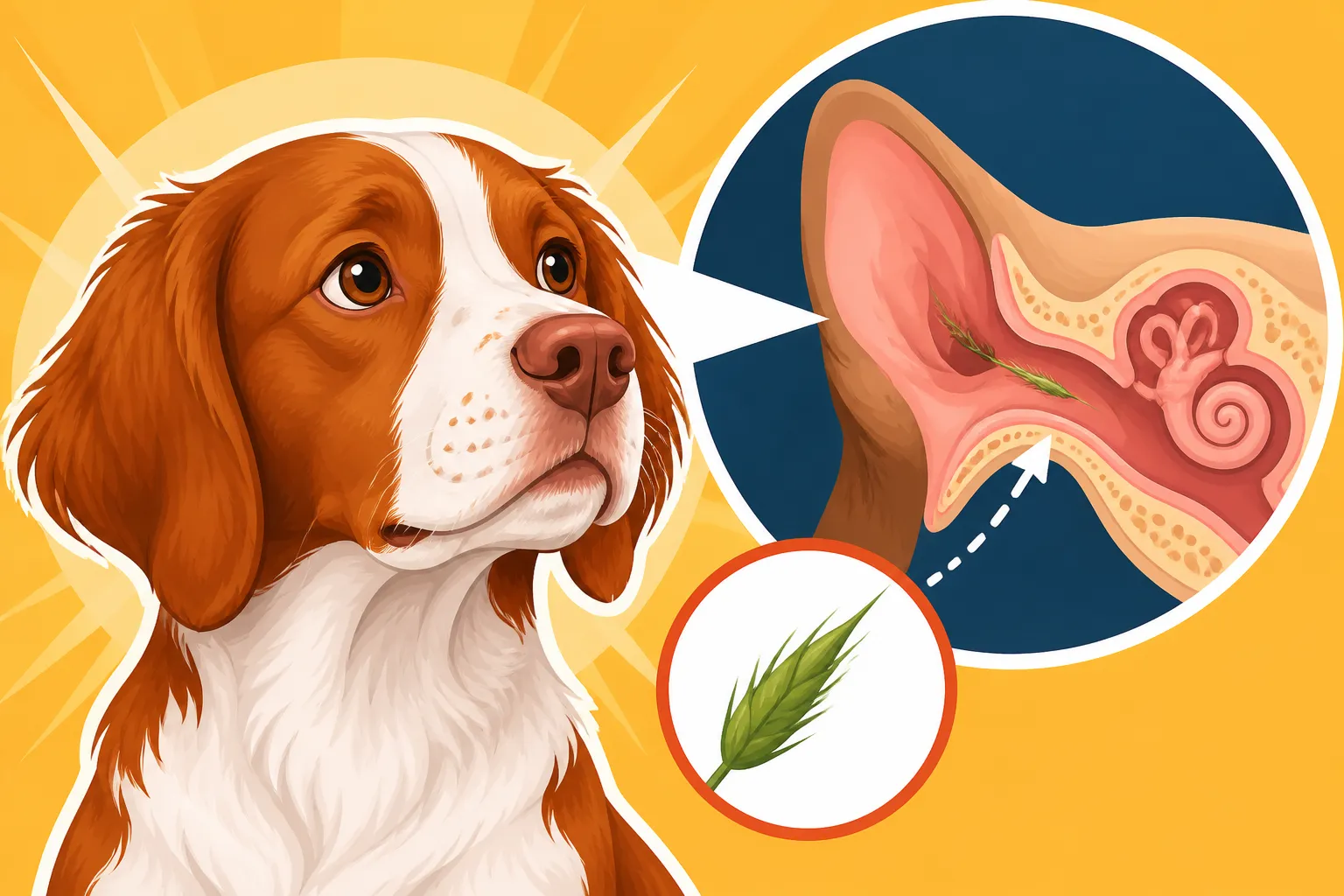
Whether Grass Awns Reach a Brittany’s Eardrum
It's a terrifying thought for any Brittany owner: you're out in the field, your energetic companion is bounding through tall grass, and suddenly, you see them shaking their head frantically or pawing at an ear. The worry immediately jumps to grass awns, those sneaky, barbed seed heads that seem to defy all logic in their ability to burrow into fur, skin, and even deep into an ear canal. One of the most urgent questions that comes to mind is whether these insidious plant parts can actually reach something as vital and delicate as your Brittany's eardrum. This guide is here to unravel that concerning possibility, explain the mechanics of how awns move, what damage they can cause, and most importantly, what you need to do to protect your beloved hunting partner.
The Anatomy of a Brittany's Ear and Why It's Susceptible
To truly understand the risk, we need to take a quick dive into the fascinating, albeit frustrating, architecture of a Brittany's ear. Those beautiful, soft, low-set ears are part of what makes our Brittanys so endearing, but they also create a perfect storm for certain kinds of trouble. Unlike humans, whose ear canals are relatively short and straight, dogs have an ear canal that is long, L-shaped, and wonderfully complex – designed to protect the inner ear but also, unfortunately, to trap foreign invaders like grass awns.
The Ear Canal's Twisty Path
Imagine a deep, narrow tunnel that first travels vertically down from the ear opening, then takes a sharp turn horizontally towards the eardrum. That's essentially your Brittany's ear canal. This vertical and horizontal structure means that anything entering the outer ear doesn't just fall out easily. Gravity, which might help dislodge something from a human ear, works against removal in a dog's ear. Instead, foreign bodies tend to get wedged in the turn or continue their journey deeper into the horizontal canal.
The skin lining this canal is also delicate and prone to inflammation, especially in a breed like the Brittany with its penchant for water and outdoor activity. The warm, dark, and often humid environment created by those floppy ears is an ideal breeding ground for bacteria and yeast, which can compound any irritation caused by an awn. This complex pathway, combined with the usual moisture and warmth, explains why Brittanys are notoriously susceptible to ear issues in general. If you've ever battled recurring ear infections, you know the frustration well. For more on this, check out Why a Brittany's Ears Get Infected Every Season.
The Role of the Eardrum (Tympanic Membrane)
At the very end of that long, twisty ear canal lies the eardrum, or tympanic membrane. This thin, delicate membrane vibrates in response to sound waves, transmitting these vibrations to the tiny bones of the middle ear, which then send signals to the brain. It's crucial for your Brittany's hearing, and it acts as a barrier, protecting the even more sensitive structures of the middle and inner ear from the outside world.
While the eardrum is robust enough to handle normal sound pressures, it is incredibly vulnerable to physical trauma or sustained irritation. A grass awn, with its sharp point and microscopic barbs, is precisely the kind of foreign body that can pierce or rupture this membrane. Once the eardrum is compromised, the middle ear becomes exposed, opening the door to much more severe infections and potentially permanent hearing damage. The good news is that the eardrum is generally quite far down that L-shaped canal, meaning an awn has a significant journey to make before it gets there. The bad news? Those awns are incredibly good at making that journey.
How Grass Awns Infiltrate and Migrate
Grass awns are masters of movement. They are often compared to tiny, one-way arrows, and for good reason. Understanding their sneaky tactics helps explain why they pose such a serious threat to our active Brittanys.
The Mechanics of Awn Movement
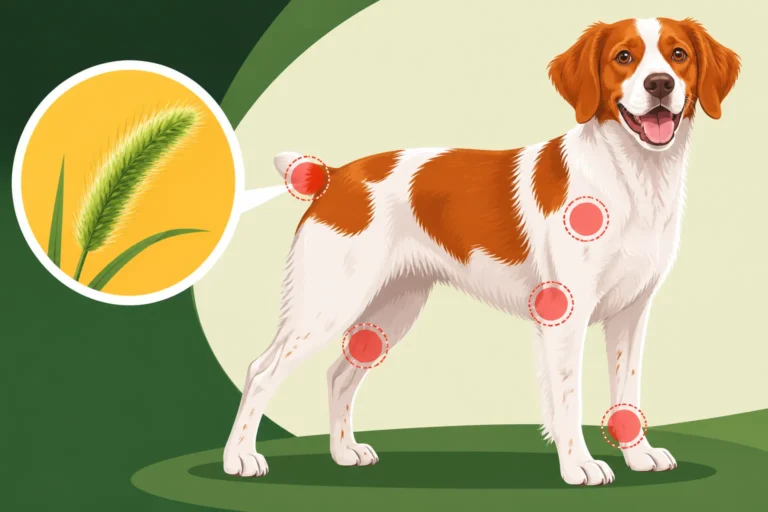
Imagine a tiny spear, tipped with a sharp point and covered in backward-facing barbs. That's essentially a grass awn. When your Brittany runs through tall, dry grass, these awns readily attach to their coat, especially the feathery hair on their legs, belly, and, yes, around their ears. Once attached, every movement your dog makes—walking, shaking their head, scratching—helps propel the awn forward. The barbs prevent it from backing out; they only allow it to move in one direction.
The natural vibrations and contractions of the ear canal itself, combined with the awn's barbed structure, act like a biological conveyor belt, slowly but surely pulling the awn deeper and deeper. It's a relentless, one-way journey. This is why even a small awn can be a huge problem. It doesn't need to be pushed; it walks itself into places you'd never imagine. This migration can happen surprisingly quickly, often within a matter of hours or a day, turning a minor irritation into a serious medical emergency.
Identifying the Culprits: Common Awn Types
Not all grasses are equally problematic, but several notorious culprits are responsible for most grass awn incidents. These include Foxtail, Cheatgrass, Ryegrass, and some types of Brome. They all share that distinctive, barbed seed head design. They're prevalent in many hunting regions across North America, thriving in dry, open fields and along trails.
- Foxtails: Perhaps the most infamous, foxtails have a pointed tip and clusters of stiff, backward-pointing bristles. They're brutally effective at burrowing.
- Cheatgrass: Also known as Downy Brome, this grass produces feathery, barbed seed heads that are particularly adept at clinging to fur and working their way in.
- Ryegrass: While less common than foxtails for deep penetration, certain varieties can still cause issues, especially in ears.
Knowing what these look like in the field can help you avoid certain areas, especially once the grasses have gone to seed and dried out. Many experienced hunters make it a habit to scout their preferred areas for these types of grasses before bringing their dogs out. It's a proactive step that can save a lot of heartache (and vet bills!). To learn more about general post-hunt checks, see What to Do With a Brittany After Every Hunt.
Signs Your Brittany Has an Awn in Its Ear
Recognizing the signs of a grass awn early can make all the difference in preventing severe damage. Our Brittanys are tough, but they're not immune to pain, and an awn in the ear is incredibly uncomfortable.
Obvious and Subtle Behavioral Changes
The most common and immediate sign of an awn in the ear is a sudden onset of head shaking and ear pawing. Your Brittany might shake their head violently, tilt it to one side, or constantly try to scratch at the affected ear with a hind paw. It's usually quite pronounced, enough to make any owner sit up and take notice.
However, sometimes the signs can be more subtle, especially if the awn is lodged deeper or the initial irritation has led to a secondary infection. You might observe:
- Lethargy or changes in mood: A dog in constant pain or discomfort might be less enthusiastic about walks or play, seem withdrawn, or even become grumpy.
- Reluctance to eat: While not specific to ear issues, any significant discomfort can make a dog go off its feed. If your Brittany isn't interested in their usual bowl of food, whether it's their regular kibble from Chewy or a fresh meal from Ollie, it's a red flag.
- Pain when touched: Your Brittany might yelp or flinch when you try to examine their ear or even touch their head.
- Rubbing head on furniture or ground: This is another attempt to alleviate the irritation.
Don't dismiss these symptoms, even if they seem minor. A Brittany that normally can't get enough of the outdoors suddenly acting subdued could be trying to tell you something important.
Visual Cues and What to Look For
While head shaking is often the first clue, a visual inspection can confirm your suspicions, though seeing the awn itself can be challenging.
When you carefully lift your Brittany's ear flap, you might notice:
- Redness and inflammation: The inner surface of the ear flap and the opening of the ear canal may appear redder than usual.
- Discharge: As the irritation progresses, there might be a brownish, yellowish, or even bloody discharge coming from the ear. This is a strong indicator of inflammation or infection.
- Odor: An unpleasant smell often accompanies infection, which is a common secondary issue when an awn is present.
- Swelling: In severe cases, particularly if the ear canal has been scratched or a secondary infection has set in, you might see swelling around the ear opening or even along the external ear canal.
- The awn itself: If you're very lucky, and the awn hasn't burrowed too deeply yet, you might spot the tip of it just inside the ear canal. However, resist the urge to pull it out with tweezers yourself, as you could easily break it off or push it deeper. This is a job for a professional.
When checking your Brittany's ears, always do so gently. If your dog shows signs of pain, stop immediately and contact your vet. You can learn more about routine ear care in How Often a Brittany's Ears Need Cleaning.
The Dangers of Unremoved Grass Awns
Leaving a grass awn in your Brittany's ear is not an option. The potential consequences range from irritating to life-threatening, and they almost always get worse over time.
Infections and Damage Beyond the Eardrum
Even if an awn doesn't immediately puncture the eardrum, its presence alone creates significant problems. The foreign body acts as a constant irritant, causing inflammation, pain, and inevitably, infection. The barbs can scratch the delicate lining of the ear canal, creating entry points for bacteria and yeast, leading to a severe otitis externa (outer ear infection) or otitis media (middle ear infection). These infections are incredibly painful and can be difficult to treat without removing the underlying cause.
Furthermore, the inflammation can cause the ear canal to swell shut, making it even harder for your veterinarian to visualize and extract the awn. This swelling can also trap pus and debris, exacerbating the infection and increasing pressure on the eardrum. Over time, chronic irritation and infection can lead to permanent thickening of the ear canal tissues, making the ear even more prone to future infections and potentially requiring extensive surgery. This is precisely why prompt removal is so critical.
The Peril of a Ruptured Eardrum
The most serious immediate danger is the awn penetrating and rupturing the eardrum. As mentioned, the eardrum serves as a protective barrier. Once it's breached, bacteria and debris from the outer ear canal gain direct access to the middle ear. This can lead to:
- Middle ear infection (Otitis Media): This is far more serious than an outer ear infection, often causing severe pain, neurological signs, and in some cases, can spread to the inner ear or even the brain.
- Inner ear infection (Otitis Interna): If the infection reaches the inner ear, it can affect balance and hearing. You might see your Brittany developing a head tilt, nystagmus (involuntary eye movements), or circling behavior. These are neurological emergencies.
- Permanent hearing loss: While eardrums can sometimes heal, a severe rupture or repeated infections can lead to permanent damage to the structures of the middle or inner ear, resulting in partial or complete hearing loss in the affected ear.
The short answer to the initial question, "Whether Grass Awns Reach a Brittany's Eardrum," is a resounding and concerning YES. They absolutely can, and they frequently do. This is not just a theoretical risk; it's a common and serious issue for active dogs, especially those with drop ears like our Brittanys, who love to plunge headfirst into dense cover.
What to Do if You Suspect an Awn
This is one of those times when your gut feeling as a dog owner is usually right. If you suspect a grass awn, don't hesitate.
The Importance of Immediate Veterinary Attention
If you notice any of the signs we've discussed, your very next step should be to contact your veterinarian. This is not a "wait and see" situation. The longer the awn remains, the deeper it can travel, and the more damage and infection it can cause.
Your vet will likely:
- Examine the ear: Using an otoscope, they will carefully examine the ear canal to visualize the foreign body. This often requires sedation or even general anesthesia, especially if the ear is very painful or the awn is deep. Trying to extract an awn from an awake, struggling dog is dangerous and likely to cause more harm.
- Extract the awn: Specialized instruments, like long forceps, are used to carefully grasp and remove the awn. Because of the barbs, it needs to be pulled out cleanly.
- Assess damage: After removal, the vet will inspect the ear canal and eardrum for any damage, such as scratches, inflammation, or a rupture.
- Treat secondary issues: They will prescribe appropriate medication, which might include ear drops (antibiotic, antifungal, or anti-inflammatory), oral antibiotics, or pain relief, depending on the severity of the infection or damage.
Never attempt to extract an awn yourself beyond the very outermost part of the ear if it's clearly visible and easily accessible without pushing it further. Anything deeper requires a vet's expertise. Trying to use tweezers or cotton swabs can push the awn deeper, break it apart, or damage the delicate ear canal.
Home Care: What Not to Do
While you should absolutely seek veterinary help, there are some things you can do at home to help manage the situation and prevent future occurrences.
What Not to Do:
- Don't ignore the signs: As discussed, delaying treatment can have severe consequences.
- Don't try to flush the ear vigorously: This can push the awn deeper or introduce water into a potentially ruptured eardrum, worsening infection.
- Don't stick anything down the ear canal: Cotton swabs, tweezers, or other instruments can cause trauma, push the awn further, or rupture the eardrum.
- Don't apply unprescribed ear drops: If the eardrum is ruptured, some ear medications can be ototoxic (toxic to the ear), causing further damage. Only use drops prescribed by your vet after they've assessed the eardrum.
What You Can Do:
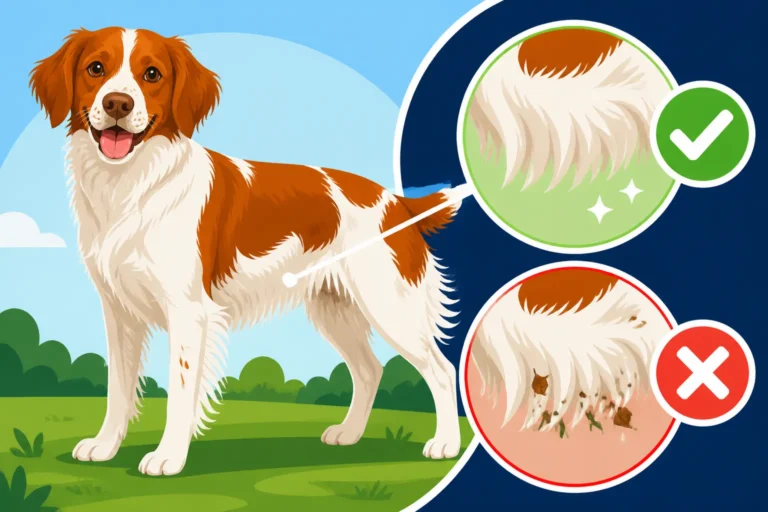
- Perform thorough post-hunt checks: After every outing, especially if your Brittany has been in tall grasses, meticulously check their ears, between their toes, armpits, and groin for any awns. Gentle brushing with a fine-toothed comb can help dislodge them from feathering. For more on this, check How to Check a Brittany Between the Toes.
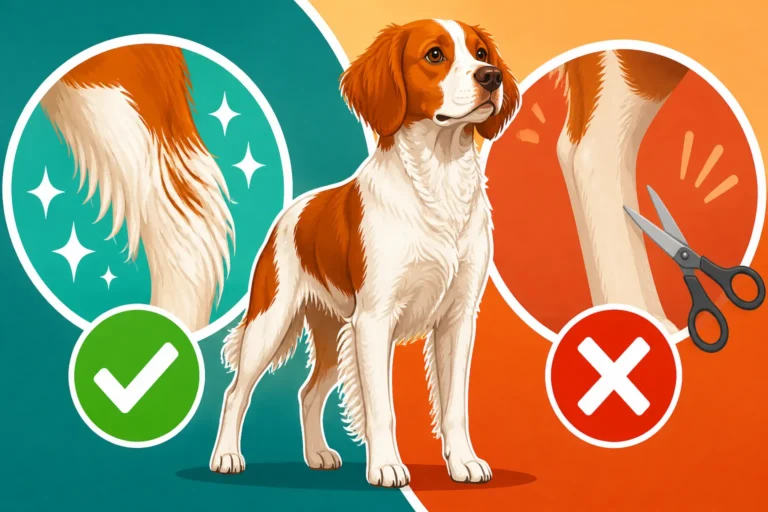
- Consider preventative grooming: Keeping the hair around and inside your Brittany's ear canal trimmed can reduce the surface area for awns to cling to and make them easier to spot. This should be done carefully to avoid cutting the delicate skin.
- Use protective gear: In particularly problematic areas, ear protection can be a lifesaver. Specialized snoods or ear coverings can help prevent awns from entering the ear canal.
- Keep a first-aid kit handy: While you won't be removing deep awns yourself, having a basic kit for field scrapes and minor issues is always a good idea. What a First Aid Kit for a Brittany Should Hold gives a good overview.
- Shop smart for ear cleaners: Once cleared by your vet, you can find a variety of vet-recommended ear cleaners on sites like Chewy or Amazon to help keep the ears clean and healthy, especially in a breed like the Brittany prone to ear issues.
Dealing with grass awns is a reality for many Brittany owners, but with vigilance, prompt action, and good veterinary care, you can protect your beloved hunting partner from their potentially devastating effects.
| Symptom Category | Mild Concern (Awn may be superficial) | High Concern (Awn likely deep or causing significant issues) |
|---|---|---|
| Behavioral | Occasional head shake, mild pawing. | Constant, violent head shaking; relentless pawing/scratching; head tilt; reluctance to play/eat. |
| Visual/Physical | Mild redness at ear canal opening; slight discharge. | Obvious swelling; thick, colored or bloody discharge; strong odor; visible trauma to ear flap. |
| Pain Level | Mild discomfort, allows gentle ear examination. | Yelps/flinches when ear is touched; guards head. |
| General Health | Otherwise normal energy and appetite. | Lethargy, fever, loss of appetite. |
| Action Needed | Monitor closely, gentle superficial check, contact vet if worsening. | Immediate Veterinary Attention Required. |
Disclaimer
This article is for general informational purposes only and does not constitute professional advice. Laws, prices and regulations vary by location and change over time. Consult a qualified professional for guidance on your specific situation.