Retinal Dysplasia in a Brittany Spaniel
Finding out your beloved Brittany Spaniel might be facing vision challenges can be incredibly disheartening, bringing a wave of worry about their quality of life and future. Hereditary conditions like retinal dysplasia often catch owners off guard, leaving them with many questions and anxieties about what lies ahead. This comprehensive guide aims to illuminate what retinal Dysplasia is, how it affects Brittanys, its various forms, the symptoms to watch for, how it’s diagnosed, and crucially, what steps you can take for management and prevention to help safeguard your cherished companion's sight.
Understanding Retinal Dysplasia: What It Means for Your Brittany's Vision
It's a scary thought to imagine our energetic, bird-hunting Brittanys struggling to see the world around them. Retinal dysplasia is one of those conditions that can lurk quietly, sometimes only revealing itself subtly until it's more advanced. Understanding what this condition truly is, and how it impacts your dog's intricate vision system, is the first step in being a proactive and informed owner.
The Retina's Role and What Goes Wrong
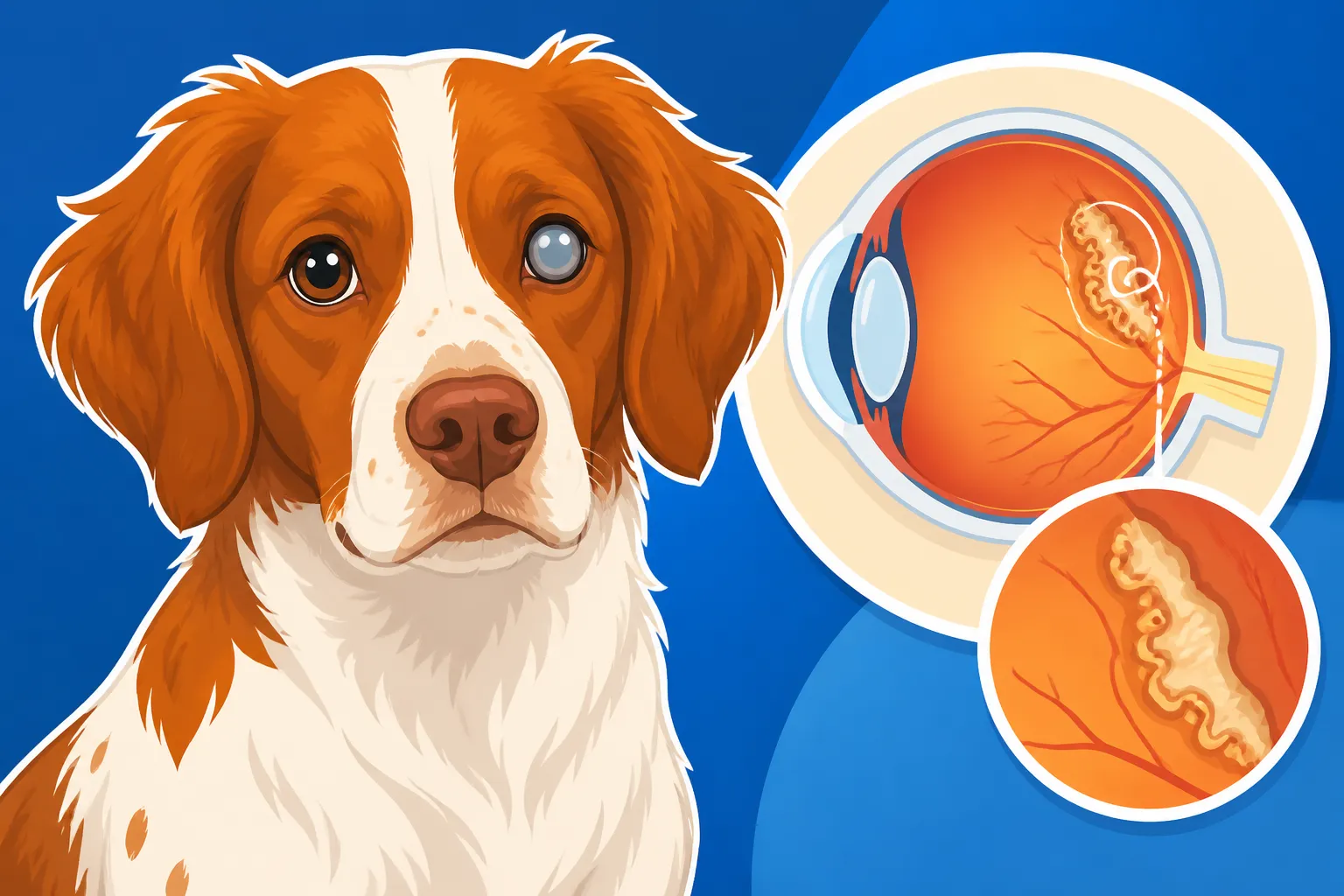
To grasp retinal dysplasia, it helps to know a little about the retina itself. Think of the retina as the "film" in a camera at the back of your dog's eye. It’s a delicate layer of tissue packed with light-sensitive cells that detect images and send them to the brain via the optic nerve. This is how your Brittany processes everything from the darting movement of a quail in the field to the loving glance you share at home. When we talk about retinal dysplasia, we're essentially referring to an abnormal development of this crucial retinal tissue during the puppy's growth. It's not an injury or an infection; it's a developmental defect, meaning the retina didn't form correctly from the start. This can lead to folds, rosettes (small, abnormal clusters of retinal cells), or even large detachments of the retina from the underlying tissue. Imagine trying to take a clear photo with crumpled or torn film – the images just won't come out right. The severity of these malformations directly dictates the degree of vision impairment your Brittany might experience, ranging from barely noticeable to complete blindness.
The frustrating part is that this improper development happens early, often before a puppy even leaves its littermates. It's a foundational issue, and because the retina is so vital, any defect can have profound effects. Sometimes, the initial changes might be quite small, just minor folds that don't significantly impede vision, particularly in an active dog that uses its other senses adeptly. Other times, the malformation can be extensive, causing large areas of the retina to be non-functional or even fully detached. This spectrum of severity is why two Brittanys with retinal dysplasia might have vastly different visual capabilities, making early detection and understanding its specific presentation so important for their care and quality of life.
Unraveling the Genetic Thread in Brittanys
When we talk about conditions like retinal dysplasia in a specific breed, genetics almost always play a significant role. For Brittany Spaniels, retinal dysplasia is recognized as a hereditary condition, meaning it’s passed down from parent to offspring. This genetic component is a major reason why responsible breeding practices are absolutely critical. It’s not just bad luck; it’s often a result of inherited traits. While the exact mode of inheritance can sometimes be complex, involving multiple genes or recessive traits, the underlying fact is that certain genetic predispositions make Brittanys more susceptible.
This genetic vulnerability places a heavy responsibility on breeders to screen their breeding stock thoroughly. Owners often wonder about the health history of their puppy's parents, and rightly so. Reputable breeders should be transparent about their dogs' health clearances, including ophthalmological examinations. Without proper screening, unknowingly breeding affected or carrier dogs can perpetuate the condition within the breed line, leading to more puppies suffering from vision issues. The genetic nature of retinal dysplasia means that even if a parent doesn’t show severe symptoms, they could still be a carrier, capable of passing on the faulty gene to their offspring. This is why a simple visual inspection of the parents isn't enough; professional veterinary screening is essential. It reinforces why understanding what a Brittany Spaniel breeder should have tested is so crucial for any prospective owner.
Spotting the Subtle and Obvious Clues
One of the challenges with any eye condition in a dog, especially a breed as active and adaptable as the Brittany, is that they are masters at compensating. They might use their incredible sense of smell and hearing to navigate, making it difficult for an owner to immediately notice subtle vision deficits. However, knowing what to look for, and understanding the different ways retinal dysplasia can manifest, can empower you to detect issues sooner rather than later.
Different Presentations of Retinal Dysplasia
Retinal dysplasia isn't a single, uniform condition; it can manifest in several ways, each with varying degrees of severity and impact on your Brittany's vision. These different forms are usually categorized by the extent of the retinal malformation observed during an eye exam. The mildest form often presents as retinal folds. These are small, localized wrinkles or creases in the retina. Many dogs with only retinal folds might have perfectly normal vision, or very slight, unnoticeable deficits. They often live full, active lives without any major visual impairment. It's a situation where the "film" has a few tiny creases, but the picture still largely comes through.
Moving up the scale of severity, we encounter geographic retinal dysplasia. This form involves larger, more irregular areas of retinal malformation, often with associated areas of abnormal tissue development (rosettes) and thinning of the retinal layers. Think of it as more extensive crumpling or even small tears in the camera film. Dogs with geographic retinal dysplasia will likely experience some degree of vision impairment, which can vary depending on the size and location of these affected areas. Their ability to track fast-moving objects, or see clearly in dim light, might be compromised. Finally, the most severe form is retinal detachment. In this scenario, a significant portion, or even the entire retina, separates from the underlying choroid layer that supplies it with blood and nutrients. This is akin to the film completely tearing away from the back of the camera. When the retina detaches, the light-sensitive cells lose their vital support, leading to profound vision loss or complete blindness in the affected eye.
Here's a quick overview of the different forms:
| Type of Retinal Dysplasia | Severity | Typical Appearance on Exam | Impact on Vision |
|---|---|---|---|
| Retinal Folds | Mild | Small, linear folds/creases in retina | Usually none to minimal |
| Geographic Retinal Dysplasia | Moderate | Larger, irregular areas of malformed retina, rosettes | Mild to moderate impairment |
| Retinal Detachment | Severe | Retina separated from underlying tissue | Severe impairment to blindness |
It's worth noting that some Brittanys might have a combination of these forms, and the condition can also be associated with other ocular defects or even systemic issues in rare cases. The progressive nature of some forms means that what starts as folds might, in some unlucky individuals, advance to more severe forms, although this is less common than the condition remaining stable.
Behavioral Changes and Physical Indicators
Because Brittanys are so adaptable, picking up on vision problems often requires keen observation from their owners. You might not notice an obvious bump or stumble at first, especially if the changes are gradual or one eye is more affected than the other. However, behavioral changes are often the first, albeit subtle, indicators. Your Brittany might become more hesitant to navigate in dimly lit areas, or perhaps refuse to go down stairs they previously had no issue with. They might bump into furniture that has been rearranged, or even familiar objects if their peripheral vision is compromised. When you throw a toy, they might not track it as effectively, or miss it completely. If you have an active hunting dog, you might notice a decreased ability to mark birds or retrieve them confidently, especially if they fall in thick cover. These could be signs that a Brittany’s vision is not what it once was.
Beyond these behavioral shifts, there can also be physical indicators, though these are less common and usually point to more severe forms of the disease or secondary complications. In cases of severe retinal detachment, particularly if it's been present for a while, you might notice a dilated pupil that doesn't constrict normally in bright light, or the eye might appear slightly different in size or position. Sometimes, with extensive detachment, a greyish or greenish reflection might be visible through the pupil, rather than the normal red-orange tapetal reflection. If your Brittany is experiencing pain or inflammation due to secondary complications, they might rub at their eye, blink excessively, or show redness and discharge. However, these latter signs are more typical of acute problems or advanced disease. For earlier detection, it's those subtle changes in confidence, navigation, and tracking ability that you'll need to be most vigilant about.
Navigating Diagnosis and Living with the Condition
The moment you suspect something might be wrong with your Brittany's vision can be a very anxious time. The good news is that veterinary ophthalmology has advanced significantly, offering clear pathways to diagnosis and helping you understand the prognosis, allowing you to best support your furry family member.
The Veterinary Ophthalmologist's Role
If you notice any of the subtle behavioral changes or suspect your Brittany is having trouble seeing, the absolute first step is a visit to your regular veterinarian. They can perform an initial assessment and, if they suspect an underlying eye condition, they will almost certainly recommend a referral to a board-certified veterinary ophthalmologist. These specialists are crucial because they have the specialized equipment and expertise to thoroughly examine the intricate structures of the eye, particularly the retina. It’s not just a general check-up; it’s a deep dive into the health of your dog’s eyes.
During the ophthalmological exam, the specialist will use various tools, including an ophthalmoscope, which allows them to visualize the retina directly. They might also perform dilated eye exams, using drops to widen the pupil for a better view of the back of the eye. Retinal folds, geographic lesions, and detachments are typically visible during such an examination. In some cases, an electroretinogram (ERG) might be recommended. This test measures the electrical activity of the retinal cells in response to light, providing a functional assessment of the retina. It can detect if the retina is working properly, even if structural changes aren't immediately obvious, or help confirm the extent of functional loss. Early and accurate diagnosis by a specialist is key to understanding the specific form and severity of retinal dysplasia your Brittany has, which in turn helps in planning for their future care. This is an important part of why a Brittany needs a yearly eye exam, especially from a young age, to catch these types of issues early.
Prognosis and Adapting to Vision Impairment
Once a diagnosis of retinal dysplasia is confirmed, many owners grapple with questions about their Brittany's future. The prognosis heavily depends on the specific form and severity of the condition. For dogs with mild retinal folds, the prognosis for maintaining good vision is excellent. Many of these dogs will never experience significant vision problems and can continue their lives, including hunting and competing, without issues. For those with geographic retinal dysplasia, the prognosis is more varied. Some will have mild to moderate vision impairment but can still navigate their world effectively, adapting well over time. Others might have more significant challenges, especially in low light or unfamiliar environments.
When it comes to retinal detachment, the prognosis for vision recovery is generally poor, especially if the detachment is extensive and long-standing. Unfortunately, there is no surgical or medical cure for retinal dysplasia itself. However, even if your Brittany faces significant vision loss or blindness, it doesn't mean their quality of life is over. Dogs are incredibly resilient and adapt remarkably well to vision impairment. You can help them by keeping furniture in consistent locations, using scent cues, and maintaining a predictable routine. Many blind dogs thrive with their families, enjoying walks, playtime, and all the affection they deserve. Companies like Healthy Paws offer pet insurance plans that can provide some peace of mind regarding diagnostic costs, specialist visits, and any supportive care needed for chronic conditions, helping owners focus on their dog's well-being rather than financial strain. It’s a testament to their spirit that even a Brittany with severe vision impairment can still bring immense joy and be a wonderful companion for many years, highlighting the average How Long a Brittany Spaniel Lives on Average.
Proactive Steps: Breeding for Better Vision and Ongoing Care
As responsible Brittany owners and enthusiasts, we all want to see the breed thrive, free from preventable health issues. When it comes to hereditary conditions like retinal dysplasia, proactive steps are essential, focusing on both ethical breeding practices and diligent, ongoing care for our individual dogs.
The Imperative of Responsible Breeding Practices
The most powerful tool we have against hereditary conditions like retinal dysplasia is responsible breeding. Since this condition is genetic, preventing it means preventing affected dogs from entering the breeding pool. This is where the commitment of ethical breeders truly shines. They understand the importance of genetic screening and health clearances for both parents before any breeding takes place. For eye conditions, this typically involves annual eye examinations by a board-certified veterinary ophthalmologist, often referred to as an OFA Eye (formerly CERF) exam. This exam specifically looks for signs of inherited eye diseases, including retinal dysplasia. A breeder should be able to provide clear documentation of these examinations for both the dam and sire of any litter. Asking a Brittany breeder whether they certify eyes every year is a perfectly valid and important question for a prospective puppy owner.
Choosing a puppy from a breeder who prioritizes these health screenings is arguably the single most important decision you can make to minimize the risk of your Brittany developing retinal dysplasia. Responsible breeders not only screen their dogs but also meticulously research pedigrees to avoid doubling up on lines with known instances of the disease. They won’t shy away from discussing potential health concerns in their lines, but rather will educate prospective owners on how they are actively working to mitigate risks. This level of transparency and dedication is what helps ensure the future health of the breed and prevents unnecessary suffering. While no guarantee is absolute, a breeder committed to health clearances significantly reduces the odds, contributing to the reputation that The Brittany Is One of the Healthiest Sporting Breeds overall.
Supporting Your Brittany's Eye Health Long-Term
Even if your Brittany comes from excellent lines with clear health certifications, ongoing eye health care is still important. Regular veterinary check-ups are key, and your vet will typically include a basic eye exam as part of their routine wellness visits. If your Brittany is an active field dog, their eyes are exposed to more environmental hazards, such as debris, dust, and branches, making routine checks even more crucial. After every hunt, checking your Brittany's eyes for any redness, discharge, or foreign objects is a good habit. You should also know When a Brittany Puppy's Eyes Should Be Checked by a specialist, which is usually around 8 weeks of age for an initial screening, and then annually.
For a Brittany already diagnosed with retinal dysplasia, management shifts from prevention to support and maximizing their comfort. While there's no treatment to reverse the retinal malformation, you can proactively ensure their environment is safe and predictable. Keep pathways clear, use consistent verbal cues, and consider enriching their environment with scent games and auditory toys to engage their other senses. Regular vet visits can also help monitor for any secondary complications, such as cataracts or glaucoma, that might arise in eyes with underlying structural abnormalities. Discussing these long-term care needs with your vet, and exploring pet insurance options like Healthy Paws, can provide a robust support system, both medically and financially, as your Brittany ages and potentially requires more specialized attention, especially as you begin Caring for a Brittany Past Ten. Your love and attention will go a long way in ensuring your Brittany enjoys a full and happy life, regardless of their visual acuity.
Disclaimer
The information provided in this guide is for general informational purposes only and does not constitute veterinary advice. Always consult with a qualified veterinarian or veterinary ophthalmologist for any health concerns or before making any decisions about your Brittany Spaniel's health or treatment.